
Israel is using its wealth—accumulated through technology—to prop up a new vision of territory. But there’s a price to pay. Ultimately, land obsession is harder to remove than politicians expect. It resides not on maps, but in the deepest fissures of national memory.
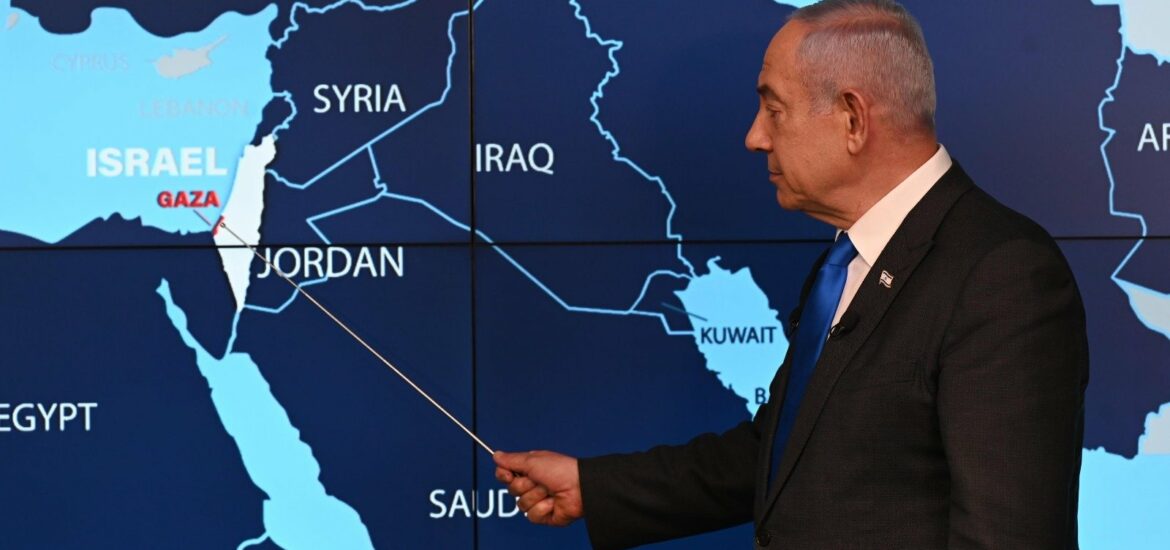
Israel seeks to expand into 'Greater Israel.'
In his later years, Shimon Peres, the eighth prime minister of Isreal, made a remark—frequently quoted—to the effect that science, more than soil, had become the country’s provider of national wealth. Territory can be seized by tanks, but science knows no borders. A nation could increase its scientific achievements without taking anything from others.
He also argued that the real driver of regional unrest today is less a clash of civilizations than a clash of generations. The older one values land more, while wealth in the new era comes from knowledge. A nation that relies on land is destined to feel isolated in the era of globalization.
Peres appeared to have tremendous faith in his words when he uttered them. The generation of Israeli state-builders he represented understood well that the survival of this tiny country lay not in hoarding deserts but in unlocking the potential of the human mind.
This logic has been borne out by Israel’s achievements in agricultural technology, cybersecurity, military science and technology. Its per capita venture capital investment has long ranked among the highest in the world, and its reputation as a “startup nation” is well-deserved.
Peres died in 2016. Since then, the Middle East has evolved: It no longer resembles his ideal vision.
U.S. ambassador delivers a shock
In an interview with American commentator Tucker Carlson in February this year, U.S. Ambassador to Israel Mike Huckabee discussed the biblical description of the “promised land for Abraham and his descendants”—a land that, in some interpretations, stretches from the Nile to the Euphrates. When asked whether it would be appropriate for Israel to annex Syria and Lebanon, Huckabee did not reject the premise but said instead: “It would be fine if they took it all.”
Shortly afterward, Jordan, Saudi Arabia, Egypt, Turkey, the United Arab Emirates, Indonesia, Pakistan and the Palestinians issued a joint statement, denouncing his words as “dangerous and inflammatory,” constituting “a flagrant violation of the principles of international law and the Charter of the United Nations” that posed a grave threat to regional security and stability.
The U.S. embassy quickly backed away, saying that Huckabee’s comments did not represent official U.S. policy. Yet this corrective statement did little to obscure a logic that has already been articulated in public discourse. The reason Huckabee’s words provoked such a strong reaction was not that he was speaking on behalf of the U.S. government, but that the worldview he described—basing territorial claims on biblical texts and treating the modern international legal order as secondary—is not uncommon in mainstream Israeli politics today.
It’s a paradox that merits serious attention. Why has a nation founded on technology, with per capita patent numbers that tower over the globe, displayed a strong impulse for territorial expansion on multiple fronts between 2025 and today?
Buffer zones
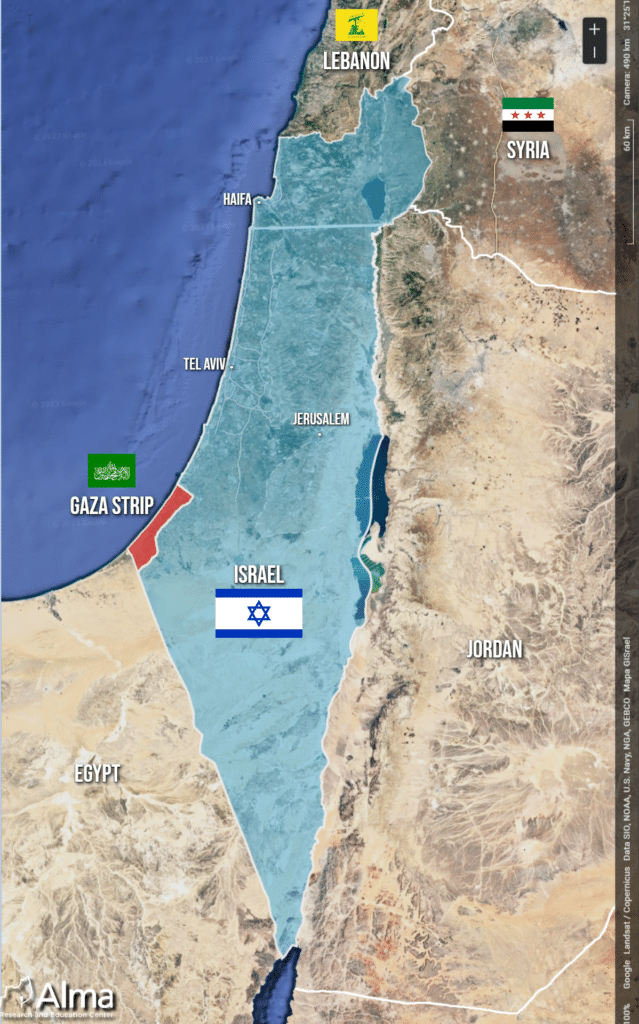
We can start with Lebanon: In March, Israeli Defense Minister Israel Katz announced that the Israel Defense Forces would demolish houses in Lebanese villages near the Israeli border and occupy southern Lebanon up to the Litani River. Before that, the IDF had already destroyed major bridges over the Litani, effectively cutting off southern Lebanon from the rest of the country.
Israel characterized the move as creating a “security buffer zone,” but in truth it amounted to a form of military occupation covering roughly one-10th of Lebanon’s territory. This was not an ad hoc measure taken in response to a new conflict. Announcing the expansion, Prime Minister Benjamin Netanyahu made clear that he aimed to “fundamentally change the situation in the north” and framed the operation as replicating the “Gaza model”—that is, long-term military occupation and control. This indicates that Israel has shifted its approach to southern Lebanon from temporary military strikes to long-term control.
The situation in Gaza is even more explicit. Since the conflict there began in October 2023, Israel has dragged out cease-fire negotiations and expanded the scope of buffer zones. Far-right ministers in the government have openly advocated rebuilding Israeli settlements in Gaza. Settlement construction in the West Bank accelerated between 2024 and 2025, with residents of multiple Palestinian villages displaced and large parts of the West Bank designated as state land. The Golan Heights, after being recognized by the Trump administration in 2019, has likewise seen further consolidation of control, along with ongoing plans for the expansion of Jewish settlements. Taken together, it is hard to dismiss these developments as merely a series of isolated security considerations.
The “David Corridor”
On the Syrian front, Israel’s strategic intentions have sparked an ongoing debate over whether the so-called David Corridor project exists. The concept has never been acknowledged in official Israeli discourse. It circulates mainly in Arab media and among political observers in the Middle East and describes a strategic vision to establish a secure land route that begins in the Golan Heights and extends northward through the Druze region of southern Syria.
The objective seems to be the formation of a strategic pivot at the junction of Syria, Jordan and Iraq that connects to Kurdish-controlled areas in northeastern Syria and ultimately would create a north-south buffer zone inside Syria. Supporters argue that the idea aligns with the Zionist “periphery strategy”—supporting regional minority groups to exploit structural divisions within the hostile Arab world and thereby help ensure Israel’s security. However, critics dismiss it as a post-hoc rationalization for Israel’s opportunistic territorial expansion.
What keeps the debate unresolved is Israel’s actions on the ground in Syria. In July last year, large-scale clashes erupted between Druze militias and Bedouin tribes in southern Syria’s Suwayda province. The situation deteriorated sharply after Syrian government forces intervened, eventually leaving more than 1,000 dead. Israel quickly launched airstrikes under the pretext of protecting the Druze community, targeting not only military facilities in southern Syria but also, unusually, bombing the Syrian General Staff headquarters in central Damascus.
Since then, the IDF has maintained a military presence in southern Syria, setting up checkpoints, building trenches and pushing its line of actual control northward from the Golan Heights. When unrest flared again in Suwayda in March this year, Israel intervened on the same grounds. According to a Washington Post report citing former Israeli officials, Israel conducted secret airdrops of rifles, ammunition and body armor, all of which were packed alongside goods for humanitarian aid, to Druze militias in southern Syria.
Yet the narrative of “protecting the Druze” does not withstand scrutiny. Israel’s relationship with the Syrian Druze is not simply that of protector and protected. Although Druze citizens in Israel have been subject to compulsory military service since 1956, they have long experienced unequal civil rights. Tensions went public after the release of the 2018 Nation-State Law, when large numbers of Druze took to the streets in protest. The Syrian Druze community is also split over Israeli intervention. Some spiritual leaders explicitly rejected Israeli “protection” and advocated resolving issues within the Syrian national framework. This division reflects the fundamental predicament of the Druze: Being compelled to accept an external protector can sometimes be harder than confronting the threat itself.
The same applies to the Kurds. Israel views them as “natural allies,” but Syrian Kurds already had the backing of the United States, and the Kurdistan Region in Iraq has an established autonomous system and its own oil revenues. Therefore, no Kurdish militia truly needs Israel’s endorsement or support. Many Syrians have begun to fear that the Kurdish issue could draw Israel deeper into northern Syrian.
Therefore, whether the David Corridor is a deliberate strategic plan or an interpretive framework projected onto Israel’s actions by observers may be an open question. But one thing is certain: Israel is systematically extending its military presence deeper into Syrian territory, and each extension comes with a logically consistent humanitarian justification.
Roots of territorial obsession
These facts beg one question: What drives this obsession? Supporters of Israel usually cite security considerations. Israel is a small country, barely more than 10 kilometers wide at its narrowest point and historically surrounded by hostile forces. From this perspective, control over land is closely tied to the preservation of the country’s security space. Accordingly, the occupation of southern Lebanon is framed as a means of preventing Hezbollah rockets from reaching Haifa, while operations in Syria are justified as efforts to disrupt Iranian weapons supply routes that approach Israel’s borders.
This explanation is not without merit, but it cannot account for the full range of developments. If Israel were pursuing limited defensive security, its actions would be expected to cease when threats are eliminated, rather than continuing to advance into the enemy’s heartland. The Gaza conflict has dragged on, with hard-liners in the Israeli government consistently obstructing cease-fire agreements. West Bank settlement expansion has never been conditioned on the “elimination of security threats.” And the scope and depth of operations in southern Syria have long exceeded what could reasonably be justified on purely defensive grounds.
Closer to the truth is a profound shift in Israel’s domestic political ecosystem. Since 2009, the Likud bloc led by Netanyahu and the far-right has remained in power, defining Judea and Samaria in the West Bank as indivisible Israeli territory and treating settlement expansion as a core component of national policy rather than a phased security arrangement. National Security Minister Itamar Ben-Gvir, Finance Minister Bezalel Smotrich and other high-level officials have publicly called for the full annexation of the West Bank and for imposing sufficient pressure to encourage Palestinian departure. This political coalition found an outlet in the conflicts of 2025-26: War is not only a security instrument but also a historic opportunity to advance territorial goals.
Religious factors cannot be ignored either. The biblical description of the promised land is no longer a literary metaphor in today’s religious nationalist movement in Israel; it’s a political action program. The reason Huckabee could speak so naturally reflects the extent to which this mindset has taken deep root within the American-Israeli evangelical Christian political alliance. In this narrative, land is not viewed as a resource or a security buffer but as a sacred divine entitlement, inalienable in nature and requiring no justification.
Russia as mirror
Russia offers another dimension for understanding territorial obsession. It is the largest country in the world by territory, covering roughly one-eighth of the global landmass and spanning 11 time zones. However, Moscow under Vladimir Putin annexed Crimea in 2014, launched a full-scale invasion of Ukraine in 2022 and declared the incorporation of four eastern Ukrainian regions into Russia in 2024. Why would a country that already has more than enough land continue to seize territory at all costs?
The answer is not simply resources. Eastern Ukraine does have industrial infrastructure and black soil, but the price Russia has paid to control it far outweighs any possible economic gains. The deeper motive is a mix of geopolitical anxiety and imperial nostalgia. Located on the Eurasian Steppe, Russia has historically lacked natural defenses; invasions have nearly always come from the west, from the Mongols and Poles to Napoleon and Hitler. This geopolitical trauma has shaped a unique security doctrine holding that only by pushing borders outward can Russia gain defensive depth and feel secure.
Meanwhile, the imperial narrative from Czarist Russia to the Soviet Union has given generations of ruling elites a lingering great-power identity. In Putin’s narrative, losing Ukraine amounts to a civilizational shrinkage and a historical betrayal, so Ukraine must be incorporated into Russia.
Russia’s territorial obsession is great-power expansion driven by imperialism, while Israel’s is an extreme form of small-nation survival—a fierce attachment to physical space forged by security anxiety, religious mythologyand nationalist sentiment. Yet both share the same underlying logic: Territory is the ultimate currency of security, and no technological progress can replace control over land itself.
What Peres overlooked
Peres’s insight is not unfounded economically. Israel remains a remarkable tech-driven economy today. The International Monetary Fund estimates its 2026 per capita GDP at approximately $69,000; it ranks third globally in the number of listed companies on the NASDAQ; more than 400 multinational tech giants, including Intel, Microsoft, and Apple, have set up R&D centers in Israel. Despite recent warfare, Israel’s economy is resilient: Its GDP grew by 3.1 percent in 2025, above the OECD average, and its central bank forecasts that domestic growth will accelerate to more than 5 percent this year.
These figures are indeed impressive. Israel is like a house with a freshly painted exterior, but its problems are cracks within its walls. The first crack is a loss of manpower. According to a late-2025 study by Tel Aviv University, approximately 90,000 Israelis left the country between 2023 and 2024. The share of highly educated people among emigrants jumped from 46 percent in 2010 to 60 percent.
An even more telling figure is that Israeli tech companies now employ more staff abroad than domestically—about 440,000 overseas versus 400,000 at home. One industry insider described this state as “super Sparta”—meaning functional under pressure, but when the brightest minds serve more than 200 days a year in reserve military duty, the problems the innovation ecosystem can solve are capped in advance.
The second crack is a lack of international support. Israel is experiencing international isolation in almost every field. Besides the United States, the only major country standing by it today is Argentina. President Javier Milei visited Israel for the third time in April, and Netanyahu said, “We have no better partners in the world than the United States of America and the great democracy of Argentina.” Yet the foundation of this friendship is personal political enthusiasm. Former Brazilian President Jair Bolsonaro was also a staunch supporter of Israel, but bilateral relations cooled rapidly once he left office.
When a country’s international relations depend on the arrival of “the right leaders” from other nations, the problem speaks for itself. The International Criminal Court has issued an arrest warrant for Netanyahu; several European countries have recognized the State of Palestine; and Israel’s normalization process with the Arab world is virtually frozen.
This is the predicament Israel faces today: Economic data are rebounding, manpower is draining and allies are dwindling. Its technological advantages fundamentally depend on top-tier talent and an open international environment, but both are being eroded by each step forward in military expansion. In the Peres framework, Israel is harnessing the wealth of the technological age to prop up a pretechnological vision of territory. But there is a price to be paid that will not show up immediately in GDP. It will emerge at some point in the future in the form of a talent shortage and international isolation.
Conclusion
Based on the analysis above and the dramatic shift in Israel’s military policy over the past two and a half years, one can safely conclude that the Peres prophecy has been invalidated. This does not mean his judgment on the power of technology is wrong but only that he underestimated the inertia of fear. When a nation operates for a long time under an “existential threat” narrative, it’s hard for the openness and cooperative logic brought by scientific and technological innovation to overcome the psychological certainty that a “wall mentality” and territorial control provide.
Technology enables wealth to move across borders, but it cannot change the entrenched dream that enough land and thick walls will provide a safe home. In this sense, land obsession is harder to eradicate than any generation of politicians expects. It resides not on maps, but in the deepest fissures of national memory.
