
The U.S.-Iran conflict is increasing instability and straining U.S. resources while undermining Washington’s global credibility and leadership. At the same time, China is capitalizing on the situation by positioning itself as a neutral, stabilizing force and expanding its diplomatic influence at the United States’ expense.
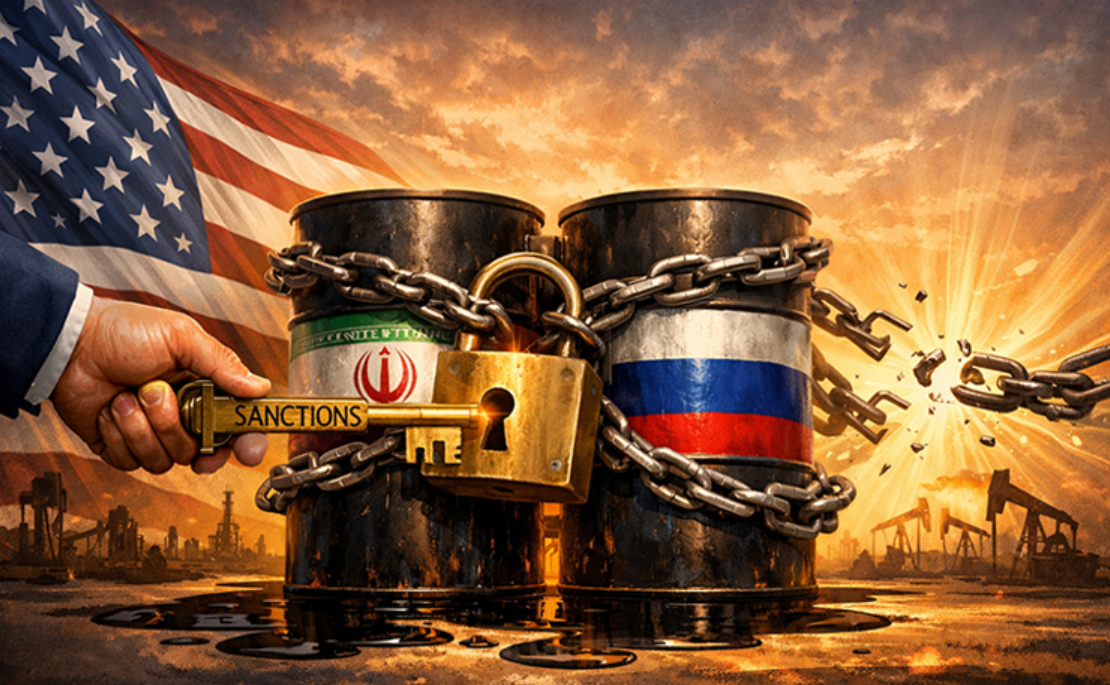
The war that the United States and Israel are waging against Iran is leading to growing speculation about which countries in the international system are likely to be impressive winners from this conflict and which ones risk becoming prominent losers. Observers already are concluding that Russia will be a big beneficiary of the turmoil, perhaps even the principal economic and strategic beneficiary. That conclusion is likely to prove valid. Russia is a major producer of oil and natural gas, so constrained supply and soaring prices of those commodities are producing a financial windfall for the Kremlin and its oligarch backers. The economic benefit for Moscow will become even larger if Iran can continue to disrupt oil tanker traffic through the Strait of Hormuz. Because of severely constrained world supplies, even the United States has had to ease sanctions that it imposed on Russian oil exports.
Moscow also is poised to make gains in its strategic rivalry with the United States and NATO. Much of the advanced weaponry that would have continued flowing from those countries to Ukraine, keeping Kyiv in NATO’s proxy war against Russia, is now being diverted to U.S. allies in the Middle East to fight Iran.
Russia may prove to be the big gainer from Washington’s masochistic folly of fighting another regime-change crusade in the Middle East. But the People’s Republic of China (PRC) is not likely to be far behind in winning the economic and strategic sweepstakes. Granted, China’s advantages are not as obvious as Russia’s. For example, the PRC is a big oil and natural gas consumer, not a major producer. Consequently, rising energy prices are now and would continue to be a negative development for Beijing, not a positive one.
However, PRC leaders have been adept at exploiting opportunities in diverse respects from previous episodes of Washington’s diplomatic and military ineptitude. That was especially true in the arena of cut-throat diplomacy. A similar pattern is emerging with respect to the current conflict.
Joe Biden’s administration believed that Washington could exploit the Kremlin’s escalation of its conflict with Ukraine in February 2022 to unite the rest of the international community against Russian aggression. The administration pressed other countries, especially major powers such as India, Brazil, and China, to isolate Russia diplomatically. Indeed, U.S. officials wanted those powers to impose severe economic sanctions on Moscow and even emulate NATO in providing military aid to Ukraine.
Washington’s strategy failed utterly. Most countries in Asia, Africa, and Latin America followed China’s lead in adopting a policy of official neutrality with respect to the Ukraine-Russia war. Beijing’s professed neutrality exhibited a pronounced pro-Russia bias. Indeed, during the next several years, the two countries announced a “strategic partnership,” deepened their bilateral ties in multiple ways, and even conducted joint military exercises.
Nevertheless, the PRC managed to preserve at least a plausible veneer of neutrality. Washington’s heavy-handed conduct made China’s task easier than it should have been.
U.S. officials utterly scorned two peace proposals by Beijing to end the fighting between Ukraine and Russia. On the first anniversary of Russia’s 2022 enhanced offensive against Kyiv, China offered a 12-point plan to end the bloodshed. Beijing’s proposal stated that “the sovereignty of all countries should be respected,” however, it also called for an end to “unilateral sanctions” and—in an obvious swipe at Washington and its NATO allies--condemned “bloc confrontations” and manifestations of a “cold-war mentality.”
The reaction of Biden administration officials was decidedly negative. Secretary of State Antony Blinken told ABC News that the peace plan merely showed that China was trying to draw the world’s eyes away from its support of Russian President Vladimir Putin. “China’s been trying to have it both ways — it’s on the one hand trying to present itself publicly as neutral and seeking peace, while at the same time it is talking up Russia’s false narrative about the war,” Blinken stated. “There are 12 points in the Chinese plan. If they were serious about the first one, sovereignty, then this war could end tomorrow.”
President Biden likewise was utterly dismissive of Beijing’s handiwork. In late April, following a phone call between PRC President Xi Jinping and Ukraine President Volodymyr Zelensky, Beijing offered a modified 10-point plan. U.S. leaders were as dismissive toward that initiative as they had been regarding the earlier one. The reception to Beijing’s mediation efforts was much more favorable elsewhere in the international community, however. Washington ‘s arrogant behavior deepened its own diplomatic isolation and enhanced the PRC’s carefully crafted image of being a constructive player trying to dampen disorder and soothe international conflicts.
The U.S./NATO proxy war against Russia undermined Washington’s assertion that the United States was the principal promoter and guardian of a “rules-based international order.” Instead, U.S. conduct reinforced the impression (already building from the country’s previous aggressive actions in the Balkans and the Muslim world) that despite being the world’s leading economic and military power, the United States had become a disruptive rather than a stabilizing player. The PRC gradually, but inexorably, moved to enhance its reputation as an alternative source of international stability.
Beijing’s diplomatic positioning toward both Russia and a growing host of neutral powers in response to NATO’s crusade against Moscow was the most obvious manifestation of a clever strategy, but there were others that had no apparent connection to that conflict. In 2023, the PRC played a significant, constructive role in helping to resolve long-standing tensions between Saudi Arabia and Iran. That breakthrough had an important ripple effect as well. It led to Riyadh improving its relations with Tehran’s principal Middle East ally, Syria. The more conciliatory overall atmosphere in turn led to Syria’s reentry into the Saudi-led Arab League, after being excluded for more than a decade. Beijing’s mediation efforts to help end the chronic hostility of both Iran and Syria toward Saudi Arabia survived even the collapse of Bashar al-Assad’s Syrian regime in December 2024 and the emergence of a new Islamist government.
Perhaps even more important, the PRC’s Middle East initiatives confirmed that the United States was no longer the global diplomatic hegemon. The rise of China, Japan, and other crucial economic actors already demonstrated that U.S. economic hegemony had expired. Washington’s failures to achieve its policy objectives in either Iraq or Afghanistan at least suggested that the United States was no longer the global military hegemon either, and the looming possibility of twin failures in Ukraine and Iran would be confirmation of that reality as well.
Indeed, the Iran war may well prove to be the biggest opportunity yet for China’s diplomacy to undermine what remains of U.S. dominance. Beijing already is positioning itself to be the responsible voice for restraint and peace. Iran is a larger and more capable adversary than Washington has faced in its previous regime-change wars, increasing the risk to the United States that the fighting may not end quickly. Israel and its patron also have generated significantly greater opposition from major neutral powers and even many U.S. allies than has occurred before. It would be supremely ironic if the United States again played into the hands of its most capable economic and strategic challenger, but that outcome appears to be increasingly probable.
