
Iraq once again stands at a dangerous crossroads. Trapped in a fragmented power‑sharing system and caught between security dependence on the United States and economic subordination to Iran, the finding a path to national reconstruction.
On April 28, Iraq swore in a new prime minister, Ali al-Zaidi. A former banker with no prior experience in public office and no participation in the general election last November, he has been described by some observers as a political outsider who might break with established patterns. Yet as he navigates pressures from Washington and Tehran, a decisive question returns: How long can Iraq maintain a facade of unity amid the U.S.‑Iran rivalry? The United States may once again be facing an Iraq trap.
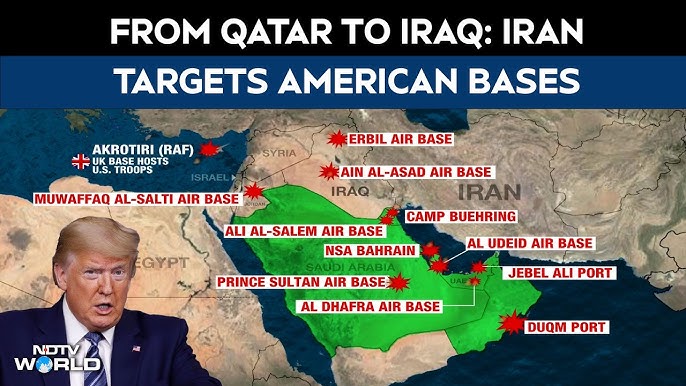
This is no exaggeration. Since the outbreak of the war against Iran, Iraq has been more than just a neighbor suffering the spillover effects; it has become a potential epicenter of a multidimensional geopolitical crisis. Missile and drone attacks have spread across the country, low in intensity but wider in geographic scope and higher in frequency than anywhere else in the region. If Iraq were to spiral out of control, the resulting shock to regional security, U.S. global strategy and even the international order would be severe.
Iraq’s predicament stems from a structural existential paradox: It relies on the United States for security, yet remains deeply constrained by Iran’s influence over its energy and politics. Although U.S. troops have largely withdrawn from Iraq, Washington’s counterterrorism support, intelligence sharing and military aid remain the external backbone of the Baghdad government’s minimal security. Without U.S. air cover and logistical support, Iraqi forces would be severely weakened in their operations against the remnants of the Islamic State.
In the energy sector, Iraq’s power grid depends heavily on Iranian natural gas. Attacks on Iran’s South Pars gas field cut off supplies, triggering nationwide blackouts and public anger in Iraq. Meanwhile, through advisory networks of the Islamic Revolutionary Guard Corps, Iran has deeply penetrated pro‑Iranian factions within the Popular Mobilization Forces (PMF), enabling it to exercise partial control over Iraq’s central government.
This means any attempt to take sides would carry severe risks. If Baghdad tilts toward Washington, pro‑Iran militias could destabilize the predominantly Shiite south and even threaten the government’s survival. If it moves closer to Tehran, U.S. sanctions would strike immediately, freezing Iraqi assets in the United States and accelerating economic collapse. The Zaidi government begins its term trapped in this double bind: Unable to offend Washington yet also powerless to escape Tehran’s influence.
Beyond external pressures, three deepening internal fault lines risk igniting a crisis at any moment:
First, the risk of PMF disintegration. On April 22, four Iraqi brigades aligned with Grand Ayatollah Ali al‑Sistani, Iraq’s top Shiite religious authority and announced their withdrawal from the PMF in protest against the growing dominance of pro‑Iranian factions. This split signals that Iran’s most important proxy instrument in Iraq is slipping from its grasp. Should armed clashes erupt among PMF groups, a civil war in Shiite areas would erupt, potentially returning Iraq to conditions reminiscent of the dark period between 2006 and 2008.
Second, is the geopolitical Kurdish issue. During the current war, the Kurdistan region has endured hundreds of attacks by pro‑Iranian militias, eroding trust in Baghdad’s protective ability to rock bottom. More dangerously, Turkey has signaled that if Iraqi Kurdish forces participate in operations inside Iran, Ankara will intervene militarily in northern Iraq. Should the Kurdish issue escalate from an internal Iraqi matter into an arena of regional power rivalry, Iraq’s territorial integrity will suffer potentially irreversible erosion.
Third, are the spillover effects of fiscal collapse. Oil revenues fund 90 percent of Iraq’s budget. The blockade of the Strait of Hormuz has crashed crude exports, which are down by more than 80 percent. When the state can no longer pay public‑sector wages, especially salaries for its large security apparatus, it will slide from governance failure to functional collapse.
Should any of these fault lines spiral out of control, the resulting shock will spill beyond Iraq’s borders and trigger chain reactions across the Middle East and globally.
For Gulf states, a collapsed Iraq would leave their northern boundaries directly exposed to armed militias, extremist groups and refugee flows. Saudi Arabia, the UAE and other countries in the region have already warned of this danger. If Baghdad loses control of its frontiers, the Gulf states may be compelled to build independent defensive barriers, accelerating fragmentation of the regional security architecture.
For Syria and Lebanon, Iraq is the strategic linchpin of Iran’s so-called Shiite Crescent. If this pivot were weakened or removed, Tehran’s overland connection between Damascus and Beirut would be severed, dealing a fatal blow to Iran’s strategic projection across the Levant. Yet such a setback would not necessarily lead to a peaceful Iranian retreat. More likely, Iran would double down on direct control of remnant militias in an effort to preserve influence, thereby sparking fiercer proxy conflicts along the Syria‑Iraq border.
On counterterrorism, the lesson of 2014 remains stark: Whenever Baghdad descends into political deadlock and a security vacuum, disenfranchisement in Sunni areas provides fertile ground for extremism. Early signs of a governance vacuum are already emerging in Anbar and Nineveh provinces. Should Iraqi security forces collapse under fiscal strain, Islamic State remnants would likely seek to exploit the vacuum by moving quickly.
For the United States, the cost of an unstable Iraq would extend far beyond a setback in its Middle East strategy; it would undermine U.S. global positioning on three fronts.
First, misalignment of strategic resources. President Trump is pushing hard for his great‑power competition agenda and a strategic shift to the Indo‑Pacific. A collapse in Iraq could force the Washington to redeploy military resources, much as the Obama administration was compelled to return to Iraq after the Islamic State’s rise in 2014. A U.S. mired in the Middle East would find it increasingly difficult to concentrate on the great‑power competition it defines as its top challenge.
Second, uncontrolled proxy competition. The inherent limitation of “offshore balancing” is that when a sovereign state like Iraq is effectively fragmented, the search for reliable local partners often devolves into chaotic competition among multiple actors. The Pentagon may find that even greater investment would not be enough to build a strategic advantage in territories where sovereignty has become increasingly hollowed out.
Third, is the impact on global energy and economic sectors. Iraq is OPEC’s second‑largest oil producer and disruptions to its exports can easily destabilize global prices. If fragmentation leads the southern oil fields, the Kurdistan Region and the central government to operate independently and dump oil into the market, global energy markets will face volatile and unpredictable shocks, thereby intensifying the inflationary pressures on major economies already struggling with price stability.
Iraq’s fate has never been determined solely by Iraqis themselves. A country that once bogged down the United States now stands at a crossroads as dangerous as when the Islamic State seized Mosul in 2014. Trapped in a fragmented power‑sharing system and caught between security dependence on the United States and economic subordination to Iran, the question is stark: Can the Zaidi government resolve its systemic crisis and set the country on a path toward national reconstruction?
The world should not wait for explosions to demand answers. In a globalized geopolitical ecosystem, the collapse of a middle‑sized country can be more unmanageable and contagious than a rivalry between superpowers. Iraq today may foreshadow the future of some countries in the Sahel, serving as a harbinger of fragile zones caught in the crossfire of a great‑power rivalry.
This is the most dangerous footnote to 21st century geopolitics: When the “sandwich states” begin to fracture, it becomes impossible to predict how far the resulting fault lines will spread.
