

A visit to Michigan reminded me that understanding the United States requires looking beyond Washington to the country’s vast heartland—how the fortunes of a single factory can shape the livelihoods of several generations and influence political choices.
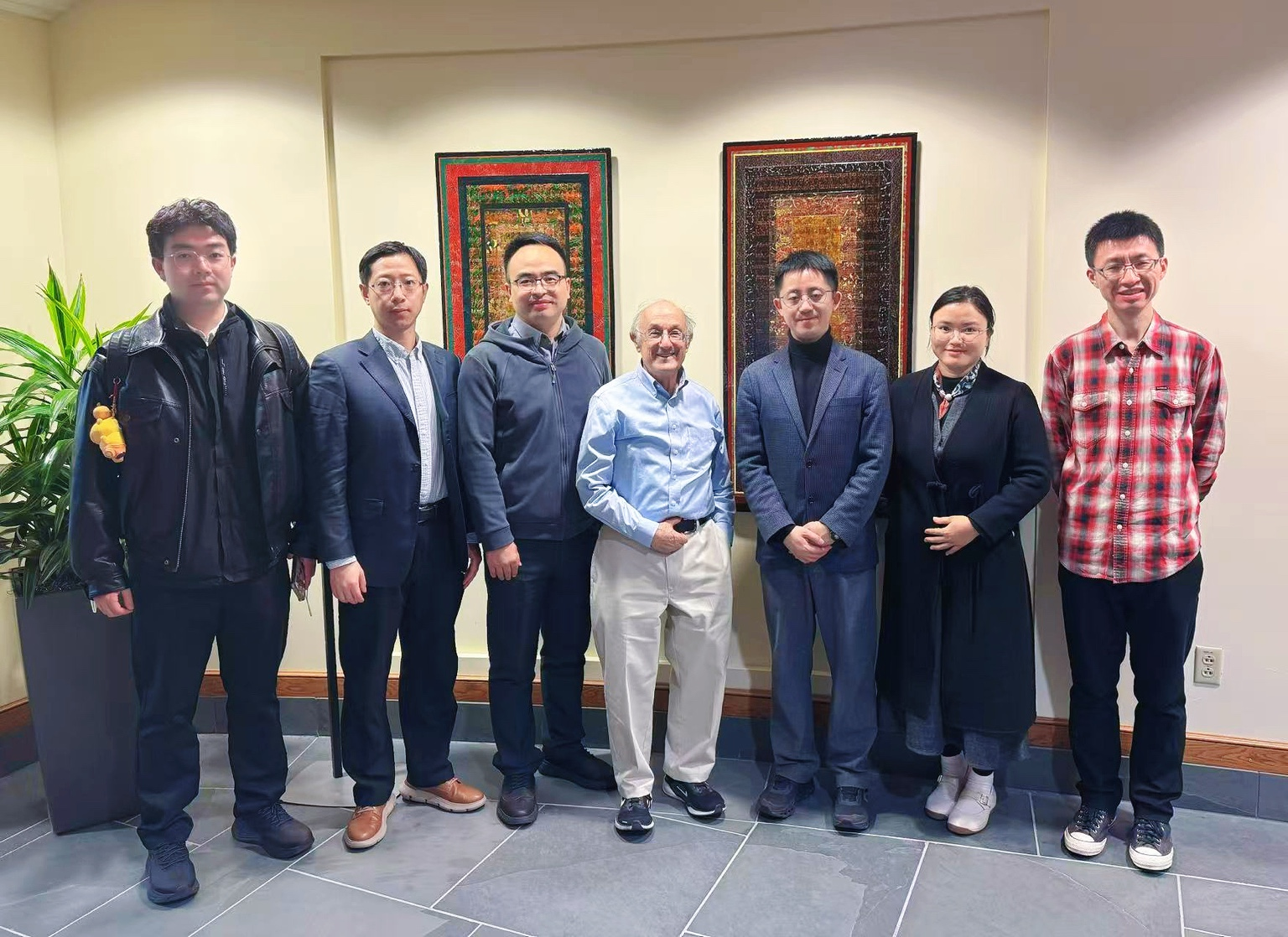
In mid- to late-November, shortly after the U.S. midterm elections, I traveled from New York to Michigan as part of a group of six that included colleagues from the Shanghai Institutes for International Studies and the Institute of American Studies at the Chinese Academy of Social Sciences. We visited Ann Arbor, Lansing, Detroit and other communities, where we spoke with former government officials, university professors, business people and representatives of community organizations.
Before we set out, we wanted to understand why Michigan, which had voted for Donald Trump just two years earlier, had swung back to the Democrats. The clearest sign of that shift came in the Michigan House of Representatives. In 2024, Trump carried Michigan, and Republicans won a majority in the state House. Two years later, Democrats retook the House while holding the governorship and their majority in the state Senate. Most of the professors and former political figures we spoke with offered much the same explanation. Many voters had cast their ballots for Democrats primarily to register their discontent with Trump. They rarely mentioned any new Democratic proposal that had won those voters over.
At the federal level, victory poses a dilemma for Democrats. When they take control of both houses of Congress next year, they will be able to decide which legislation to take up first. They will also have to decide where they are willing to negotiate with the White House. Voters have every reason to ask how much better off they will be for having put Democrats in charge of Congress. If, after two years, congressional investigations into the White House have drawn the most attention and Democrats have little to show on health care costs or jobs, the discontent that helped elect them could turn against them in 2028.
Republicans have plenty of problems of their own. Trump brought working-class voters who were disillusioned with both parties into the Republican fold. His successor will find it hard to command the same personal loyalty. The contest for the 2028 nomination is already under way. Vice President JD Vance, Secretary of State Marco Rubio and Senator Ted Cruz are all reportedly preparing for possible bids. Several of the Americans we spoke with expect the Republican primary field to be every bit as crowded as the Democratic one.
Over the next two years, as Republicans confront the question of where the party goes after Trump, the MAGA coalition he personally mobilized may gradually become less cohesive. Republicans who favor a return to the party’s traditional free-market policies are already making their case, and new factions may emerge from the debates. On the Democratic side, several governors and senators are also attracting attention. This year’s vote in Michigan illustrates the shift of balance that has takes place. There will likely be a hard-fought primary in each party to determine who will compete for the White House two years from now.
Economics underlies these political shifts. The word we heard most often during our visit was “affordability.” What people in Michigan meant was how much of their paycheck was left after the weekly grocery run and a fill-up at the gas station. According to the U.S. Bureau of Labor Statistics, food prices in the Detroit metropolitan area rose 2.6 percent between August and October, and energy prices rose 4.5 percent. A pre-election poll by Michigan State University likewise found that lowering the cost of living was voters’ top priority in choosing their next governor.
In Michigan, we found that conversations about the cost of living invariably turned to the auto industry or to manufacturing more broadly. In Washington, discussions about bringing manufacturing back to the United States often begin with the size of the investment. Someone who used to work in an auto parts plant has more immediate questions. How many people will the new plant hire? Can I use the skills I already have? Will the job pay as well as my old one? Michigan had about 584,000 manufacturing jobs in October, down slightly from a year earlier. A worker moving from engine assembly to a battery production line has to learn new equipment and processes. How people in Michigan view this industrial transition depends in part on whether employers will pay for training so workers can keep earning a living while they change roles.
A change of job can also mean a change in health coverage. For people who buy their own insurance, this is the time to choose a plan for next year. Michigan’s insurance regulator approved an average rate increase of 14.2 percent for 2027 in the individual health insurance market. For households that qualify for premium tax credits, what matters is the premium they pay after the credit is applied. A family weighing a job offer has to consider take-home pay alongside the cost of insuring everyone in the household. That is one reason the Rust Belt experience resonates across the country. When an entire family’s health coverage is tied to one person’s job, the whole family shares the risk of a job change.
Even data centers, a subject seemingly far removed from everyday life, raise a familiar question at the local level. Who pays the electric bill? In Saline Township, near Ann Arbor, the power company needs to expand capacity to serve a data center. Construction can bring jobs, but residents worry that if the company operating the center pulls out a few years from now, the cost of upgrading the grid could end up on their electric bills.
Most residents we spoke with were also deeply concerned about the environmental damage, noise pollution and waste of energy that data centers might bring. If the United States wants to keep its lead in artificial intelligence, it will have to build data centers faster. But before individual projects can go ahead, the people who live in the towns that would host them need answers.
Our visit also prompted us to reconsider how much room there is for cooperation between the Chinese and U.S. auto industries. On Nov. 18, while we were still in Michigan, Ford announced that it had begun shipping the first lithium iron phosphate battery cells produced at its plant in Marshall, Michigan, to Kentucky for use in electric pickup prototypes. Ford owns and operates the plant, which uses technology from the Chinese battery maker CATL.
For all the competition between them, the Chinese and U.S. auto industries can still find areas where each has something the other needs. In 2013, when Rick Snyder, the governor of Michigan at the time, visited Chongqing, the two governments signed a memorandum of understanding on strategic cooperation to expand exchanges. It identified several priorities, including automotive manufacturing and related industries, electronics and information technology, software and information services outsourcing, tourism, trade, logistics and new energy.
Today, the two countries should continue to make use of ties between Chinese provinces and U.S. states, as well as sister-city relationships. The agenda could be of modest scope. Auto parts manufacturers and vocational colleges from Michigan and Chongqing could, for instance, sit down together to discuss what equipment is needed to test batteries and how to train technicians to service them. We should also encourage more local officials, entrepreneurs and scholars from both countries to visit one another’s factories and schools and judge for themselves what is worth doing together.
The visit to Michigan reminded me that understanding the United States requires looking beyond Washington to the country’s vast heartland. How the fortunes of a single factory can shape the livelihoods of several generations and, in turn, influence a community’s political choices is a question worth studying up close. Time spent on American factory floors and farms doing careful fieldwork can take us beyond what books can teach and gradually deepen our understanding of American society. Understanding and trust between the Chinese and American people also grows out of this kind of sustained personal contact.
