
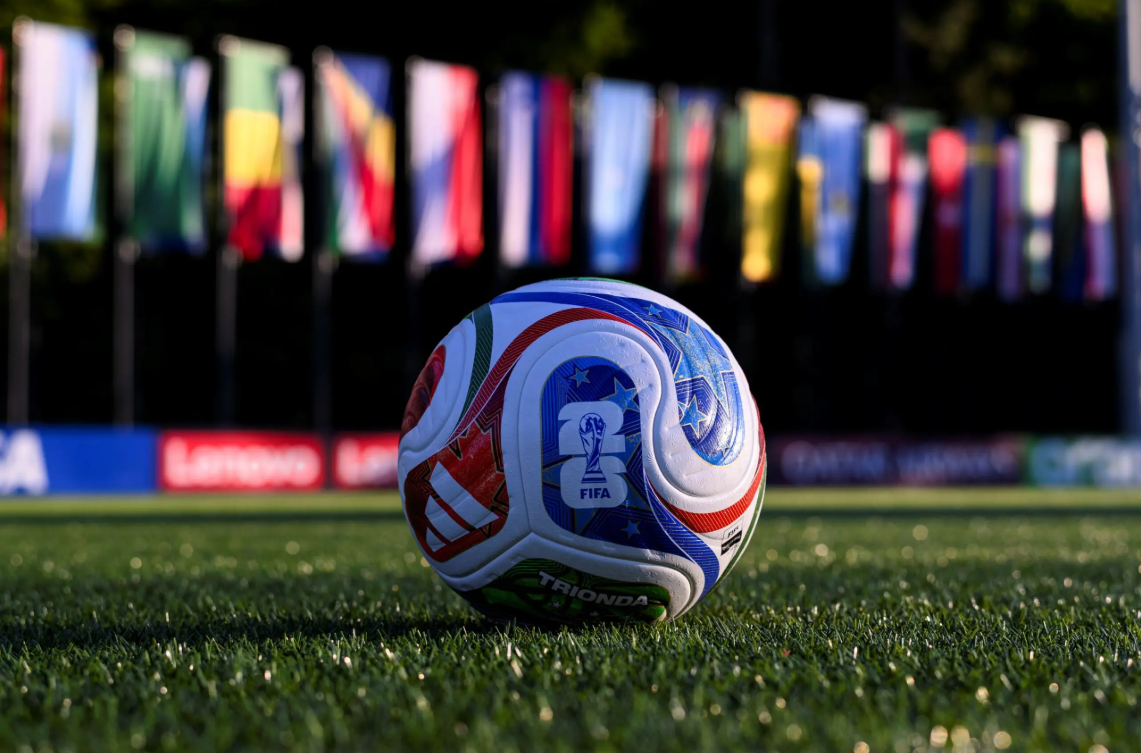
This has been an extraordinary summer of sports: from the Knicks to Wimbledon, and Spain’s win over Argentina at the World Cup. More than just a series of separate experiences, this festival of games has reminded me that rules and fair play are what make sport an arena of governed joy—and a spirit we might adopt as we re‑think U.S.–China relations.
In New York, the Knicks’ best-of-seven playoff turned into a shared emotional journey. No one knew whether it would end in four, five, six or seven games. When Cleveland won the fourth game, it did more than level the series; it factory reset the mood, pulling everyone back into a thrilling state of uncertainty.
I was in New York for most of the games, and what captured my imagination was not only the action on the court, but what I saw happening between people. The ups and downs of each game came to characterize conversations between friends and strangers, so much so that the Knicks transcended sport and became a new meeting point, a silk thread of experience allowing even old acquaintances to connect in a fresh, more personal way.
In June, I went to my first baseball game and watched the Yankees play the Guardians. It felt like a window into America and its people, seen through the prism of sports. What stood out was the camaraderie in the stands, the loyalty to a team no matter how well or badly they were playing, and a sense of competition and justice. My friends (and even strangers a few rows behind us) explained the rules to a rookie with evident pride. They seemed to feel respected that I was taking an interest in something so intrinsic to them.
The World Cup did something similar on a larger stage. Played across Canada, the U.S. and Mexico, it carried millions of people through the same sequence of group matches, knockouts and eliminations. Even when we supported different teams, we moved through the same emotional calendar, swinging from early hope to nervous thresholds, sudden exits and, finally, a champion.
Across these moments, a simple image keeps returning — a ball in play. A baseball circumventing the bright lights at Yankee Stadium, a basketball tunneling through a hoop at Madison Square Garden, a football darting across a World Cup pitch. What unifies these scenes is the fact that everyone present understands the rules of the game. We know what counts as a strike, a foul, a goal. We recognize the authority of the umpire or referee, even when we argue about individual calls.
This is what I mean by sport as governed joy: intense emotions held within a framework that everyone accepts. The rules do more than make the game possible; they make trust possible. We can invest fully in the suspense of a series or a tournament because we believe, at some basic level, that the contest has been fair and the outcome earned.
I have seen that same pattern on other courts and tables. At Wimbledon, singles matches still invite us to read athletes through their flags: Coco Gauff as an all‑American presence and Jannik Sinner as the top seed from Italy. In doubles, teams are often mixed-nationality. The label softens as athletes from different countries join forces, yet the established rules do not blur. Whoever shares a side of the net plays on the same surface, under the same scoring system, bound by the same honor code. In singles, identity is foregrounded. In doubles, the team becomes more global by nature.
Table tennis has long offered a historic lesson to those of us working in the U.S.–China space. In 1971, it was young players with paddles and a small white ball who first crossed the threshold between the two countries, helping open the door to contact while stepping into the unknown. This year, in tribute to the 55th anniversary of Ping Pong Diplomacy, we chose to disrupt the tested formula by inviting Americans and Chinese to play pickleball in Jiangxi. Instead of pairing doubles teams by nationality, we deliberately mixed them on the same side, so that difference sat inside the partnership, not just across the net.
In international relations, trust rarely appears overnight; it grows through repeated interactions under standards both sides accept. Like a slow‑motion replay following a contested shot or goal, we have the benefit of examining our actions against almost half a century of modern relations.
This matters because the wider world is struggling with rules. Since the end of the Second World War, the multilateral system has rested on an idea of shared “rules of the road”: the UN, the Bretton Woods institutions and a broader architecture meant to provide predictability and restraint. Not all countries experience those rules in the same way. Some see them as necessary guardrails; others see them as selective or imposed. That tension is itself part of the present crisis. States increasingly act as though they can choose which rules to follow and when. In doing so, they not only move the goalposts of what is acceptable; they also remove some of the pillars that make the field recognizable at all.
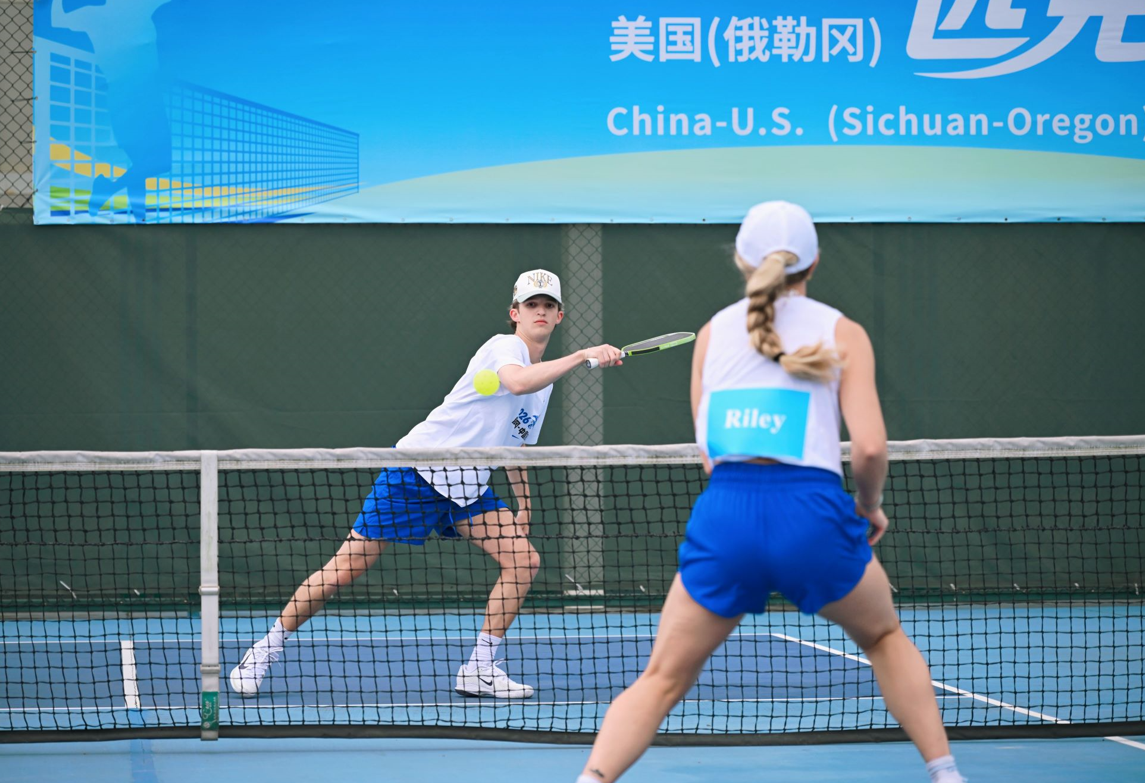
American players Luke Aaron and Riley Hanks compete in a pickleball friendship match in China's southwestern Chengdu, May 2026.
For the U.S. and China, this is not a distant problem. It is visible in the Western Pacific, where each side worries about unsafe encounters at sea and in the air. It is visible in emerging technologies such as artificial intelligence, where both governments have begun cautious dialogues on risk and guardrails precisely because a common rulebook does not yet exist. In these areas, there is no fully accepted referee, and misperception can carry dangerous consequences.
By contrast, in sports, Americans and Chinese already accept common rules, common limits and the authority of the same umpire. In our exchanges this year, I have watched mixed teams of American and Chinese players navigate differences inside a partnership: finding ways to communicate without a shared language, adjusting to one another’s strengths and weaknesses, learning that success depends on cooperation. Sports will not resolve strategic rivalry. The claim is more modest, but also more durable: they show what bounded rivalry looks like and remind us that fierce competition does not require the abandonment of rules.
In today’s world, our neighbors are not only the people who live next door. They are also the people in the next country and on the next continent. We share more than borders; we share responsibilities and risks. For neighbors to coexist, goodwill is not enough. We also need shared expectations — rules about how we compete, how we disagree and how we protect one another from harm.
So this summer, as I think about the value of keeping the ball in play, a fundamental question has emerged for me. We are capable of intense rivalry held within clear rules. We are capable of feeling “all in” together, even when we are new to the game or cheering for different sides. But the question is whether we can bring that same maturity to the larger system we share, especially between Americans and Chinese, before too many of its pillars are dismantled.
