
Christina Monroe, Leadership Development and Public Diplomacy Consultant, AsiaGlobal Fellow
Jan 23, 2026
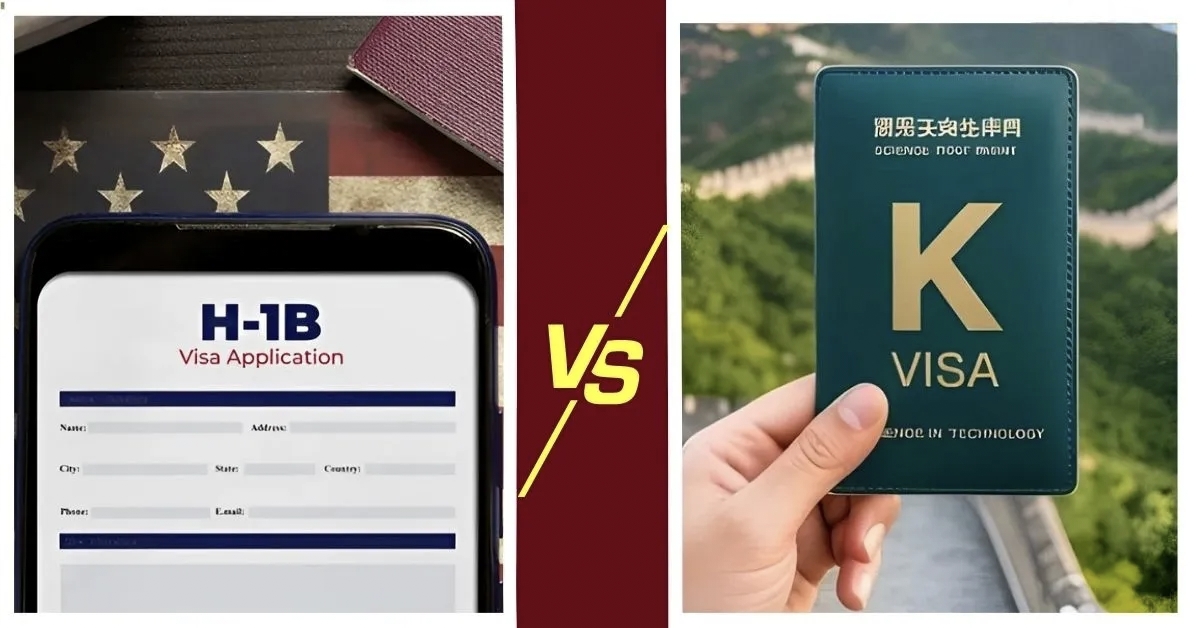
U.S. restrictions on visas and growing uncertainty for international students and skilled workers, contrasted with China’s rollout of more permissive talent visas, are reshaping global education and career decisions and making the United States a less attractive destination for emerging and established talent. As competition for innovation increasingly mirrors economic decoupling, sustained limits on mobility and collaboration risk undermining cross-border knowledge exchange, even as long-term scientific and technological progress continues to depend on international talent flows and institutional cooperation.
Brian Wong, Assistant Professor in Philosophy and Fellow at Centre on Contemporary China and the World, HKU and Rhodes Scholar
Oct 17, 2025
China introduced the K-visa on October 1, 2025, for young foreign STEM professionals, offering longer stays, multiple entries, and broader benefits. The program seeks to boost innovation and international collaboration amid slowing population growth, but faces public concerns over job competition and talent retention.
Philip Cunningham, Independent Scholar
Sep 06, 2022
Not all conflict can be avoided through better understanding, but promoting cultural exchange is a great place to start mending relations. And as China-U.S. relations spiral, promoting study abroad opportunities, many seeking to return to normal after the pandemic, is perhaps more important than ever before.
Shaun Tan, Writer
Nov 03, 2017
The power of America’s example has been eroded at home by both the far left and the far right. For its own sake, as well as for the rest of the world, that example must endure.
Robert I. Rotberg, Founding Director of Program on Intrastate Conflict, Harvard Kennedy School
Jul 17, 2017
Beginning by educating Africans on Chinese culture through Confucius Institutes on the continent, China now provides thousands of scholarships per year to African seeking to study at Chinese universities. But this arrangement is more than an educational exchange; it is Chinese soft power at work.

Shen Lu, Master's Student at Medill School of Journalism, Northwestern University
Jul 07, 2017
Several Chinese friends have sympathetically said that I am “too Americanized,” as if I have betrayed my own culture. But I am definitely not American, and I have no desire to become one. My mindset hasn’t shifted to a nationalist one, nor have I joined the “China-bashing club,” while I’m certainly critical about all its faults. Watching China from afar, I’ve gained a much clearer view of its problems than when I was on the ground covering and living through them.
Qin Xiaoying, Research Scholar, China Foundation For Int'l and Strategic Studies
Jul 05, 2017
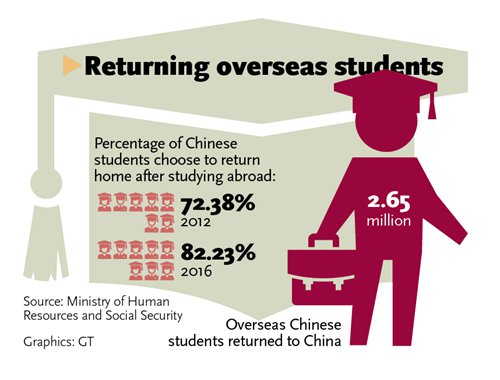
In 2017, 10 million Chinese high school students compete fiercely for college entry. At the same time, as many as 7 million college graduates will enter the job market. Without appropriate measures to be taken, the employment of college graduates could become a problem causing big headache.
Back to Top

- China-US Focus builds trust and understanding between the U.S. and China through open dialogue among thought leaders.