
Today’s Venezuela will have a long and unpredictable road to travel before it can escape the shadow of the Noriega era. Operation Absolute Resolve will either bring the United States to the summit of hegemony or act as a fuse that ignites the collapse of the rules-based global order.
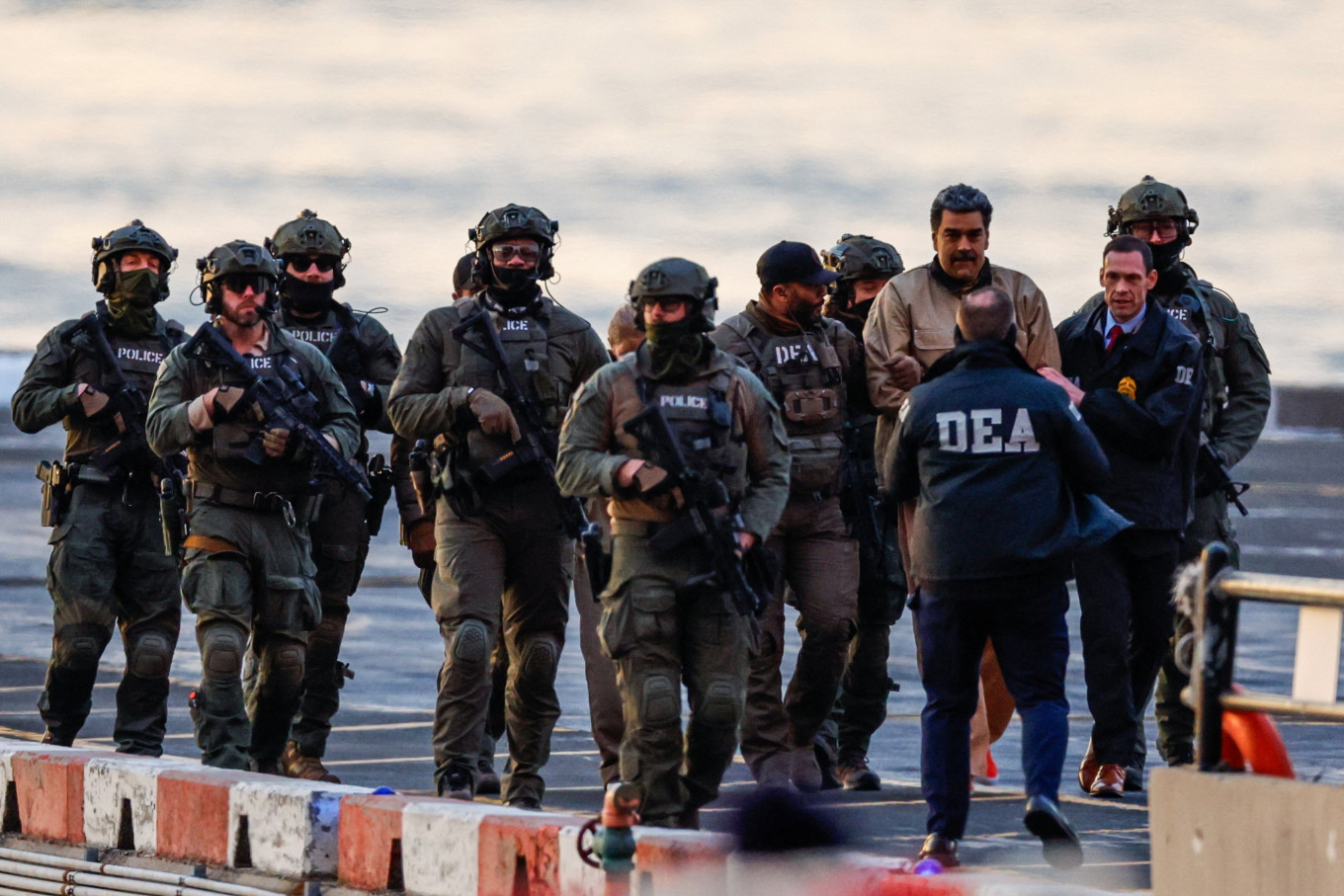
The United State suddenly launched large-scale military strikes on Venezuela on Jan. 3, attacking the Venezuelan capital, Caracas, and military targets on its periphery. It forcefully brought President Nicolas Maduro and his wife, Cilia Flores, to New York to face “trial.” Many observers have compared the so-called Operation Absolute Resolve with Operation Just Cause in Panama 37 years ago. That action also took place in the early morning.
In 1989, George H. W. Bush deployed 27,000 troops in a high-profile traditional invasion. In 2026, Trump conducted a “minimalist war” of the digital age, accomplishing a country’s head of state across borders with an extremely small number of special forces and cyberwarfare tactics. Yet, through the mist of the precise surgical strike, what we see is still the same geopolitical logic spanning three decades: criminalizing political positions and seeking regime change. The repeat of history is not only a shock to Latin American politics but also a sign that the international order is entering dangerous deep waters.
Sovereignty succumbs
In White House narratives, both Manuel Noriega in 1989 and Nicolas Maduro in 2026 were portrayed as drug lords and autocrats. This lent legitimacy to the U.S. cross-border use of force, which is to say it not styled as a war between two countries but as a police raid based on U.S. domestic law. Jurisprudentially, such manipulation rests on the extremely disputable “Ker-Frisbie doctrine,” which holds that so long as the suspect is brought to a U.S. courtroom the court has jurisdiction despite the process being illegal. The U.S. Supreme Court affirmed the legitimacy of the trial of Noriega in 1992 through this principle. It is now being applied to Maduro.
However, such intervention “in the name of the law” appears even more problematic this time around. In 1989, the world still saw the idealist colors of the post-Cold War new world order. The Venezuela incident was the result of Trump’s shameless preaching of the so-called Trump corollary of the Monroe Doctrine, which claims the whole Western Hemisphere is part of America’s core sphere of interest. So any behavior that threatens U.S. security (say narcoterrorism) or introduces outside influence (Chinese, Russian) will be met with devastating blows in utter disregard of sovereignty.
U.S. to “run” Venezuela?
Similar to the Noriega episode in 1989, the Maduro case has ignited discussions in the United States about the immunity of heads of state, executive power expansion and the transgression of international law. But Maduro has stronger legitimacy based on electoral procedure compared with Noriega, and domestic approval ratings of the two military interventions in 1989 and 2026 are clearly different.
This further promotes the polarization of U.S. domestic politics and has already begun to disrupt the run-up to next year’s midterm elections. In the wake the Venezuela action, the Republican Party has won over the right-wing Latino voters in such key states as Florida, and especially the support of Latino voters of Cuban and Venezuelan origins, but the Democrats may also take advantage of the topic to mobilize groups who oppose both war and intervention in other countries’ internal affairs. They are more concerned about economic topics.
It’s worth paying more attention to the prospect that the operation against Venezuela will very likely amplify internal disputes and contradiction within the Trump administration as well as within the Republican Party, such as that between the MAGA isolationists and the interventionists represented by Marco Rubio.
But what does it mean when Trump says the U.S. will run Venezuela?
First, Trump doesn’t seem to be planning to “restore democracy,” which distinguishes this operation from the one in 1989. Having witnessed the disappointing Juan Guaido in 2019, Trump doesn’t want Maria Corina Machado; he only wants more oil.
Immediately after its invasion of Panama in 1989, the US military installed Guillermo Endara, who had just won the general election, in an attempt to build an entire democratic political regime. This year the US. has shown its indifference to traditional democratic processes. It did not eagerly support such opposition leaders as Machado and Edmundo Gonzalez Urrutia, who have been recognized both inside and outside Venezuela. Rather, it has shown a willingness for contact with the sitting vice president, Delcy Rodríguez. Such “Maduroism without Maduro” reflects Trump’s pragmatism—achieving social control at the lowest possible cost using the executive machinery of the old regime.
The political landscape in Venezuela will not see the kind of thorough reshuffle the opposition had anticipated but may sink into a protracted period of transition manipulated by the United States from behind the scenes—and as a result of compromises by all sides.
Second, after invading Panama, the U.S. offered $500 million in aid in a bid to stabilize the new government, but this time the Trump administration has demonstrated an extreme inclination to “transact” and “economize.” The core implication of Trump’s idea of running Venezuela is to take over its resources—that is, dispatching large oil companies (such as ExxonMobil) directly into Venezuela to repair and operate its dilapidated oil infrastructure. Energy revenues will be used in part to repay the U.S. for the costs of its so-called law enforcement action and infrastructure investment. Venezuela’s economic sovereignty will be stripped away in the name of restoration and will be passively incorporated into the U.S. energy supply security system.
Global order collapses
The 1989 Panama incident occurred at the dawn of the unipolar moment. By contrast, the Venezuela incident this year happened during a period of fierce wrangling in a multipolar world. The U.S. cross-border raid has triggered universal fear and condemnation from such regional powers as Brazil, Colombia and Mexico. The international community worries Trump has opened up a new era in which domestic laws take the place of international ones and major powers interfere in small countries’ affairs at will. President Luiz Inacio Lula da Silva of Brazil lamented that an “unacceptable bottom line” has been transgressed, presaging that the diplomatic system of the Western Hemisphere may sink into long term distrust and confrontation. The Venezuela incident may become another domino in the collapse of the international legal system, as the world retreats at an accelerated pace into the 19th century Monroe Doctrine logic of “might makes right.”
By comparing 1989 with 2026, we can see clearly that even though military action has become more sophisticated and less costly, the strategic environment in Washington’s face has become more complex and fragile. Under the dual pressures of multipolar rivalry and resource plunder, today’s Venezuela will have a much longer and more unpredictable road to travel before it can escape the shadow of the Noriega era. Time will reveal whether Operation Absolute Resolve will bring the United States to the summit of hegemony or will act as the fuse that ignites the collapse of the rules-based global order.
