
The political shift in the United States is no historical accident. It’s the product of combined pressures arising from economic, social and ideological transformations and reflects profound changes taking place in the evolution of capitalism and the country’s domestic and foreign policies.
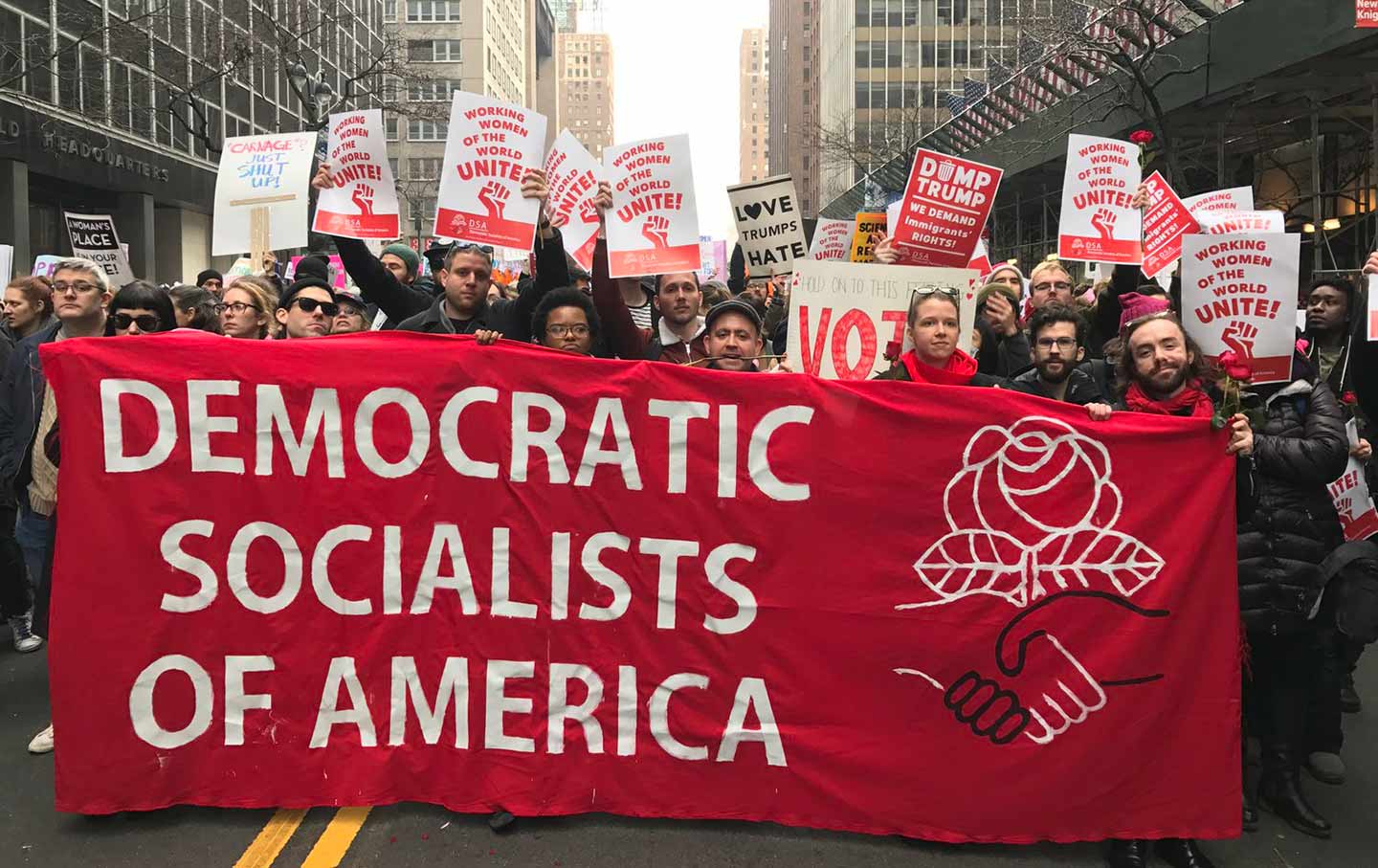
(Photo from The Democratic Socialists of America website)
With fewer than 100 days remaining before the 2026 U.S. midterm elections, candidates identifying with democratic socialism have secured victories in several key races, underscoring the growing influence of the movement in this election cycle. Over the past decade, figures such as Bernie Sanders, Alexandria Ocasio-Cortez, Zohran Mamdani and Melat Kiros helped move democratic socialism from the political margins toward the mainstream of American politics. This evolution reflects the combined effects of the mounting economic, social, ideological and international pressures confronting the United States, and, more fundamentally, points to broader transformations within American society and its capitalist system.
The sharp rise in wealth inequality is the economic foundation of the resurgence of democratic socialism in the United States. Widening disparities in the distribution of wealth have become the underlying driver of its growing appeal. Since the Ronald Reagan administration, neoliberalism has served as the dominant framework for economic governance. Policies such as tax cuts, financial liberalization and industrial offshoring have consistently favored capital and contributed to an increasingly unequal wealth disparity. Today, the wealthiest 1 percent of American households control more than 30 percent of the nation’s wealth, roughly equivalent to the combined assets of the bottom 90 percent, while the bottom 50 percent hold only 2.6 percent of total household wealth.
This year, as leading artificial intelligence companies in the U.S. rushed to go public, a new wave of wealth creation driven by trillion-dollar technology companies further widened the gap between the owners of capital and ordinary workers. By contrast, wages for many working Americans have remained largely stagnant as an increasing share of the returns generated by labor accrues to the capital holders.
Escalating tuition costs, soaring housing prices and mounting medical debt have significantly narrowed opportunities for upward mobility for Millennials and Generation Z. Student debt, now totaling approximately $1.7 trillion, has become a heavy burden for younger generations, leaving the promise of the American Dream increasingly out of reach.
At the same time, the growing influence of money in politics has profoundly shaped the American political system. Large corporations exert considerable influence over legislation through campaign contributions and lobbying, while policies such as tax reductions and weaker antitrust enforcement have often favored corporate interests. Critics argue that this pattern reflects an increasingly entrenched relationship between wealth and political power. In response, democratic socialists have advocated measures such as wealth taxes, the breakup of monopolies and stronger protections for workers' rights. These redistributive proposals resonate with many voters and provide an important source of popular support for democratic socialism.
The normalization of government intervention in the economy has also contributed to an erosion of the neoliberal consensus. Democratic socialists advocate a stronger role for the state in regulating and constraining market forces. Interestingly, at roughly the same time, both major American political parties have moved away from the traditional ideal of small government, with state intervention evolving from an emergency response to economic crises into a more permanent feature of governance.
The 2008 global financial crisis and the COVID-19 pandemic were two major turning points in this transformation. During both crises, the federal government committed massive financial resources to support banks and businesses, provided direct assistance to households and intervened administratively to stabilize industrial supply chains. In the post-pandemic era—whether through the CHIPS and Science Act and climate-related industrial subsidies of the Biden administration, or Trump’s use of tariffs and industrial policy to promote the reshoring of manufacturing and greater federal involvement in strategically important industries—government intervention has become an increasingly normal component of U.S. economic policy.
Democratic socialists have further expanded the scope of state involvement by advocating broader access to healthcare, education and housing, as well as public housing programs, rent regulation and tuition-free community colleges. Together, these proposals have helped redefine the relationship between the state and the market by extending the government’s role in economic and social affairs.
The growing diversification of social thought has intensified ideological and political arguments across the United States. The rise of democratic socialism challenges the post-Cold War political landscape long dominated by conservatism and liberalism. It is also weakening the Democratic Party’s traditional establishment-centered orientation. As a result, the American ideological landscape has become more pluralistic, but also more polarized.
At the same time, contemporary democratic socialism has broadened its agenda by integrating concerns over economic equality with issues of race, gender and climate justice, thereby expanding the scope of progressive politics. The coexistence of competing ideological currents has made it increasingly difficult to sustain a broad social consensus, as cultural conflicts and economic grievances have become deeply intertwined. Political and social polarization have become persistent features of American society.
Meanwhile, against the backdrop of a new technological revolution, technology-driven ideologies have also gained prominence. One example is “effective accelerationism,” or e/acc, which argues that accelerating technological innovation will yield the most effective solution to many of humanity’s challenges. By contrast, the rapid advancement of artificial intelligence has, since the beginning of this year, fueled a growing backlash across the United States. Opposition to the construction of data centers, concerns over AI-driven job displacement and fears about the security risks associated with increasingly autonomous AI systems have all become more widespread. These concerns overlap with many of the policy priorities advocated by democratic socialists, further expanding the movement’s influence within American society.
Global change has made the influence of the international environment on the United States increasingly visible. The rise of democratic socialism is not only a product of America’s domestic contradictions but also reflects the country’s efforts to adapt to, and be reshaped by, a changing international order. As the benefits that the United States once derived from globalization have dissipated, democratic socialists and right-wing populists have become—despite their ideological differences—increasingly critical of unrestricted free trade. Proposals to curb tax avoidance by multinational corporations, to reshape the distribution of gains from international trade, to reduce excessive U.S. intervention overseas and to pursue a more restrained approach to global leadership all point to a broader reassessment of America’s relationship with the world.
At the same time, intensifying major-power competition has created additional pressure for domestic institutional adjustment. To preserve its industrial and technological advantages, the United States must address problems associated with the neoliberal era, including industrial hollowing-out and the widening of socioeconomic inequality. In this sense, strategic competition has, perhaps unintentionally, created greater political space for some of the economic and social reforms advocated by democratic socialists.
Also, the prolonged Israel-Hamas conflict and the controversy surrounding accusations of antisemitism have triggered protests on American university campuses. Democratic socialist ideas have exerted a significant influence on many student activists and their supporters during this process. Through student organizations and a new generation of political figures, these ideas have gradually evolved beyond criticism of U.S. foreign policy to encompass broader structural critiques of capitalism, imperialism and the role of capital in higher education. This development has strengthened the democratic socialist movement’s ability to mobilize public opinion, while giving it a distinctly generational character. This contributes to the growing prominence of what has been described as “Generation Z socialism” in the United States and other Western countries.
Against the backdrop of profound changes in the international landscape, the rise of democratic socialism reflects a broader transformation of the United States. Deepening wealth inequality, the normalization of state intervention in the economy, and the growing diversification of ideological currents are together reshaping the country’s political, economic and social landscape. A clearer understanding of the evolution and underlying dynamics of democratic socialism not only sheds light on the changing trajectory of contemporary capitalism in the West but also provides valuable insights into the long-term direction of U.S. domestic and foreign policy.
