
Voter in the United States have rallied around the Democratic Party’s opposition to Donald Trump but have yet to develop a platform capable of cementing swing voters, reconciling the party’s internal factions or adapting to the broader trend toward retrenchment.
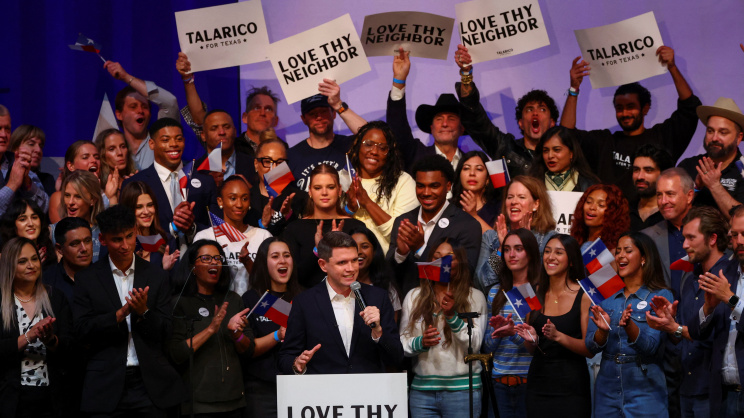
A near record-high number of young people turned out to vote in the 2026 midterm elections and contributed to a number of unlikely Democratic successes.
The Democrats’ sweeping victory in the 2026 U.S. midterm elections can be seen primarily as a vote to check President Donald Trump’s governing agenda. It rested on a loosely defined, ad hoc coalition united by opposition to Trump. The mandate itself is therefore highly ambiguous, giving rise to three questions the Democratic Party must now confront: Will Congress focus on pragmatic lawmaking or confrontational investigations? Will the party’s internal balance shift toward moderate pragmatism or move closer to the progressive position? Is a return to the liberal international order a realistic possibility?
With control of both chambers of Congress, the Democrats’ policy choices will be constrained by the very electoral dynamics that produced their victory. They will have to strike a balance between pragmatic compromise and confrontational investigations.
On one hand, progressives may now have the capacity to set the party’s agenda, and they are inclined to make full use of oversight tools such as congressional subpoenas and hearings to pursue sustained investigations into issues including tariff policy, administrative procedures and national security decisions. Some will also press for impeachment and political retribution. On the other hand, the blue wave included gains in a large number of swing-state seats, both at the state and national level, and so the political survival of newly elected moderate Democrats will depend heavily on centrist voters. Pushing partisan investigations and impeachment-driven reprisals too far could easily squander the hard-won trust of voters across party lines and create liabilities for the 2028 election.
On the other hand, voters’ primary motivation for choosing Democratic candidates was to check Trump, not to endorse the party’s more radical agenda, such as raising taxes, changing election laws or abolishing private health insurance—positions that voters in states such as Iowa, Ohio and North Carolina may not necessarily support. The legislative landscape presents its own structural constraints. Democrats lack the two-thirds majority needed to override a presidential veto, leaving sweeping progressive legislation effectively blocked by the veto threshold. Proposals such as universal health care and large-scale progressive tax increases would also face resistance from moderate Democrats within the party before they were even to reach the floor. Room for negotiation and compromise is likely to exist only on issues where cross-party consensus is possible, such as budgetary measures, cost-of-living relief, protections for abortion rights and limited adjustments to election procedures.
The Democrats, therefore, will have to strike a balance between mobilizing their own base and retaining their seats in swing states. Congressional investigations under Democratic control are likely to become a regular feature but will probably focus narrowly on whether administrative procedures have complied with the law, rather than pursuing political vendettas at any cost. At the same time, the party is likely to pursue practical policy outcomes through piecemeal, transactional legislation.
Ongoing ideological contest
The progressive wing has made historic gains. Eight candidates endorsed by the Democratic Socialists of America have won seats in Congress, creating the largest bloc of left-wing lawmakers in congressional history. Prominent progressive figures continue to gain influence within the party. They enjoy a solid grassroots base mobilized in safely Democratic districts—in California and Michigan, for example—enabling them to advance radical proposals and shape the party’s policy agenda. However, progressives have mobilized young people, working-class voters and ethnic minorities—groups with historically low turnout—by putting forward clear and radical calls for structural change. Yet the far-left-wing agenda has limited appeal among centrist voters in a national election and is unlikely, on its own, to provide a sufficient foundation for presidential campaigns in swing states.
The Democratic Party’s moderates, meanwhile, draw confidence from their hard-won gains. In this election, Democrats broke through Republican strongholds in typical red states such as Kansas, Texas and South Carolina to win Senate seats. Voters in these constituencies tend to be less receptive to high taxes or to radical positions on cultural issues. The moderates’ political approach, by contrast, is to keep the focus firmly on the economy and people’s livelihoods, set aside divisive cultural issues and maintain a broad electoral coalition spanning racial and socioeconomic groups.
The distribution of congressional seats within the Democratic Party is inherently divisive. Representatives from safe Democratic districts remain under sustained pressure from the left, while newly elected Democrats from Republican-leaning swing districts must keep a close eye on centrist voters. With these two distinct political imperatives operating side by side, the contest over the party’s direction is unlikely to be settled through the passage of legislation during the current Congress. The real battleground will be the 2028 primaries.
The lesson from the Republicans’ defeat applies equally to the Democrats: A party’s long-term electoral success depends on a consistent set of policies and principles, not the appeal of any single individual. Any move toward ideological extremism carries the risk of electoral collapse.
The progressive wing of the Democratic Party and Trump’s MAGA movement are implacably opposed in their values, yet their foreign policy instincts both tend toward retrenchment. For progressives, retrenchment begins with domestic redistribution: They argue that resources should be directed first toward domestic welfare, housing and healthcare and are deeply skeptical of increased military spending and prolonged overseas interventions. They oppose continued overseas commitments justified in the name of national security. Democratic moderates, by contrast, hope to repair transatlantic relations and restore some multilateral mechanisms, while using Congress’s power of the purse to constrain Trump’s unilateral military adventures.
Foreign policy differences and illusions
Profound differences over alliance commitments and the appropriate scope of overseas intervention make it difficult for the Democrats to develop a coherent foreign policy platform. Constitutional constraints further limit the influence of Congress: The core powers over diplomacy and military affairs remain in the hands of the president, leaving Congress able to hold hearings, withhold funding or issue non-binding resolutions, but not to rewrite the overarching grand strategy.
The blue wave has given the Democrats power, but not consensus. Voters rejected Trump but declined to give any faction of the Democratic Party a comprehensive mandate for its policy agenda. Domestically, the party’s various factions may become locked in a protracted struggle, with the outcome ultimately hinging on the 2028 primaries.
Abroad, meanwhile, any effort to repair alliances is likely to be limited, and a return to the old order may prove little more than an illusion. This is the Democrats’ dilemma: They have rallied voters around opposition to Trump but have yet to forge a platform capable of locking in swing voters, reconciling the party’s internal factions or adapting to the broader trend towards retrenchment.
