
The United States needs to demonstrate solidarity with Japan as it faces concurrent challenges from China, Russia, and North Korea.
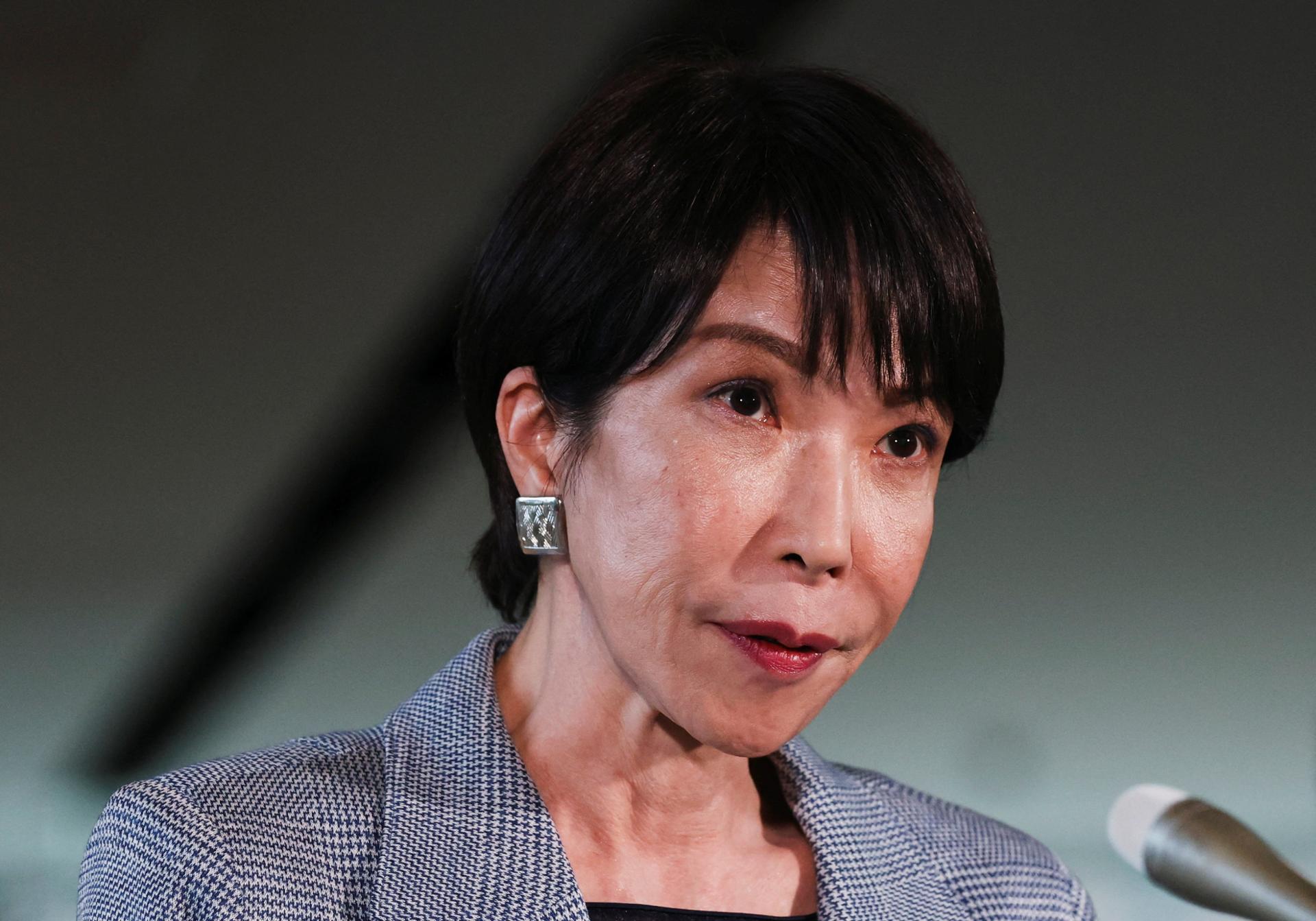
Japanese Prime Minister Sanae Takaichi’s quest to confer with U.S. President Donald Trump on the sidelines of the U.N. General Assembly’s high-level meetings this month is understandable. Japan needs strong U.S. support to manage what its recently released “Defense of Japan” white paper characterizes as the country’s most menacing security environment since World War II—with the immediate challenge being China.
For more than a decade, Beijing has assertively contested Japan’s control over the Senkaku Islands (known as the Diaoyu Islands in China) and their surrounding natural resources. China has established a permanent presence of military, paramilitary (well-armed Coast Guard ships), and commercial vessels, along with structures like buoys. More recently, the Chinese military has expanded operations beyond the East China Sea to include the Sea of Japan and the western Pacific beyond the First Island Chain, which encompasses Japan’s southwestern islands, along with Taiwan and the northern Philippines. The Chinese Air Force and Navy, including its aircraft carriers, now regularly patrol these regions.
An important goal of China’s expanding military deployments is to deter Japanese military intervention in support of Taiwan. In November 2025, Takaichi confirmed that, should Beijing employ force against Taiwan, Tokyo would consider deploying its self-defense forces to protect Japanese citizens and interests there. Beijing responded by restricting trade and tourism, expanding its military activities around Japan, and ratcheting up rhetoric against alleged Japanese militarism.
The white paper also highlighted concerns regarding North Korea and Russia. The Democratic People's Republic of Korea (DPRK) has long tested ballistic missiles near Japanese territory, threatened to use nuclear weapons, and obscured information about abducted Japanese citizens.
North Korea’s growing military ties with Russia have become a more recent concern. Thousands of DPRK soldiers have gained extensive combat experience fighting for Russia against Ukraine. In return for this support, Russia has provided substantial military-technical assistance to North Korea. This assistance has helped modernize the DPRK defense industry and improve its military platforms, such as the shorter-range missiles and long-range drones that pose the most immediate threat to Japanese territory.
Russia itself has also become a more acute threat to Japan since Tokyo joined other Western countries in imposing sanctions on Russia following Moscow’s 2022 invasion of Ukraine. This August, Vladimir Putin made his first presidential visit to the Japanese islands that Moscow has controlled since the end of World War II. Japan continues to insist on their recovery for historical, economic, and security reasons: some former residents want to return, the surrounding waters are rich in resources, and the islands lie extremely close to Japan’s home islands. The visit confirmed Russian disinterest in a near-term diplomatic rapprochement with Japan.
The strengthening military ties between China and Russia have compounded Japan's security challenges. Beijing and Moscow have maintained a robust series of joint naval and air force exercises around the Japanese archipelago. They have also amplified each other’s messaging about alleged threats from Tokyo’s improving military capabilities, possible revision of its Three Non-Nuclear Principles, and Japanese-U.S. collusion in building NATO-like structures in Asia.
Japan has indeed bolstered its military power, but only for defensive reasons. Its new long-range missiles are fundamentally retaliatory systems designed to prevent adversaries from continuing strikes after a war has already started. Other new Japanese capabilities, such as next-generation drones and anti-ship missiles, aim to better protect Japan’s outlying islands.
Many U.S. military analysts would like Japan to increase, not decrease, its defense efforts in certain critical domains. For example, Japan has only made modest progress in protecting its people and territory (and the more than 50,000 American troops based there) from proliferating ballistic, cruise, and hypersonic missile threats. Recent wargames conducted at the Hudson Institute indicate that Japan’s air and missile defense requirements will surge during the 2035–40 period as China’s long-range strike capabilities improve.
To address this threat, Japan needs a more resilient, flexible, layered, and multi-domain defense network. Acquiring the mobile Integrated Battle Command System in service with the U.S. Army would link Japan’s disparate sensors and interceptors into an open "plug-and-fight" architecture. This bolstered interconnectedness would defend more targets, use each interceptor more efficiently, and rapidly reconstruct networks under attack.
Another priority is to continue frequent and realistic Japanese-U.S. military exercises. These drills should rehearse scenarios in which allied forces defend against concurrent missile attacks by China, Russia, and North Korea. They should also involve South Korea and other partners where possible since any major conflict involving Japan and the United States could plausibly envelop other countries.
But the immediate imperative is to demonstrate solidarity with Japan during this month’s UN meetings and the Trump-Xi summit. U.S. officials need to make clear their unwavering commitment to defend Japan against China, Russia, and North Korea. A firm stand now can avert disasters later.
