
The American president’s approach has been characterized by improvisation, contradictory messaging, lack of coherent strategic planning and no clear exit strategy. This has imposed significant political and economic costs and undermined U.S. standing and deterrence worldwide.
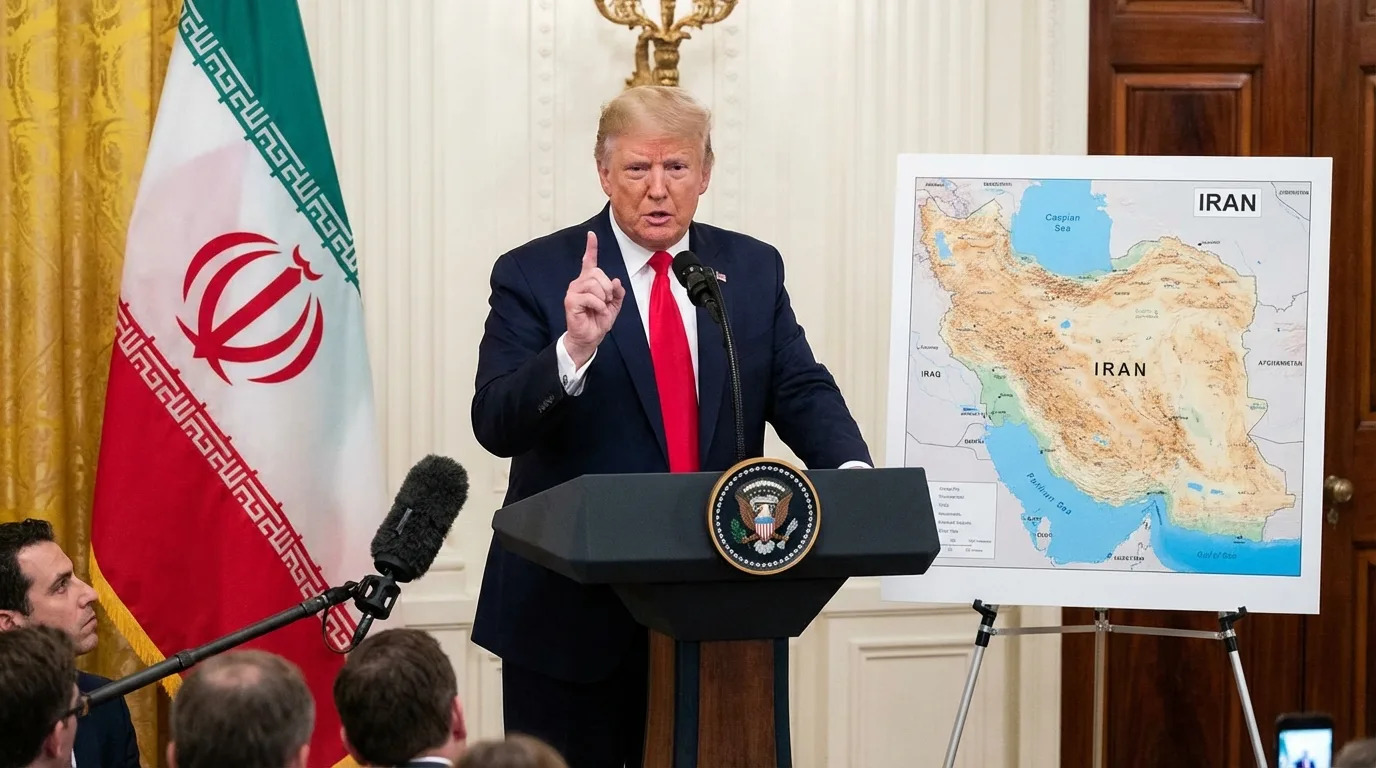
President Trump has claimed a war-ending deal with Iran dozens of times in recent months.
The Iran war dilemma illustrates the deep policymaking flaws of U.S. President Donald Trump and his administration. It is characterized by improvisation, contradictory messaging and a lack of coherent strategic planning, leading to a protracted conflict with no clear exit strategy. This approach has resulted in significant political and economic costs for Trump’s presidency, including rising gas prices, declining approval ratings and a stalled foreign policy agenda as he heads into the 2026 midterm elections.
The war with Iran, which began in February, has exposed fundamental flaws in Trump’s foreign policy thinking. Several key characteristics have become clear.
First is the strategy’s improvisational and incoherent nature. Trump’s policy toward Iran demonstrates what Atlantic analysts describe as a having “lost its last shred of coherence.” The White House cannot agree on the war’s goals, as Trump publicly contradicts his own vice president and cabinet members. While Trump insisted that preventing Iran from acquiring nuclear weapons was the “number one goal,” Vice President JD Vance said that lowering fuel prices was actually “goal No. 1” of the war, as reported by NBC News early in September. This internal disagreement reflects a broader absence of strategic clarity or internal coordination within Trump’s national security team.
Trump’s “wildly zigzagging messaging on the war betrays an absence of strategy and a profound ignorance of his enemy,” according to an analysis cited by The Guardian. Trump alternates between threats of massive escalation and sudden diplomatic overtures, creating a cycle of “bluster and backdown” that has turned the Iran war into what critics call “Trump’s Groundhog Day.” The world has to plan not only for mercurial U.S. policy changes but also for sudden presidential reversals.
The second characteristic is the misdiagnosis of Iran’s intentions and capabilities. A Washington-based think tank, Defense Priorities, argued that Trump’s war was “predicated on exaggerations and misunderstandings” about Iran. The administration incorrectly assumed Iran was “implacably aggressive and therefore undeterrable,” while in reality its foreign policy reflects deep insecurity in a region dominated by U.S. and Israeli military power.
Trump declared four main justifications for the military attack: Iran’s nuclear activities, support for proxy forces, its ballistic missile program and domestic repression. However, these rationales misread Iran’s defensive posture as offensive aggression. Iran views its nuclear program, missiles, and proxies as deterrents against external threats, not tools of expansion. So far, the war has failed to achieve any of Trump’s stated objectives and has instead strengthened Iran’s position in the region by demonstrating the regime’s resilience.
Third is the absence of exit planning. Perhaps the most damaging revelation is that Trump entered the war without a strategy. He originally claimed the conflict would last “just weeks” and be over by mid-April. Now, six months later, the war continues with no clear path to either victory or withdrawal.
Trump now faces what Reuters describes as “a menu of bad options”—accept an interim deal that would grant Iran unprecedented control over the Strait of Hormuz, escalate military action at the risk of prolonging the conflict or maintain an unsustainable status quo. None of these options offers a face-saving way out of the conflict he had predicted would be short and decisive.
The fourth characteristic involves Trump’s erratic reversals, which undermine credibility. His foreign policy has been marked by actions that contradict his stated goals. While fighting a war he claims will prevent nuclear proliferation in Iran, he simultaneously curtailed joint military exercises with South Korea—a move, he said, that was “based on my very good relationship with Kim Jong Un” and despite the fact that North Korea never said it would give up its nuclear program. And he threatened to bomb Oman, a regional ally, for attempting to mediate between the U.S. and Iran. Such inconsistencies have led Max Boot, a prominent foreign policy analyst, to conclude that Trump’s “zigzagging” approach to Iran is “guaranteed to fail.”
The Iran war dilemma has profound implications for Trump’s presidency, particularly with the midterm elections coming in November. The leadership dilemma has exposed Trump’s political vulnerability, as the war has become deeply unpopular with the American public and is contributing to his low approval ratings. High gasoline prices, a direct consequence of the conflict’s disruption to global oil markets, have created economic pain for voters.
With early voting beginning in September in some states, the Trump administration acknowledges that the conflict will be going on when the midterms arrive. Reuters reported that Trump is “short on foreign policy wins” as he heads into the midterms, with the Iran war dragging on and as voters feel more pressure. The conflict has become a political liability for a president who campaigned on a promise to avoid foreign interventions and focus on Americans’ economic concerns.
The war dilemma has also revealed Trump’s strategic paralysis. The Iran quagmire has stalled his broader foreign policy agenda. Crises from Ukraine to Gaza remain unresolved, and the president’s ambitious foreign policy agenda seems to be stuck. The administration’s inability to resolve the Iran conflict has consumed diplomatic and military resources, limiting its capacity to address other international challenges.
The war has also strained U.S. military readiness. The Pentagon has run out of munitions at a “staggering rate,” reducing preparedness for contingencies in other theaters, potentially for years to come. Some experts warn that the Iran war complicates contingency plans to defend Taiwan, raising questions about U.S. credibility in the Indo-Pacific region.
The dilemma has also damaged the trust of U.S. allies. Trump’s handling of the Iran war has undercut relationships with traditional allies. European governments, weakened by war-related cost-of-living increases, have been increasingly critical of the U.S. policy. Gulf states that host U.S. military bases have been attacked by Iran, raising resentment toward Washington. Trump’s public threats against Oman over its mediation efforts and his unilateral decision to reduce the scale of exercises with South Korea signal to allies that U.S. commitments are unreliable. This damage of trust undermines America’s ability to build coalitions for future challenges and even encourages allies to hedge against U.S. unpredictability.
Finally, the dilemma has long-term strategic consequences. The Iran war has produced outcomes opposite to Trump’s stated goals. Rather than preventing nuclear proliferation, it has strengthened incentives for Iran to pursue nuclear weapons as a deterrent against future attacks. U.S. intelligence indicates that Iran’s new supreme leader, Mojtaba Khamenei, is more open to pursuing a nuclear weapon than was his predecessor.
The war has also transformed Iran’s latent power over the Strait of Hormuz into “tangible and lasting leverage.” Even if the war ends, Iran’s ability to suppress commerce through the strait is likely to persist, giving Tehran a strategic advantage it never possessed before the war.
As former deputy U.S. intelligence officer Jonathan Panikoff said, Russia, North Korea and other counties are “watching closely” and “learning what U.S. limitations are going to be for years to come.” Therefore, the perception of American weakness and strategic incoherence could undermine U.S. deterrence globally.
