
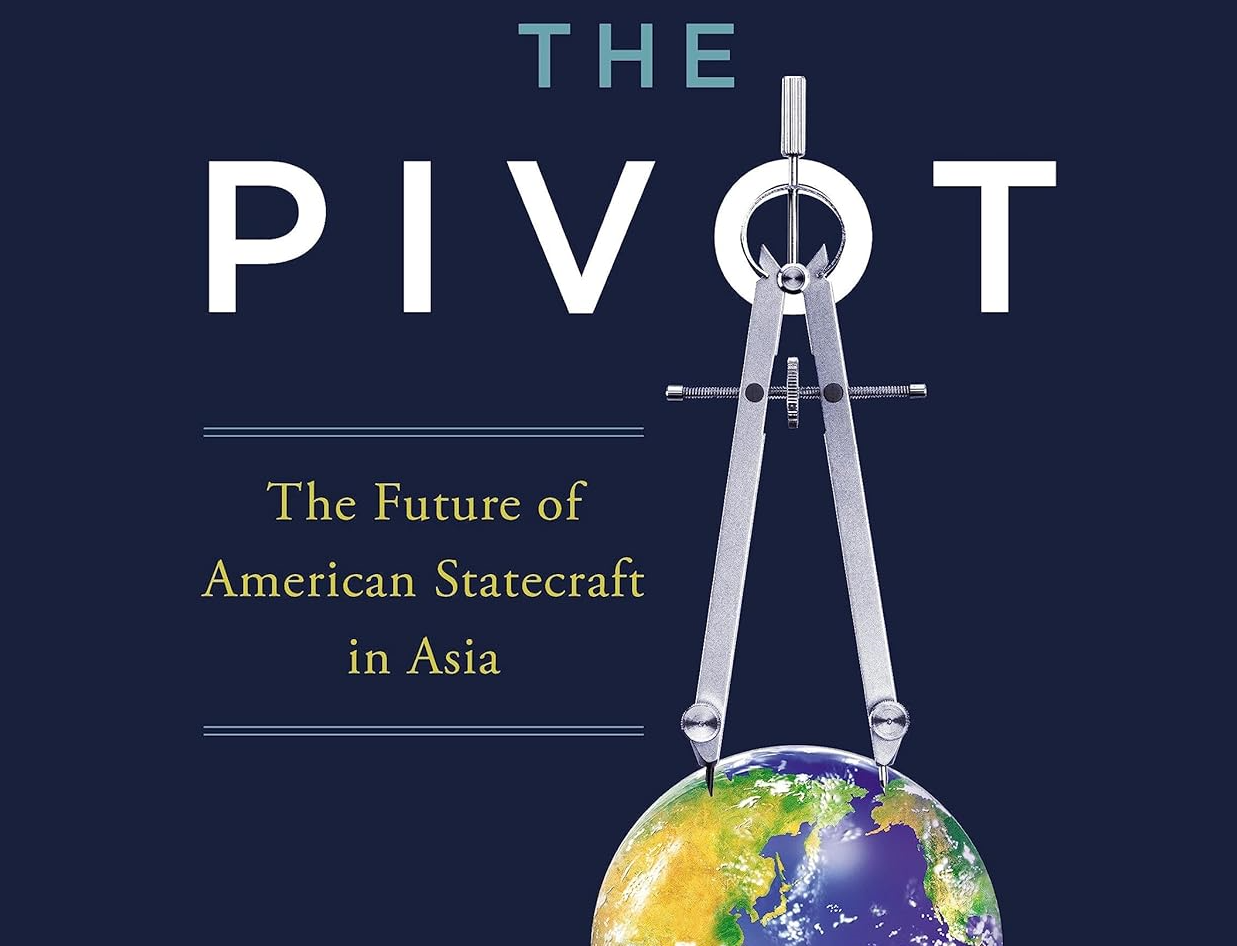
The book on the major shift in American foreign policy, its interests and assets, to Asia by U.S. former assistant secretary of state Kurt M. Campbell.
For nearly eight decades, American grand strategy in the Indo-Pacific has rested on a singular assumption: that the United States can project decisive military power from a network of forward bases running from Japan through the First Island Chain to Guam. That assumption is now dead. It was not undone by a failure of political will or funding, but by the unyielding constraints of industrial capacity, materials science, and missile mathematics.
The United States can no longer viably defend its regional bases, cannot replenish critical weapons systems in a sustained conflict, and is structurally incapable of winning a protracted war in East Asia. As regional partners quietly absorb this reality, the strategic landscape is fracturing. The talk of additional arms packages for the Philippines, Japan, or Taiwan is largely theatre. The United States faces a structural eviction from the Western Pacific, and no external actor possesses both the power and the willingness to reverse it.
The Mathematics of Attrition: American Assessments of Depleted Capacity
The foundational flaw in the Western defence posture is the asymmetric deficit in magazine depth. American analysts themselves have documented the scale of the problem with increasing urgency. Jennifer Kavanagh, Director of Military Analysis at Defense Priorities, has meticulously traced a systemic munitions crisis born of long-term strategic overreach. The simultaneous demands of arming Ukraine and prosecuting a continuous kinetic campaign against Iran have drained U.S. inventories of critical defensive interceptors. Patriot PAC-3 and THAAD stocks have cratered by nearly half or more in successive assessments.
Recent work from the Center for Strategic and International Studies (CSIS) reinforces this picture with granular detail. Mark Cancian and Chris Park’s July 2026 analyses show that the United States has used roughly half of its initial inventories of Patriot, THAAD, and Precision Strike Missile systems, and about one-third of key strike munitions such as JASSM, SM-2/3/6, and Tomahawk. By late July 2026, Patriot inventories had fallen below 1,000 and THAAD to approximately 250. A renewed phase of operations against Iran would further test these already diminished interceptor stocks, forcing greater operational risk with no adequate substitutes for ballistic missile defence.
CSIS identifies multiple structural causes beyond any single conflict. Post–Cold War strategy assumed short regional wars rather than protracted great-power contests, so procurement was scaled down. The defence industrial base was deliberately restructured for efficient peacetime production, not wartime surge; the “Last Supper” consolidation of the 1990s left little spare capacity. Munitions have consistently lost out to platforms in the Pentagon’s budget process because they are less visible and lack the long service lives of ships or aircraft. Recent Middle East operations and transfers of select systems have compounded the drawdown. Ukraine transfers, while significant for certain items such as Patriot, remain a secondary factor for most high-end munitions relevant to a Pacific contingency.
The implication is stark. In any serious conflict over Taiwan or the First Island Chain, Western interceptor magazines would be exhausted within days against Chinese precision-mass salvos. Even optimistic assumptions about electronic warfare and hardened shelters do not alter the equilibrium: China’s deep stockpiles allow it to absorb initial countermeasures and overwhelm bases with cheap, jam-resistant submunition swarms. Modelling points to the potential loss of hundreds of U.S. aircraft on the ground in the opening week. Conventional deterrence in Asia is not fraying; it is broken.
Reindustrialisation and the Unrealistic Timeline
CSIS’s July 2026 brief on reindustrialisation and great-power competition makes the deeper point explicit: deterrence is ineffective when adversaries know the United States cannot sustain a long war. Low munitions stockpiles and constrained industrial capacity alter the time horizon adversaries use to assess U.S. staying power. Capacity functions as a fourth variable of deterrence—alongside capability, credibility, and communication—by making combat power replenishable, repairable, and resilient over time. Without it, even the most advanced weapons are discounted because they cannot be replaced at the required rate.
The Trump administration’s proposed large increases in munitions funding and multi-year contracts aim to address the shortfall. Yet as both CSIS and Kavanagh emphasise, money alone cannot solve a physical manufacturing deficit. Production lead times for high-end interceptors run two to four years from contract to delivery. Specialised chemical separation facilities, rare-earth magnet capacity, and metallurgical expertise cannot be rebuilt overnight. The United States produced only a few hundred metric tons of rare-earth magnets in 2025 against demand measured in tens of thousands of tons. China’s dominance of upstream materials further constrains any rapid recovery. Reindustrialisation on the scale required is unrealistic in any meaningful timeframe for a near-term Indo-Pacific contingency. A multiyear window of vulnerability remains.
The Myth of Dispersal and the Material Choke
The Pentagon’s response has been “Agile Combat Employment”—dispersing aircraft across remote Pacific islands and austere civilian runways. This is a mirage. Dispersal does not solve the targeting problem; it multiplies it. China possesses the payload depth to saturate secondary and tertiary runways simultaneously. Modern aircraft such as the F-35 cannot operate without continuous specialised fuel, heavy-lift ordnance support, and clean-room maintenance. Scattered across dirt strips, these forces lose their industrial lifelines and become logistically stranded.
Naval assets face an even sharper constraint. Attack submarines and guided-missile destroyers cannot reload Vertical Launch System tubes at sea. They depend on a handful of fixed deep-water piers in places such as Yokosuka and Guam. If those piers are neutralised in the opening phase of conflict, the American fleet becomes a single-use system with no regional re-armament option.
The Homeland Dimension
Any lingering hope that a conflict over Taiwan could be confined to the First Island Chain has been extinguished. Chinese submarine-launched ballistic missile trials into the open Pacific have demonstrated a mature sea-based nuclear second-strike capability. Submarines operating from the South China Sea can now range the continental United States. The calculus is stark: no American administration is prepared to risk a major U.S. city for Taipei. Nuclear deterrence imposes its own brutal realism.
This rebalancing of power, and arguably a shift in the balance of power no longer to the benefit of the U.S., as U.S. Under Secretary of War for Policy Elbridge Colby has observed, recalls mid-twentieth-century anxieties, yet with a more permanent conclusion. The question of the 2030s will not be “Who lost China?” but the far larger and irreversible question: “Who lost Asia?”
The Limits of Allied Containment and the Middle-Power Illusion
Regional partners have not failed to notice. Behind diplomatic communiqués, capitals across East Asia are recalibrating. Tokyo, Seoul and Manila confront the same magazine deficits, supply-chain vulnerabilities, and exposure to Chinese missile depth that afflict the United States. Economically, China remains the indispensable trading partner for these states. Building a fortified military wall against one’s primary economic engine is a contradiction that cannot be sustained indefinitely.
Exclusive minilateral arrangements—AUKUS, the Quad, tightened trilaterals—cannot substitute for America’s albeit constrained industrial mass. Without that backbone, an allied containment front is both militarily unsustainable and economically self-defeating. And yet, America can barely supply itself.
Recent arguments from within the U.S. policy establishment, notably those advanced by Colby, reinforce this narrowing of options. Colby has dismissed the notion of a collective “middle powers” strategy as a distraction rooted in a faulty understanding of international relations, contending that such states lack a coherent basis for alignment and cannot match the scale or quality of the American defence industrial base. In this view, there is little room for autonomous middle-power agency; partners are expected to remain tethered to U.S. leadership or face strategic irrelevance.
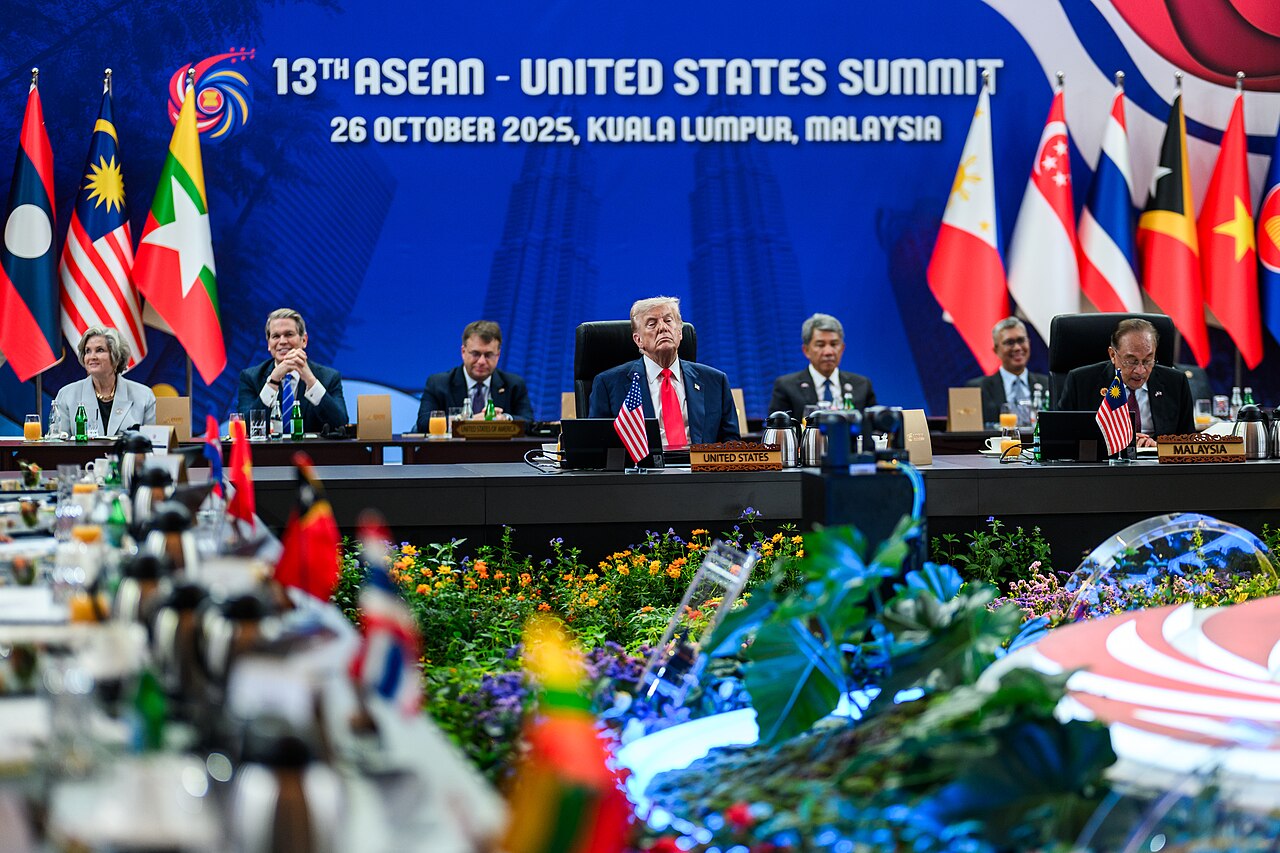
Yet this very dismissal underscores a particularly important moment for ASEAN. It creates space to demonstrate that alternatives exist and that there is sufficient collective heft and diplomatic capacity within Southeast Asia to lead a process by which new regional orders are curated and sustained. The region’s trajectory need not be defined by a new Cold War-style containment architecture, nor by resignation to great-power binary choices. Instead, it can pursue an urgent search for a framework that manages Chinese primacy without triggering catastrophic conflict—a genuine third way.
ASEAN and the Possibility of a Third Way
With containment exposed as a dead end, the strategic initiative falls to Southeast Asia. ASEAN has long practised hedging and “centrality,” serving as a diplomatic buffer between competing powers. A substantial American retreat forces a more ambitious role: from cautious manager of great-power competition to active architect of a regional settlement.
The outline of such a settlement draws on two historical precedents. From the Bandung Conference of 1955 it inherits the principles of sovereign equality, non-alignment, and rejection of external interference. From the Helsinki Accords of 1975 it takes the pragmatic recognition of existing borders, crisis-communication mechanisms, and mutual restraint among diverse political systems. The organising concept is indivisible security; that is, the security of one state cannot be purchased at the expense of another. In practice, this would mean that no regional state joins military alliances or exclusive minilateral groupings targeted at another regional member. Security ceases to be a zero-sum commodity and becomes a collective regional utility.
ASEAN’s record supplies a practical precedent. The negotiation of the Regional Comprehensive Economic Partnership demonstrated the association’s capacity to work patiently across diverse interests, accommodate major economies with competing priorities, and produce a multipolar, multilateral outcome without external imposition. The same diplomatic method—consensus-building, inclusivity, and incrementalism—can be applied to security.
Success depends on the initiative remaining genuinely ASEAN-led. Any new architecture will fail if it is perceived as Chinese-driven, directly or indirectly, or that beats America’s surreptitious fingerprints via the backdoor of an historic ally. Regional states will only invest political capital in a framework they themselves design and publicly own. China’s quiet willingness to support such a move—facilitated by progress in dedollarisation and parallel payment systems and accelerated electrification that mitigate the risk of economic coercion—makes the pathway more feasible. Yet the process itself must not be scripted from outside. The legitimacy of the enterprise rests on Southeast Asian agency.
Economic Foundations of Stability
Military mathematics alone does not determine outcomes; economic resilience matters equally. Southeast Asia remains exposed to energy disruptions and maritime chokepoints. Parallel payment systems and diversified industrial supply chains can reduce vulnerability to external financial pressure. Accelerated electrification and overland energy routes further dampen exposure to distant shocks. These measures convert an abstract debate about political systems into a concrete calculation of national survival.
Once an inclusive framework begins to take shape, middle powers face a narrowing set of choices. Japan and South Korea must weigh continued allegiance to a distant and industrially constrained partner against participation in a pan-Asian arrangement that preserves trade relationships and reduces the risk of catastrophic conflict. Australia, geographically isolated in an Asian ocean, confronts a similar gravitational pressure as its primary markets and immediate neighbours orient toward regional institutions. None of these shifts is automatic; each will be contested domestically. Yet the structural incentives point toward accommodation rather than isolation.
A Survivable Equilibrium
The end of American primacy in Asia need not produce chaos. Structural eviction of the United States simply clears space for a geopolitical correction long in the making. An ASEAN-curated architecture grounded in indivisible security offers a realistic exit from the trap of great-power war. It replaces a fragile, externally backed hegemony with a more stable, regionally managed equilibrium.
There was an Asia before European and American colonialism. There can be a viable Asia after the long asymmetry of the colonial and post-colonial eras. What Asian security looks like in the coming decades is something the states of the region can shape directly. The mathematics of industrial capacity and missile depth—now extensively documented by American analysts themselves—have already rendered the old order unsustainable. The open question is whether the region can construct a third way—non-aligned, inclusive, and grounded in mutual restraint—before the costs of the alternative become irreversible.
