
For countries dependent on imported oil, America’s war with Iran and its disruptions on global oil supplies have made China’s renewable energy strategy more attractive. While the Trump administration is doubling down on global oil dominance, China has an opportunity to strengthen its position as the renewable powerhouse while managing concerns of over dependence on Chinese renewable technologies and supply chains.
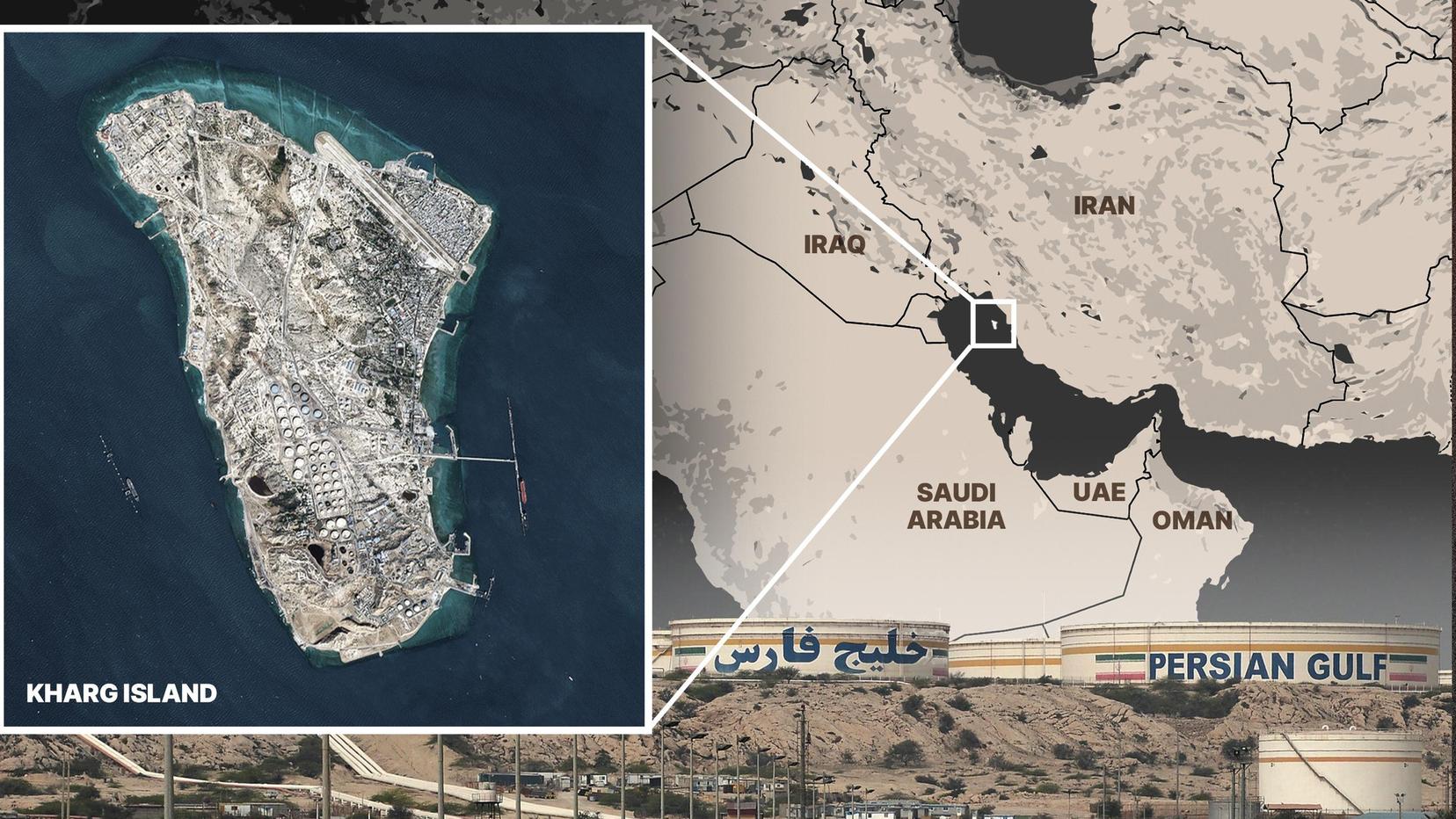
Kharg Island is home to a terminal that handles 90 per cent of Iran’s oil exports. (Credit: The Nightly)
Speculations on America’s war with Iran and its short-term disruptions to global energy prices have dominated global headlines. While the future trajectory of the war remains uncertain, the potential long-term impact is clear: the U.S. could control close to 80% of the world’s oil reserves if it succeeds in subduing Iranian resistance. Starting with the seizure of Venezuela’s oil sector, President Trump has been cementing America’s “global energy dominance” as a geopolitical weapon. As the U.S. doubles down on oil, China is entrenching its divergent strategy: a decades-long investment in renewables that positions green energy as the ultimate hedge for energy security. America’s aggressive pursuit of control over fossil fuels risks backfiring, making China’s renewables appear a safer choice for energy security.
The second Trump administration’s military operations appear less oriented toward regime change than toward consolidating control over global oil supply for geopolitical competition. After capturing Maduro, the U.S. and its allies already controlled 66% of global oil reserves (See Figure 1). The U.S. itself holds 5% of world oil reserves, its allies such as Canada, Saudi Arabia, and Kuwait hold roughly 45%, and Venezuela another 17%. If the U.S. is successful in installing a friendly government in Tehran, the U.S. will have direct or indirect control over almost 80% of the world’s oil reserves. The control of natural gas tells a similar story: the U.S. and its allies control roughly 50% of world natural gas reserves.
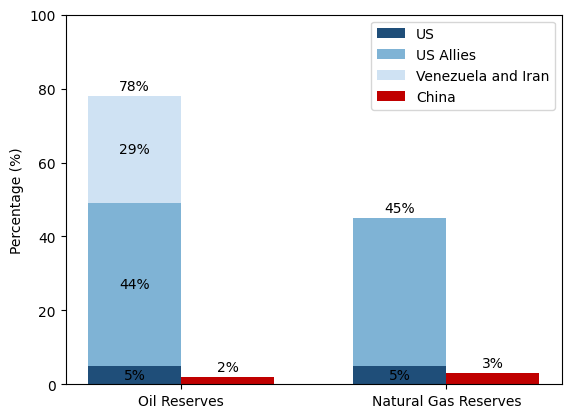
Figure 1: Percentage of oil and natural gas reserves held by geopolitical blocs (Source: IEA)
Weaponizing energy supply has become a “must-have” geopolitical tool in the 21st Century. Russia’s energy exports to Europe have provided critical strategic leverage during the war in Ukraine. While Europe has pivoted from importing energy from Russia to the U.S., the latter has also conditioned Europe’s Liquefied National Gas (LNG) access on “favorable” trade deals under the current administration. Oil embargos of the 20th Century were mostly initiated by developing countries as exporters seeking foreign policy concessions from advanced economies. Today’s major geopolitical powers such as the U.S. and Russia, however, are also major energy exporters. Because of energy independence, the U.S. or Russia can launch military interventions with relatively little concern over unbearable energy costs in the domestic markets. Quite the opposite, rising energy prices benefit energy companies in both countries while inflicting damage on their opponents.
The fusion of geopolitical power and energy dominance calls for urgent rethinking of energy security strategy, and China’s renewable energy success offers a blueprint. Despite its rise, China remains structurally dependent on foreign oil and gas imports and lacks the capacity to challenge America’s maritime control of global shipping routes. China’s ability to withstand global energy shock stems from its long-term strategic transition to a renewable energy powerhouse. (see Figure 2). China dominates production of solar panels, wind turbines, and batteries, with a tenfold advantage over the U.S. in solar PV and battery production and sixfold in wind turbines. Unlike oil and gas, which are dependent on natural endowments and trade, renewable energy technologies allow power to be manufactured, deployed, and stored locally. If China can convert its manufacturing prowess into an energy advantage, other countries can do the same.
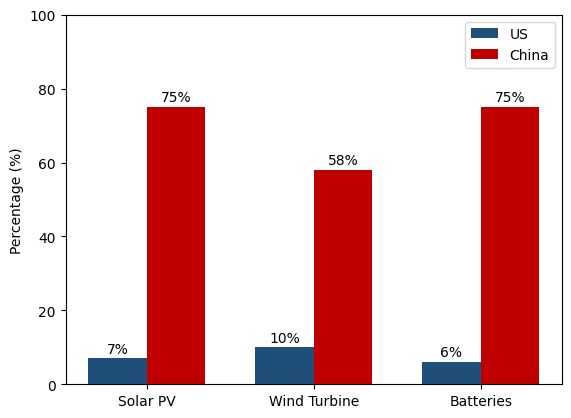
Figure 2: Percentage of global solar PV, wind turbines, and batteries by the U.S. and China (Source: IEA)
Alerted by its dependence on imported oil and gas over two decades ago, China has rapidly electrified its economy, and an increasing share of electricity is generated by renewables. Roughly 30% of China’s final energy consumption comes from electricity, out numbering the second-place country (the U.S.) by almost 10 percentage points. China’s lead defies conventional wisdom that high-income countries consume more electricity relative to fossil fuels than developing countries because the former dominates in the service sector while the latter is still experiencing industrialization. The “electro state” model allows nations to harness electricity that is produced locally rather than largely relying on imported oil and natural gas for energy consumption.
China is also taking the lead in the green transition of its energy sector. In 2024, renewables generated roughly 30%of China’s electricity, higher than that of advanced economies such as the U.S., Japan, or South Korea. This figure is expected to increase as renewable energy accounted for over 60% of all new power capacity installed in 2024. On the consumption side, a major contributor to China’s reduced reliance on imported oil is the electric vehicles (EV) boom. About 12 percent of all registered vehicles in China are EVs, including half of new cars and a third of new trucks sold in 2025. This transformation helped to cut China’s oil consumption by 10 percent last year.
In the age of geopolitical competition, the risk of over dependence on China’s renewable energy supply chain is real, but overblown. China is reportedly contemplating restrictions on solar technology export to the U.S. At the first glance, the potential move appears as déjà vu for America’s dependence on China’s rare earth imports. However, export control on solar is fundamentally different from that on rare earth even in the worst-case scenario. Unlike natural resources such as rare earth or oil, solar and wind energy can be continuously harvested with existing infrastructure. In the short run, export controls of renewable technologies only affect future energy growth instead of an instant threat on energy supply. In the long run, the growth of the U.S. renewable energy sector will be primarily shaped by domestic policy stability. Reversing solar, wind, and EV incentives in the Inflation Reduction Act by the current administration dampens the long-term development of America’s renewable energy sector much more than proposed Chinese export controls.
From China’s perspective, while it is tempting to leverage dominance in renewable energy as a geopolitical weapon, overdoing it risks losing global market shares and fostering international rivals. At the moment, Chinese renewable energy companies are faced with rising trade frictions abroad and intensified “involution competition”(内卷式竞争)driving down prices at home. A healthy and sustainable international market propelled by energy security and climate concerns expands global market share of China’s renewable energy sector. On the contrary, stifling export controls in the long run creates fragmented international ecosystems benefiting potential competitors. Ultimately, China’s global energy strategy should never be a question of black and white, but a nuanced balance between expanding market access and addressing over dependence concerns. Affordable, reliable, and clean energy supply is critical in the 21st Century from winning the AI race to solving the climate crisis. At the same time, the weaponization of energy supply has become a defining feature of today’s geopolitical competition. Ironically, America’s conquests for oil dominance have fueled growing urgency for global renewable energy development. While the U.S. is doubling down on controlling oil and gas globally, China offers an appealing alternative. China’s success in renewable energy demonstrates that energy can be manufactured and that countries have a choice to be free from energy coercion and reap the economic benefits from developing a renewable energy sector.
