
The Trump administration’s war against Iran is portrayed as a reckless and ill-timed failure that caused massive humanitarian damage, destabilized the region, and disrupted global trade while failing to achieve regime change. China is depicted as a cautious but increasingly credible actor calling for stability and open trade, highlighting shifting global dynamics as the conflict leaves a volatile crisis marked by a fragile ceasefire, blocked oil flows through the Strait of Hormuz, and a high risk of renewed conflict.
The tempestuous, scandal-ridden administration of Donald Trump not only launched the wrong war at the wrong time for the wrong reason, but appears to have lost both narrative momentum and military advantage to Iran, a mid-sized state with military resources only a fraction of those of the United States.
Iran has been battered by heavy bombing, and the humanitarian toll is grievous, but the exchange of missiles and bombs is mercifully in abeyance for the moment due to a fragile ceasefire.
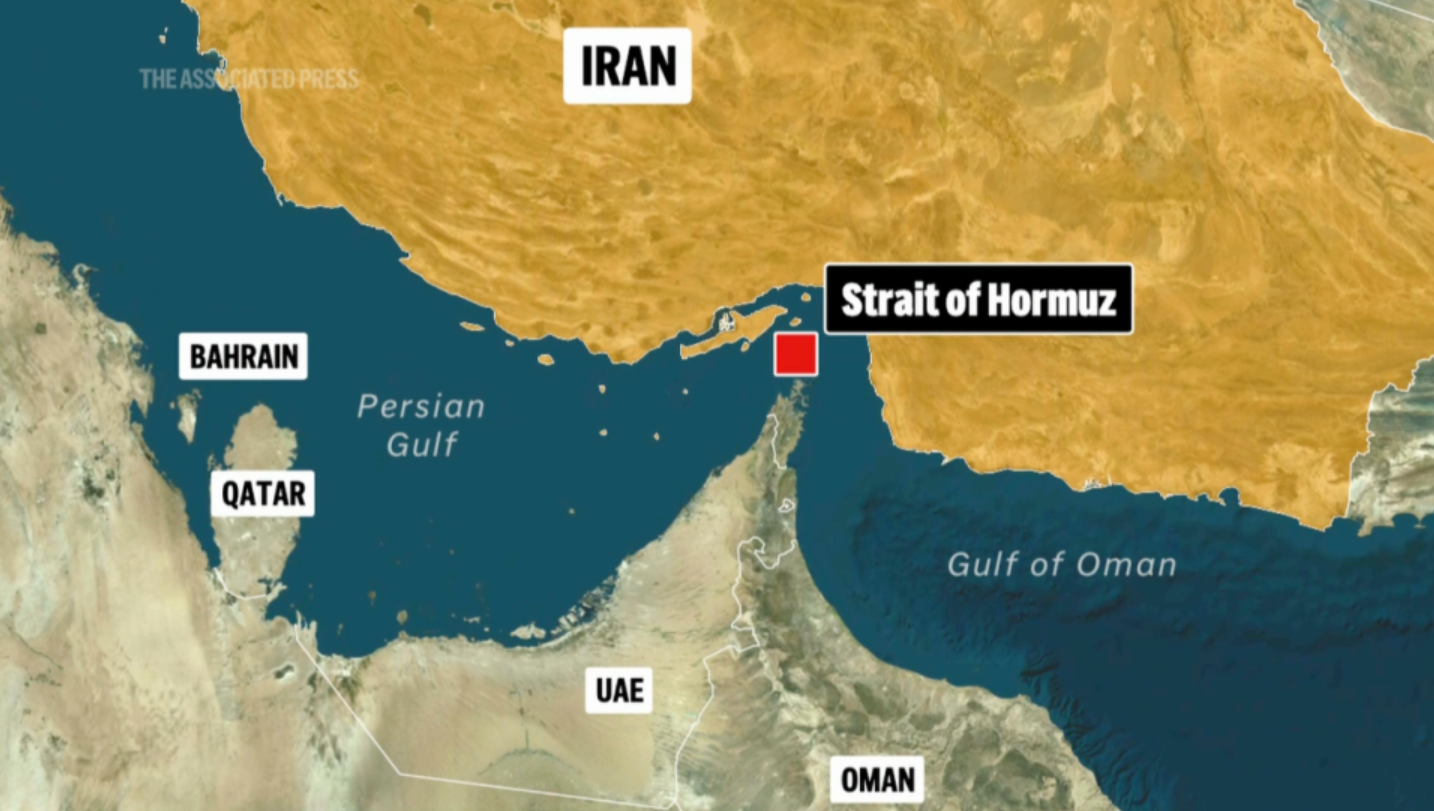
The belligerent U.S.-Israeli assault, launched during an earlier round of negotiations, can be seen as a disaster for all sides. Although Iran suffered most of the material damage, the American and Israel attackers failed to achieve their stated goal of rapid regime change. Furthermore, they set the region on fire, putting vulnerable Gulf states on the front line and failing to keep the Strait of Hormuz open, triggering a monumental setback to global flows of oil, gas, and related products such as helium and aluminum.
Now Trump has blockaded the strait he demanded Iran unblock, with the unfortunate result that both sides are further choking the flow of oil at this critical choke point, causing massive uncertainty and immediate shortages for a significant portion of global supply.
Trump alternates between threatening to blow Iran “back to the stone ages” and saying he is basically done with the job, with the fate of the Strait of Hormuz hanging in the balance—and leaving the mess instigated by the assault for others to clean up.
Thousands of ships transporting crude oil, liquefied natural gas, and fertilizers remain trapped at anchor in and around the strait. The neglect of seafarers whose work keeps the global economy running is one of many side effects of this unnecessary war. Thousands have been killed in bombing raids over Iran, and the devastation to Gulf infrastructure has been immense.
China has accrued credibility in a regional war where it is difficult to identify clear moral winners through its restraint to date. It has consistently called for a cessation of hostilities and for keeping the Strait of Hormuz open. This stance can be seen as an indirect rebuke to its erstwhile trading partner Iran, but also as reassurance to other partners in the region, especially Saudi Arabia, that the resumption of unfettered trade benefits all.
Peace talks in Pakistan are on again, off again, subject to mood swings that move markets up and down. The stakes are daunting. Calls for peace are rational, but talking about peace and enforcing it are poles apart.
While China’s options remain limited, it could lend credibility to the peace process by halting shipments to Iran of shoulder-fired missiles—a red line specifically singled out by Trump. There is also the question of Iran-bound deliveries of ammonium perchlorate, a dual-use chemical used as industrial oxidizers that can also be used to power solid-fuel missiles.
China, as the world’s largest producer of perchlorate—derived from salt, ammonia and huge amounts of electricity—needs to exercise the trade with transparency and accountability to avoid being seen as partisan to Iran’s war effort. The chemical compound is sanctioned and risks interception under the U.S. blockade of trade with Iranian ports.
The Trump administration often talks big but has proved an unreliable negotiating partner. Iranians are unlikely to forget that the peace talks in February—led by Jared Kushner and Steve Witkoff—appeared to serve as a distraction while ships moved into forward positions and missiles were readied for a decapitation strike closely coordinated with Benjamin Netanyahu in Israel. Could the current round of peace talks also be exploited to distract while both sides prepare for a new round of violence?
The Iranian regime reportedly killed 30,000 of its own citizens during the crackdown of January 8–9, 2026. It is not a nation that is easy for observers to cheer for, yet the internet is alive with pro-Iran sentiment—in part due to the bad optics of a large country attacking a smaller one, and the cavalier conduct of the war itself, amplified by the juvenile bully-boy histrionics of U.S. Defense Secretary Pete Hegseth. Blame for the massive disruption to world trade is widely placed on the United States and Israel.
Starting a war without the consent of the United States Congress by means of what critics call a sneak attack does not sit well with many otherwise patriotic Americans. Harsher critics accuse the U.S. of war crimes, and some of Trump’s statements (“a whole civilization will die tonight”) have raised questions about presidential judgment, sanity and the possible conduct of war crimes.
Leaving aside the legality of eliminating Iran’s leadership in the name of regime change, the moral calculus is chilling. Hundreds of schoolchildren have reportedly been killed—most notably in Minab, where 175 perished, and in Lamerd, in southern Iran, where a ghastly new weapon struck school grounds, detonating above its target in an airburst, spraying tungsten shrapnel to maximize lethality.
By the scorecard of the United States Department of Defense, more than ten thousand strikes have already been inflicted on Iran, and the barrage is primed to continue should the shaky talks fail.
The Strait of Hormuz remains blocked by belligerents on both sides. Jet fuel shortages will soon hamper global air travel. While the United States and Iran engage in a war of wills, both stand to lose the longer the impasse lasts.
The rest of the world watches with fear and bated breath.
