Donald Trump’s fixation on Cuba is driven by a combination of strategic and political considerations: a “Western Hemisphere first” approach, tactics to advance the Trump Doctrine and the practical aim of replicating the Venezuelan model to bolster the U.S. president’s midterm election prospects.
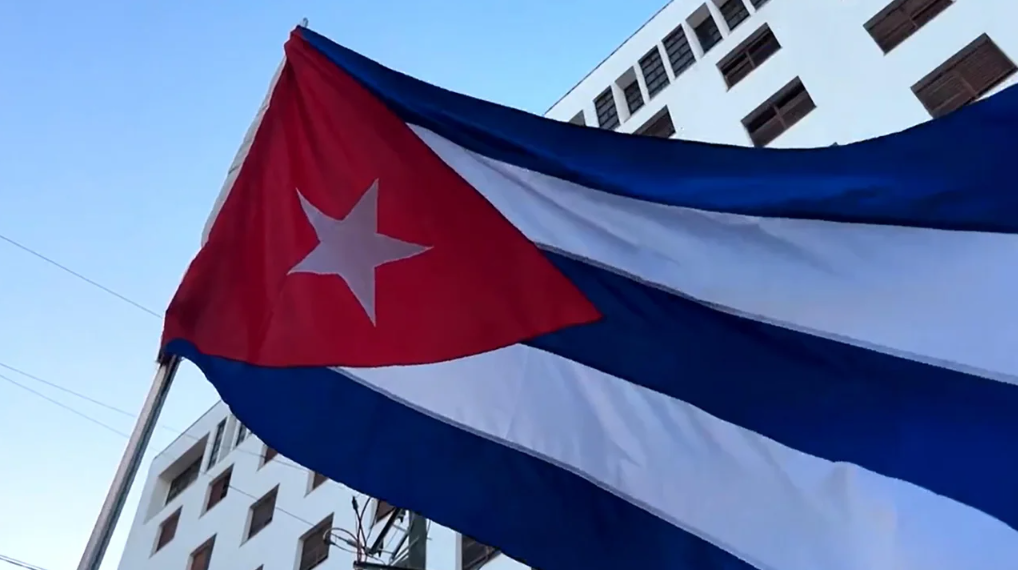
The small island nation of Cuba, just 90 miles from Florida, has played an outsized role in America's foreign policy for close to 70 years. Now, the Trump administration is blocking nearly all oil shipments from reaching the island, worsening its humanitarian crisis, with the president threatening he will be "taking Cuba."
With the Middle East conflict ongoing, Donald Trump said, “We may stop by Cuba after we’re finished.” The statement raised concerns about Cuba’s future trajectory and political direction.
Trump’s fixation on Cuba is driven by a combination of strategic and political considerations: a “Western Hemisphere first” approach, tactical efforts to identify leverage points for advancing the so-called Trump Doctrine and the practical aim of replicating the Venezuelan model to bolster his midterm election prospects.
These calculations are rooted in four motives, all aimed at reshaping the geopolitical landscape in Latin America in a manner aligned with the “Make America Great Again” agenda:
First, it seeks to remove what is perceived as the leader of left-wing movements in Latin America, thereby aligning the region’s political landscape with adjustments in national security strategy. Although Cuba does not possess vast oil reserves like Venezuela, its geopolitical role in Latin America is comparable to “a small oar moving a big ship.” For more than half a century, the Castro brothers have been regarded as symbolic figures for left-wing movements across the region. Cuba’s socialist model has driven the restructuring of regional political dynamics and the rise of left-wing movements, directly giving rise to 21st century socialism under Chavez and Maduro in Venezuela and communitarianism under Morales in Bolivia. It has also facilitated the development of ALBA-TCP, a regional anti-U.S. organization. As a result, Cuba has become the center of left-leaning political currents in the region and an important reference point for both moderate and new left-wing forces across the region.
Such a distinctive geopolitical role is likely to complicate Trump’s strategic adjustment of the Western Hemisphere, making Cuba a top priority for regime change on his political agenda. As he stated, “You know, all my life I’ve been hearing about the United States and Cuba, when will the United States [have] the honor of taking Cuba? That’s a big honor.”
In fact, Trump has long taken a hardline stance toward Cuba. At the start of his first term, he immediately reversed Obama-era efforts to ease restrictions, halting the normalization process in U.S.-Cuba relations. Following the advice of National Security Adviser John Bolton at the time, he grouped Cuba, Venezuela and Nicaragua into the “Troika of Tyranny.” After returning to the White House, Trump revived his hard-line “big stick” policy toward Cuba, including reinstating it on the U.S. list of state sponsors of terrorism and imposing extreme measures such as energy blockades on top of economic and financial sanctions. He also threatened to “take Cuba” and expected to have the “honor” of “taking Cuba in some form.” This shows that his approach, while rooted in transactional logic, continues to incorporate strong ideological and geopolitical considerations.
Amid a sharp rightward shift in Latin America’s political landscape, especially within Trump’s framework of reshaping the Western Hemisphere’s strategic security, Cuba—long associated with regional left-wing politics—is destined to face political retribution from Trump and become the main target of his strategy of aligning with the right to suppress the left.
Second, Trump seeks to increase strategic leverage based on Cuba’s geographic position, thereby strengthening control over key maritime routes in the Gulf of Mexico and the Caribbean Sea and reinforcing what is often described as the first “security perimeter” of the United States against its nearest foreign power. For Washington, Cuba’s geopolitical significance lies not only in its symbolic role in reshaping Latin America’s politics but also in its location. Situated just 90 miles from the U.S. mainland across the Straits of Florida, Cuba is close to strategic choke points linking the Gulf of Mexico and the wider Atlantic and Caribbean sea lanes. This makes it an important waypoint for movement between North and South America. Most important, the Yucatan Channel, the shortest route from the Gulf of Mexico to the Panama Canal, lies in close proximity to Cuba. Having more favorable navigation conditions than the Straits of Florida, it is regarded as the lifeline of U.S. trade and military operations.
Because of its highly strategic geographical location, Cuba is often called the key to the Gulf of Mexico and the “green crocodile of the Caribbean .”
Further, Cuba boasts numerous natural deep-water harbors, including the Port of Mariel. For U.S. energy, trade and military routes, the Gulf of Mexico and Caribbean Sea, where Cuba is located, are, in a sense, comparable to the Strait of Hormuz controlled by Iran. By “taking” Cuba, Washington would effectively enhance its ability to control supply chain routes in the Western Hemisphere and safeguard regional strategic security.
Third, Trump seeks to gain control of Cuba and harness the so-called Shield of the Americas to fend off “external spears” reaching into Latin America. Amid the ongoing tensions in the Middle East, Trump convened the first Summit of the Americas and, together with more than a dozen Latin American leaders, announced the Shield initiative. Nominally, this is presented as a framework to strengthen regional security cooperation against drug trafficking and illegal immigration. In essence, it is a warning that discourages external powers from expanding their influence within the U.S. sphere of influence in the Western Hemisphere. At the same time, it conveys an implicit warning to countries in the region against allowing external forces to gain a foothold there, emphasizing that no foreign power should be permitted to entrench itself in the region.
Among Latin American countries with close ties to external actors, Cuba and Venezuela, both committed to advancing de-Americanization through regional integration, have become major challenges to the implementation of the Trump Doctrine. Cuba maintains cooperative relations with major global powers, including China and Russia, and stands in solidarity with Iran and North Korea in the broader anti-U.S. campaign.
Following developments in Venezuela, Cuba is the remaining focal point in U.S. efforts to limit the influence of external powers in the hemisphere. For Trump, taking Cuba would not only deter closer alignment between other regional countries and external actors but would also prevent a repeat of great-power confrontations near home, including scenarios reminiscent of the Cuban missile crisis.
Fourth, Cuba may be seen as a potential compensatory arena to offset perceived setbacks in the Iran war by generating political gains ahead of the midterm elections. Although Trump has claimed a crushing victory over Iran, such self-congratulatory statements cannot conceal the miscalculations and embarrassments faced by the the United States and Israel amid Iran’s effective and resilient counterattacks. Since domestic and international controversies and criticisms have undermined his midterm election prospects, Trump urgently needs to replicate the Venezuelan model in the U.S. backyard and reverse the decline of public support.
Trump expressed confidence that he can easily take Cuba, declaring: “I mean, whether I free it, take it, think I can do anything I want with it.” Secretary of State Marco Rubio, who has a hard-line stance on Cuba, echoed this, indicating confidence in reaching some form of agreement with Cuba. Florida, home to the largest Latino electorate in the United States, played a key role in Trump’s return to the White House. In this context, a tougher approach toward Cuba has helped Trump consolidate backing from this voter base and regain some of the public support lost over dissatisfaction with rising prices and immigration policies.
In short, as the Monroe Doctrine us now reborn in Latin America in the form of the Trump Doctrine, Trump’s repeated threats to take over Cuba represent a contemporary narrative in the long history of control and resistance throughout the 200-year history of U.S.-Latin American relations. Cuba, which has withstood sustained U.S. pressure for more than half a century while punching above its weight, now stands at a crossroads. Its ordeal and future trajectory will not only shape Latin America’s political map and exert spillover effects on this year’s general elections in Peru, Colombia, and Brazil, but will also provide an important lens through which the international community can observe whether the law of the jungle will prevail in modern international relations.
