
The Iran and Ukraine wars have shifted major-power competition from military confrontation to control over global energy routes, critical infrastructure, and supply chains.
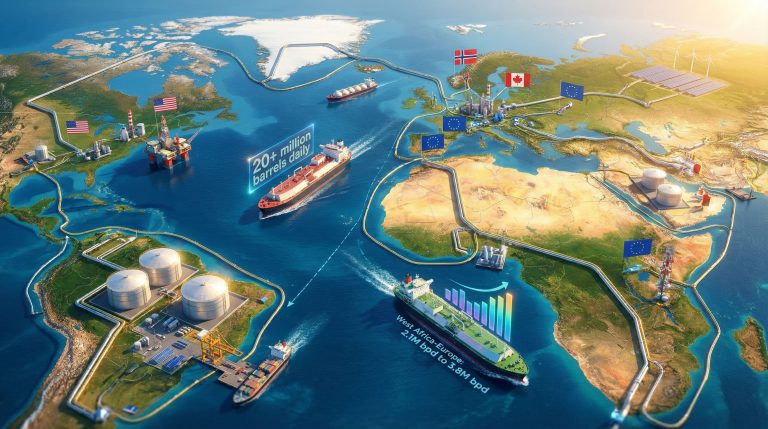
Operation Epic Fury, the U.S. code name for its joint military operations with Israel against Iran, has been underway for nearly two months. This military campaign, together with the ongoing Ukraine war, is profoundly reshaping the landscape of major-power competition. Global rivalries are expanding from direct military confrontation to the control of energy routes, critical infrastructure, and supply chain systems.
This shift has sharply heightened global economic and security uncertainty, compelling major nations to rethink their roles and responsibilities in the global system.
From Ukraine to Iran, the global economic order has experienced significant turbulence, with particularly severe impacts on the food and energy sectors. According to a March 15 report by the UN’s Food and Agriculture Organization, the Iran war has markedly exacerbated risks to global energy, fertilizer and food security.
The Strait of Hormuz typically carries roughly 25 percent of the world’s seaborne oil and 20 percent of its liquefied natural gas. Additionally, the Gulf region is a major exporter of nitrogen fertilizers, with roughly one-third of the global fertilizer trade passing through the maritime corridor in normal times.
Since the war with Iran began, shipping traffic through the strait has dropped sharply, placing significant pressure on food security in import-dependent regions across Asia and Africa and increasing the food insecurity of Gulf states themselves, most of which rely on imports for 70 to 90 percent of their food supply. In Iran, for example, wheat flour prices in Teheran surged by roughly 120 percent within a single month and nearly 200 percent year-on-year.
Spillover effects
The Iran war, which targets critical energy infrastructure and severely disrupts the Strait of Hormuz, has heightened global attention on the need to protect critical infrastructure and the security of strategic chokepoints. These dynamics will shape the strategic orientation of major powers in future competition.
From the Panama Canal to Okinawa and Guam, and from Crete in the Mediterranean to Greenland in the Arctic, the United States has built a multilayered defense system for these nodes of transportation, to secure control, deterrence and resilience involving critical infrastructure. Domestically, the U.S. may consider supporting state and local efforts to take increased responsibility for ensuring the resilience of critical infrastructure functions in their jurisdictions, according to a report—Critical Infrastructure: Emerging Trends and Policy Considerations for Congress—which was released on March 10. For example, in 2026, California has $109 billion in infrastructure projects currently underway, Alaska is aggressively expanding maritime infrastructure in Nome and planning a new port in Kotzebue to strengthen national security and support increased Arctic shipping as sea ice thaws.
This approach can boost the efficiency and relevance of infrastructure projects. Against the backdrop of external geopolitical risks such as the Iran war, such developments are expected to advance the diversification and resilience of energy, transport and digital infrastructure.
At the same time, Russia has identified the development of critical infrastructure as a top strategic priority. For the Northern Sea Route, it plans to deploy 10 new icebreakers by 2035, upgrade military protection for the Port of Ust-Luga in the Baltic Sea and strengthen defenses at Novorossiysk in the Black Sea (prioritizing the deployment of newly built vessels). Moreover, it is accelerating the operation of the International North-South Transport Corridor and modernizing the Trans-Siberian and Baikal-Amur Railways.
Despite wartime fiscal constraints, Moscow aims to complete a “critical lifeline infrastructure” program by 2030, involving the reconstruction or upgrading of 158 road facilities and 167 railway facilities nationwide.
From America’s “control of nodes” to Russia’s “route restructuring,” their different paths converge on a shared reality: Major-power competition is moving beyond battlefield confrontation to the systematic shaping and control of critical infrastructure networks.
China pursues strategic autonomy
To navigate a complex international landscape, China is focused on enhancing the resilience and autonomy of its strategic routes and supply chains through diversification and institution-building. It is forging a response path aligned with its national interests.
First, China seeks stability in relations with other major countries to consolidate the foundation of its geostrategic position. For example, deepening comprehensive strategic coordination with Russia is a mainstay for China’s efforts in managing external uncertainty. This year, which marks the 30th anniversary of the China-Russia partnership of strategic coordination, the two countries are expected to maintain high-level cooperation in energy and infrastructure, as well as strategic coordination.
Meanwhile, China continues to uphold the principles of mutual respect, peaceful coexistence and win-win cooperation in managing its relations with the United States, seeking space for cooperation amid competition to safeguard regional and global stability.
Second, China seeks to optimize the network of strategic routes to build a diverse, multidimensional transportation network. By leveraging international cooperation under the Belt and Road Initiative, i t is steadily advancing integrated transport corridors to strengthen its strategic resilience. For example:
• To the north, it has launched the Central Railway Corridor, a key component of the China-Mongolia-Russia Economic Corridor, to bolster overland transport capacity for energy and commodities.
• To the west, it is promoting the China-Kyrgyzstan-Uzbekistan Railway and expanding the Trans-Caspian International Transport Corridor to improve connectivity along the Eurasian Land Bridge.
• To the south, it is enhancing cross-border railway connectivity with ASEAN members to secure logistical stability.
These arrangements reduce reliance on single maritime routes and foster a more resilient, integrated transport system.
Third, China is strengthening its supply chain resilience to coordinate development and security. One of the efforts is to modernize its institutional framework. In April, the State Council unveiled a set of regulations on industrial and supply chain security. In addition to the pursuit of high-level opening-up and international cooperation, the regulations call for the establishment of risk monitoring, early warning and emergency response mechanisms, as well as the enhancement of tech reserves and breakthroughs in key sectors.
While guarding against external risks, the regulations also aim to promote the stability of global industrial and supply chains, which underpin the high-quality development of the Chinese economy and provide stable expectations for international partners.
Geopolitical conflicts are accelerating the misalignment of war. While battlefields remain geographically localized, major-power competition has expanded to encompass global energy routes, critical infrastructure, and supply chain systems. The contest in the future will be defined not only by military might but by comprehensive control over critical networks. In this sense, the outcomes of war have long extended far beyond the battlefield itself.
