
Donald Trump is deconstructing U.S. foreign policy through his erratic decision-making and appetite for political theater. The correction likely depends less on any single president but on whether America can build more stable strategic assessment mechanisms, more open decision-making processes and more resilient policy-correction capacity.
In 2014, while defending his decision not to intervene in Syria’s civil war, American President Barack Obama coined the now-famous phrase “Don't do stupid stuff.” Later dubbed the Obama Doctrine, it established a red line of strategic restraint meant to correct the aggressive military adventurism of the George W. Bush administration.
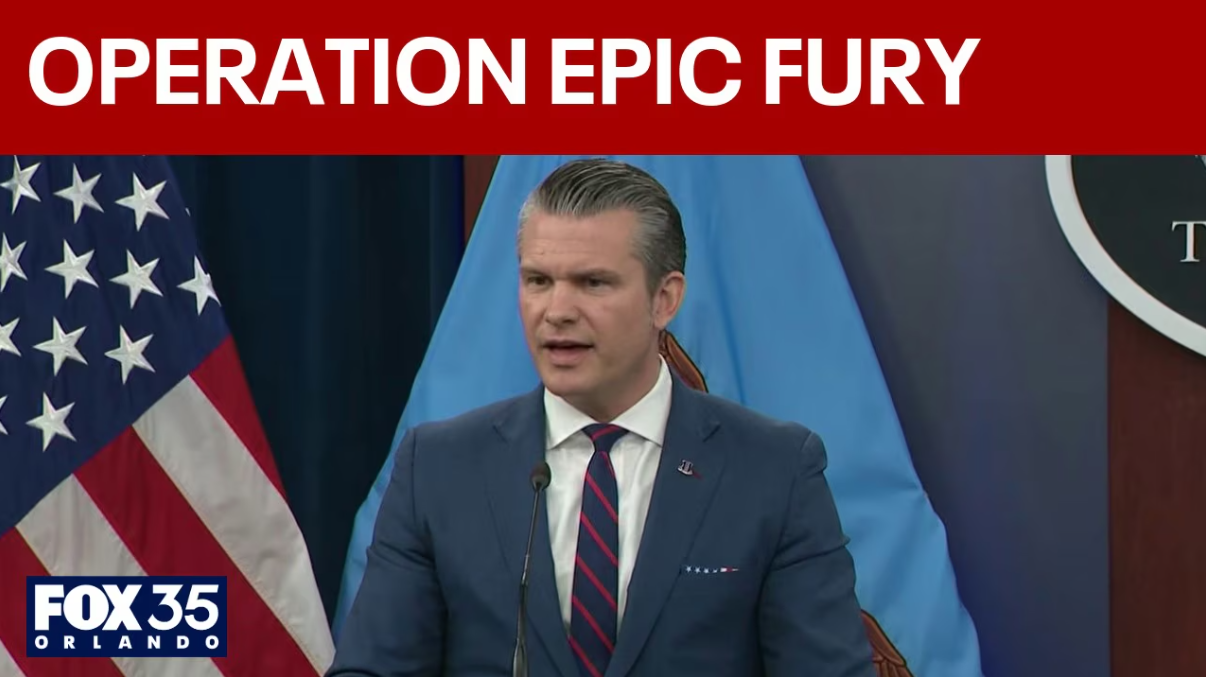
More than a decade later, on Feb. 28, 2026, Donald Trump launched a massive military strike against Iran in coordination with Israel, code-named “Epic Fury.” Supreme Leader Ayatollah Ali Khamenei was killed, war spread to the Strait of Hormuz, global oil prices surged and markets reeled.
The shift from “Don't do stupid stuff” to Epic Fury is not merely a reflection of two presidents’ differing personal styles—it represents the fracturing of U.S. foreign policy at a critical crossroads. As restraint gives way to reckless gambling, America is actively dismantling the global order it painstakingly upheld for decades.
Obama’s words were far from an empty slogan. They embodied a systematic reckoning with America’s post-Cold War foreign policy of liberal hegemony, resting on three core propositions: U.S. power is finite and should not be squandered on unattainable idealistic goals; the complexities of the Middle East defy military solution; and intervention tends to breed greater chaos.
And now, with great-power competition reemerging, America should pursue a strategic contraction and pivot its resources toward the Asia-Pacific. Trump’s Epic Fury constitutes a wholesale rejection of all three core propositions.
First, he treats American power as an unlimited instrument, convinced that overwhelming force can solve any problem. The Feb. 28 airstrikes targeted not only nuclear facilities but also Iran’s Supreme Leader himself, with administration figures openly advocating regime change. Second, he has fallen for the technological illusion of quick victory, applying the “successful experience” of the Venezuela raid to Iran while ignoring the vast differences in size, geography and military capability between the two countries. Third, he is gambling on the chessboard of great-power rivalry as he seeks to reshape Middle Eastern geopolitics by striking Iran and squeezing the strategic space of other major powers.
The irony has not gone unnoticed. Media outlets recently unearthed old Trump tweets, in which he caustically suggested that Obama would attack Iran because of plummeting poll numbers, casting himself as a “peaceful president” who would end “reckless and expensive” regime change policies. Those tweets now serve as a damning footnote to Trump’s own foreign policy reversal—from opposing regime change to embracing it. Trump is dismantling not only Obama’s legacy but his own stated commitments.
Another telling detail: Compared with last year’s symbolic strikes on Iran, the intensity, duration, and objectives of Epic Fury caught even many in Trump’s own base off guard and prompting sharp criticism from core supporters.
Trump’s fixation on military action against Iran, partly driven by his personal impulses, is unsurprising. But his gamble on Iran is accelerating America’s strategic overreach, with its costs already evident across multiple fronts.
Militarily, the U.S. finds itself in a predicament. Trump claims that the war will “end soon”; but Iran’s Revolutionary Guards counter that the moment war ends is up to Iran. Faced with Iranian resilience, Pentagon officials have privately voiced concerns that a protracted campaign could deplete precision-guided munitions and compromise readiness in other strategic theaters. The ambiguity of the operation's objectives further complicates any exit strategy. Politically, domestic anti-war sentiment and allied distancing are growing in tandem. France, Germany, and Spain have publicly drawn their own lines.
Trump once mocked Obama for “leading from behind,” only to find himself isolated. Strategically, the decapitation approach has backfired. On March 8, Iran’s Assembly of Experts swiftly elected Mojtaba Khamenei, son of the late Supreme Leader, as his successor. The transition not only avoided internal strife but appears to have hardened Iran’s resolve.
Geopolitically, Arab states in the Gulf region have responded with marked caution. Saudi Arabia and the UAE explicitly barred the U.S. from using their airspaces for offensive operations, signaling deep regional skepticism about the durability of America’s commitment. Meanwhile, Russia has provided Iran with intelligence support from satellites, and China has pushed at the UN for a cease-fire. Such moves are reshaping the great-power game in the Middle East.
Looking back from here, Obama’s “Don’t do stupid stuff" feels like an artifact of a bygone era. It represented a time when America, though still harboring hegemonic ambitions, at least understood the virtue of hesitation before leaping. Trump’s Epic Fury marks the end of that era. From George W. Bush to Obama to Trump, U.S. Middle East policy has cycled from strategic adventurism to strategic contraction and back again.
Beneath this cycle lies America's enduring confusion over its hegemonic role: In an age of relative decline and emerging multipolarity, how should it define its national interests, choose its policy tools and balance ends and means? “Don't do stupid stuff” and Epic Fury, seemingly polar opposites, point to a deeper question: Can U.S. foreign policy break free from the recurrent cycle of overexpansion and isolationist retreat to find a third way? Or is it destined to exhaust its remaining hegemonic capital in this oscillation between self-aggrandizement and contraction?
Trump's erratic decision-making and appetite for political theater throw this dilemma into sharp relief. But the answer likely depends less on any single president. It ultimately depends on whether America can build more stable strategic assessment mechanisms, more open decision-making processes and more resilient policy-correction capacity. Failing that, future “epics” will become tomorrow's “stupid stuff," and the cost will be borne by the region and the world at large.
