
Given the overwhelming superiority of the American military, Washington could create the appearance of bringing Iran under control. Regardless how the conflict ultimately unfolds, however, the United States is unlikely ever to return to an era in which the Iran issue was manageable at a limited and predictable cost.
One characteristic that distinguishes the United States from most other countries is its willingness to generate and sustain conflict while continuing to function largely as normal at home. It has repeatedly demonstrated an ability to conduct major military operations abroad without fundamentally disrupting domestic economic activity or everyday life. This is made possible not only by its overwhelming national power and strategic depth but also by its well-developed approach to conflict management.
For decades, successive U.S. administrations have relied on what might be described as a conflict-based approach to addressing geopolitical challenges. Rather than engaging in large-scale wars involving substantial use of ground forces, Washington has sought to achieve its objectives through more limited forms of coercion, including airstrikes, comprehensive sanctions, political pressure and information campaigns.
But while conflict may extend across diplomatic, economic and informational domains, military power remains the central instrument, with other tools serving a largely supporting role. This approach differs fundamentally from one centered on resolving disputes mainly through diplomacy. During his first term, President Donald Trump pushed this model even further under the concept of a whole-of-government approach to foreign policy.
Several factors help explain why the United States has favored this approach. First, anti-war sentiment has remained a persistent feature of American political culture, so the initiation of a large-scale war is politically costly. Second, successive U.S. administrations have generally been confident that America’s overwhelming military and political advantages allow it to achieve many strategic objectives without resorting to full-scale warfare. Also, the president’s authority to wage war is subject to constitutional and statutory constraints.
Since the founding of the United States, only the War of 1812, the Mexican-American War, the Spanish-American War, World War I and World War II were fought under formal declarations of war by Congress. By contrast, conflicts such as the Korean War, the Vietnam War, the War in Afghanistan and the Iraq War were conducted under various forms of congressional authorization rather than any formal declaration. Against this institutional backdrop, presidents have often relied on a conflict-based approach—that is, using limited military operations to pursue geopolitical objectives—as a more politically and legally feasible option.
The U.S. operation against Iran, code-named Epic Rage, was clearly designed around this conflict-based approach. The strategy relied on intensive airstrikes to degrade Iran’s leadership and military infrastructure, with the aim of compelling Tehran to make concessions on its nuclear program, missile capabilities and regional security policies. At its most ambitious, the campaign also carried the implicit objective of facilitating political change in Iran.
From the outset, the operation appears to have been planned as a campaign to last only a few weeks, thereby keeping both the financial costs and political risks within manageable limits. Precisely because it was conceived as a limited conflict rather than a full-scale war, the U.S. did not undertake comprehensive wartime mobilization. Militarily, it did not establish the logistics and industrial support required for a prolonged campaign. Politically, the administration neither built broad consensus within Congress across party lines nor accumulated sufficient political capital. It also failed to develop a persuasive public narrative for a sustained conflict.
Diplomatically, apart from close coordination with Israel, Washington made little effort to build wider support among its allies or to work through international organizations. Economically, it also lacked comprehensive contingency planning for the consequences of escalation, including disruptions to energy supplies and global trade. In short, the administration appeared to assume that it could achieve its objectives largely on its own.
The problem is that this model has proved to have limited effect on Iran. Iran’s resilience has exceeded almost all expectations, and air power alone has been unable to achieve the U.S. political objective of destabilizing or overthrowing the government. The conflict has also become far more serious than the Trump administration initially anticipated, with the United States drawn into a costly and open-ended war.
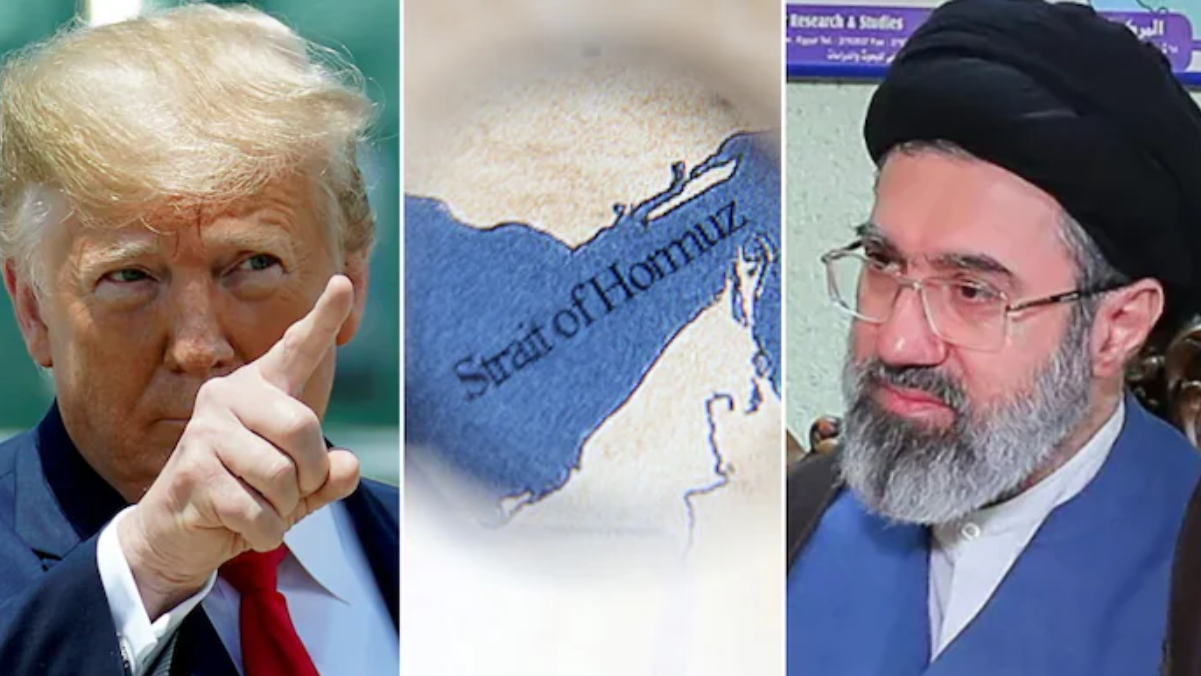
The Strait of Hormuz has emerged as an issue of importance in the global economy. As a result, U.S. military operations against Iran have broken through the traditional limits of its conflict-based model to produce consequences that extend well beyond the battlefield and into global politics, international trade and energy markets. It has also come with mounting domestic political costs. Washington can no longer manage the conflict within the relatively controlled framework that characterized previous limited military operations, nor can it simply allow the situation to drift indefinitely, as occurred during parts of the wars in Iraq and Afghanistan. Instead, it faces growing pressure to formulate a credible strategy for ending the conflict.
Moreover, repeated Iranian attacks on U.S. partners across the Middle East have affected America's broader military posture, forcing adjustments that extend beyond the region. As the war increasingly influences domestic politics—particularly with the midterm elections approaching—the Trump administration is under pressure to manage the conflict as a matter of overall national strategy rather than merely as a regional security issue.
Judged against Washington’s original objectives, the complexity of the current U.S.-Iran confrontation has reached a point where those goals are becoming increasingly difficult to achieve without a much broader war. The resilience of the Iranian political system suggests that air power alone is unlikely to alter the country’s political trajectory. Unless the United States is prepared to commit ground forces in pursuit of regime change, its initial strategic objectives are unlikely to be fully realized.
Washington therefore faces a stark strategic choice. One option is to escalate the conflict into a full-scale war in an effort to achieve its original objectives. The other is to accept at least some of Iran’s demands, acknowledge that its initial strategy has fallen short and spend years managing the political, economic and strategic consequences of the conflict. The first course would require a level of national mobilization and resource commitment far beyond anything undertaken so far. The second would represent a politically painful retreat, though this is hardly unprecedented in U.S. history.
There are growing indications that the Trump administration remains caught between these two options while continuing to consider the possibility of broader military action. According to media reports, Trump considered expanding military operations against Iran on July 23, but following a meeting on July 24, instructed U.S. forces not to carry out additional strikes. During Israeli Prime Minister Benjamin Netanyahu’s visit to Washington on July 27, one of his reported objectives was to persuade Trump to widen the military campaign against Iran. Trump, however, also appeared determined to avoid creating the impression that U.S. policy was being dictated by Israel.
Whether or not America’s strategic community can devise a way out of the current impasse remains to be seen. One possibility is that Washington could gradually scale back its military involvement while continuing to portray the outcome as a strategic success. Such an approach would not be without precedent in U.S. foreign policy.
If Trump ultimately chooses to escalate the conflict, the overwhelming military superiority of the United States could well push the Iranian government to the brink and create the appearance of bringing the country under control. Yet, regardless of which path Washington ultimately chooses, one conclusion has become increasingly difficult to avoid: The United States is unlikely ever to return to an era in which the Iran issue could be managed at a relatively limited and predictable cost.
