
The U.S.-Iran memorandum of understanding is only a political commitment and carries no legally binding force. What truly matters is whether the two sides can conclude a formal peace agreement within the 60-day negotiating period. Three formidable hurdles stand in the way.
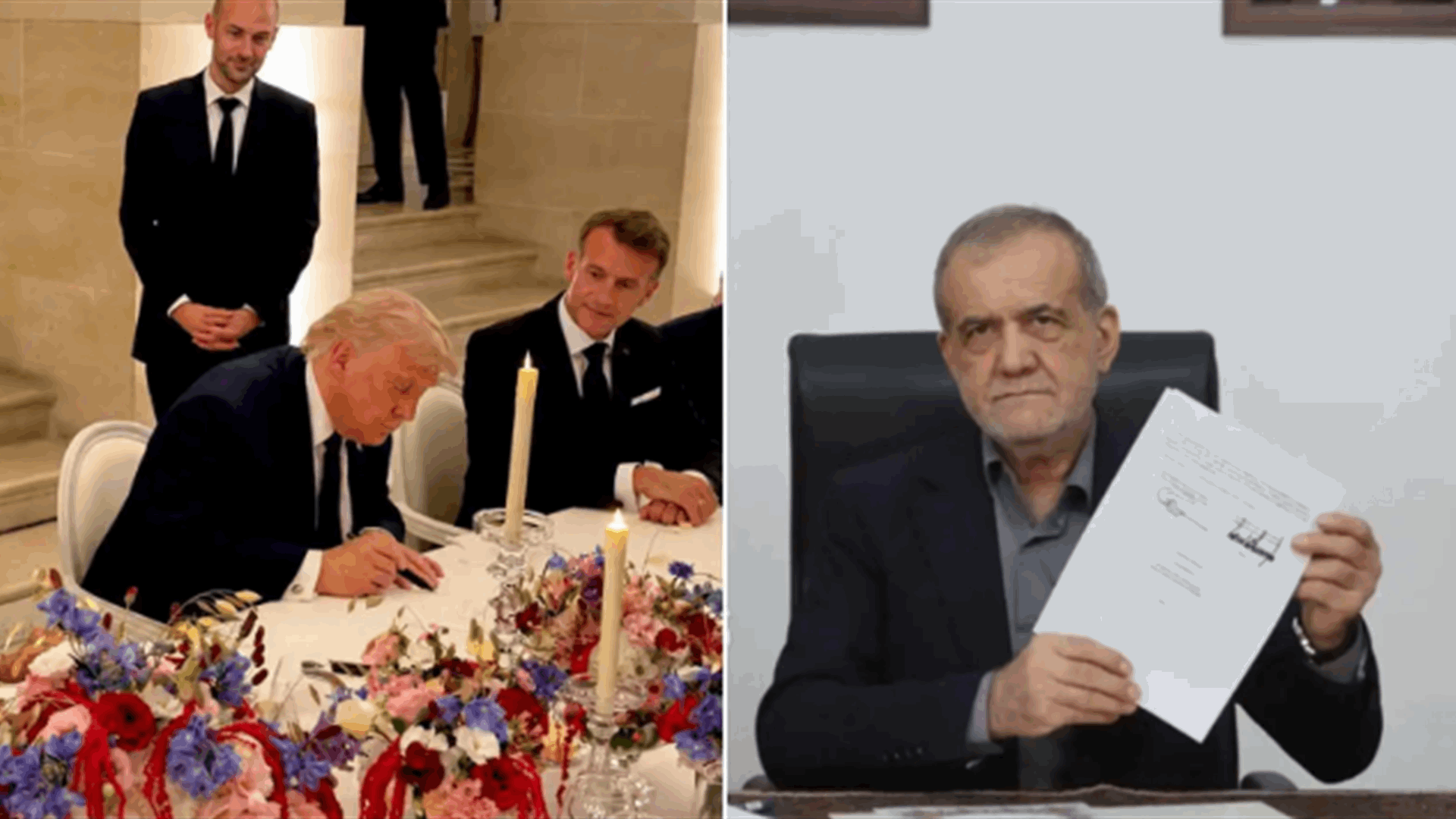
On June 17, in the Hall of Mirrors at the Palace of Versailles—the place where allied powers presented surrender terms to Germany in 1919— U.S. President Donald Trump signed a memorandum of understanding with Iran. Iranian President Masoud Pezeshkian signed the document remotely from Tehran.
In the hours that followed, the two governments presented strikingly different narratives of the 14-point agreement to their domestic audiences. Washington portrayed the memorandum as an arrangement that permanently blocked Iran’s path to nuclear weapons and secured the reopening of the Strait of Hormuz. Teheran, by contrast, claimed that the United States had been forced to back down and that Iran had not only safeguarded its sovereignty but also secured the most favorable commitments to sanctions relief since 1979.
But of course the memorandum is only a political commitment, not a legally binding instrument. The real test lies in whether the two sides can conclude a formal peace agreement within 60 days.
War-weary rivals
The current cease-fire came after 40 days of fighting and 70 days of negotiations between the United States and Iran. The underlying reason both sides have stopped fighting is that they have concluded that the costs of continuing the conflict would outweigh any conceivable benefits.
For Washington, this was an overseas war that the American public never wanted in the first place. As Iran’s disruption of traffic through the Strait of Hormuz drove up oil prices and inflationary pressures, Trump came under mounting domestic pressure to end the war. The longer the military standoff drags on, the greater the political risks become for Republicans in November’s midterm elections. Although 40 days of airstrikes inflicted severe damage on Iran’s nuclear facilities at Fordow, Natanz and Isfahan, they failed to compel Tehran to make concessions on uranium enrichment, its missile program or its network of regional proxies. More fundamentally, Washington’s ultimate objectives—regime change and the dismantling of Iran’s military capabilities—were simply unattainable through continued strikes alone.
Tehran, however, has calculations of its own. Iranian officials estimate that the war inflicted losses of roughly $270 billion on the country. At home, the government has been grappling with soaring inflation, widespread economic disruption and the near collapse of its oil and gas exports. While Iran proved capable of withstanding sustained airstrikes, it was unable to break the maritime blockade. Tehran therefore chose to strike a bargain with Washington—to accept constraints on its nuclear stockpile in exchange for exemptions allowing oil exports to resume, a written commitment to the phased lifting of sanctions and the release of frozen overseas assets to help revive the economy.
Despite the White House’s efforts to present the agreement in the most favorable light, many U.S. media outlets noted that Washington made substantial concessions while securing relatively little in return. Iran’s response has been even more unsettling to many in the United States. In their view, Supreme Leader Ali Khamenei approved the agreement while simultaneously emphasizing that he still had his reservations, suggesting that Teheran regards the current cease-fire as a tactical pause rather than a genuine embrace of peace.
Hurdles in negotiations
The memorandum sets a 60-day countdown for concluding a final agreement. Yet three formidable hurdles remain.
First, Lebanon. Article 1 of the MOU explicitly stipulates an immediate and permanent end to the war on all fronts, including Lebanon. However, around June 19, Israel carried out more airstrikes in southern Lebanon, reportedly killing 18 people.
Israeli officials maintained that the military would retain control of the occupied buffer zone for as long as deemed necessary, while U.S. intelligence assessments suggested that Israel was likely to continue its operations. Israel’s unilateral actions prompted Iran to postpone sending a delegation to Switzerland for technical consultations, and the U.S. vice president's planned trip was also canceled.
Second, the Strait of Hormuz. In the memorandum, Iran pledged to ensure the free and safe passage of commercial shipping through the strait for 60 days. In practice, however, Teheran has turned that commitment into an assertion of sovereignty. It established the new Persian Gulf Strait Authority, introduced new transit regulations, including a requirement that ships seeking passage through the strait while the interim agreement is in force must submit transit requests at least 48 hours before arrival. And it made clear that the 60-day waiver merely means that the Iranian government will temporarily absorb the associated costs, not that those costs have disappeared.
Speaker Mohammad Bagher Ghalibaf declared that the strait would never return to its prewar state. In reality, the free-passage arrangement is only temporary; what Iran ultimately seeks to preserve is its enhanced authority over the administration of the strait.
Third, the agreement's implementation framework. Washington and Teheran have fundamentally different interpretations of the same document. The United States views the memorandum as performance-based, with sanctions relief contingent upon Iran’s fulfillment of its commitments. Teheran, by contrast, maintains that the easing of the blockade and the unfreezing of its overseas assets should be implemented first, while negotiations over the nuclear issue can proceed thereafter.
Although Article 13 of the memorandum attempts to bridge these differences by establishing a sequence of implementation, that very sequencing also exposes the agreement’s principal flaw. A single Israeli airstrike in Lebanon, the postponement of a negotiating delegation or a dispute over the level of uranium enrichment could stall one stage of the process. Once any link in the chain breaks down, the implementation of the entire agreement could grind to a halt.
Implications for Middle East
Although Trump and Vice President J.D. Vance have repeatedly expressed satisfaction with the outcome of the conflict, many countries in the Middle East see such statements primarily as messaging aimed at reassuring the American public.
From their perspective, none of Washington’s principal wartime objectives were achieved. The Iranian government remained in power, the Islamic Revolutionary Guard Corps retained its organizational integrity and Iran preserved both its missile capabilities and its network of regional proxies. The goals of regime change and disarming Iran, which were frequently invoked by Washington at the outset of the conflict, were not realized.
Meanwhile, the disruption of shipping through the Strait of Hormuz exposed the vulnerability of the global economy at one of its most critical chokepoints, while rising energy prices ultimately imposed costs on American consumers. A war intended to demonstrate U.S. leadership instead highlighted the growing costs of sustaining that leadership, leaving Washington in a weaker strategic position in the region than before the conflict began.
In Israel, Prime Minister Benjamin Netanyahu’s broader strategy has been to decisively weaken Iran’s regional influence. Yet by excluding Iran’s missile program and the so-called Axis of Resistance from the agenda, the memorandum effectively leaves Teheran’s most important means of deterrence intact. Israel’s continued military presence in Lebanon and Syria is therefore less a lingering consequence of the war than a reflection of its unwillingness to accept the outcome.
From Israel’s perspective, it stands only one decisive step away from fundamentally undermining Iran’s regional position, and it is reluctant to forego what it sees as the best opportunity in more than four decades to eliminate its most significant strategic threat.
What truly changed, however, was the strategic calculus of the Gulf states. Through this conflict, Saudi Arabia, the United Arab Emirates and Qatar came to recognize that underwriting someone else’s military adventure was a losing proposition and that becoming tied to a prolonged war of attrition with Iran was even less in their interest. Their priorities are de-escalation, uninterrupted oil exports the continued growth of their sovereign wealth funds, channeling capital into their respective national transformation agenda rather than onto a battlefield. Although differences remain among the Gulf states themselves, they have all shown the same instinct when it comes to bearing the costs of war: Step back rather than become more deeply entangled.
The Middle East is therefore moving away from a regional order and anchored by the deterrent power of a single superpower toward a new equilibrium in which regional actors hedge their bets, diversify their partnerships and balance against one another. Yet such fragmentation may itself sow the seeds of the next round of instability.
