
The contradictions between the Trump administration’s state strategies and outward actions highlight its new geopolitical interventionist mindset. It claims to oppose prolonged wars, yet it does not reject military means to pursue economic interests. Washington has exposed its hegemonic nature.
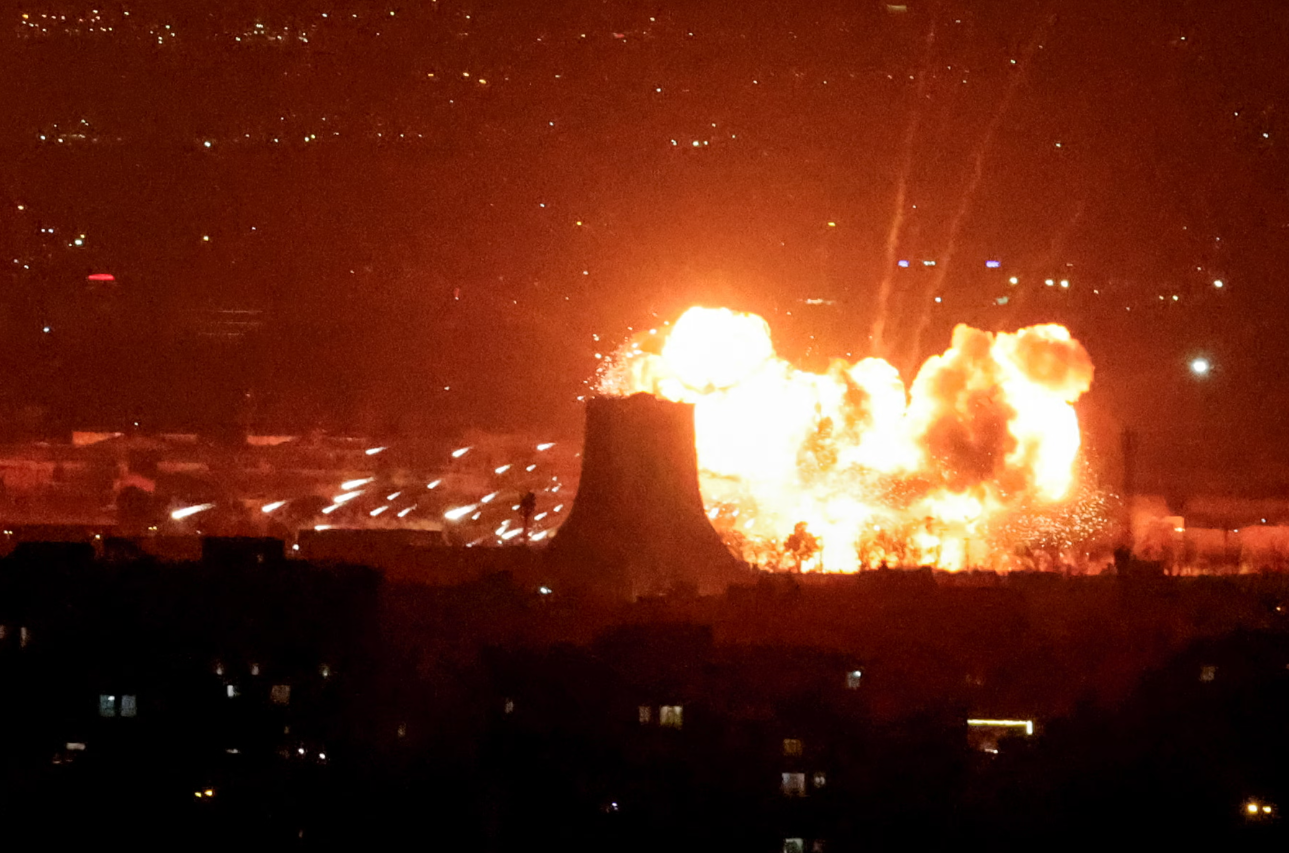
U.S. President Donald Trump has repeatedly stated his intention to keep the U.S. out of wars overseas. He has publicly criticized previous regime-change operations and prolonged wars on numerous occasions, claiming that American soldiers should not shed blood in foreign lands. This philosophy is clearly reflected in the new National Security Strategy and National Defense Strategy. A year into Trump’s second term, however, the administration has launched military strikes in many countries, including Venezuela, Iran, Yemen, Syria, Iraq, Somalia and Nigeria, with American media counting more than 600 such operations. Since the start of this year, the U.S. invaded Venezuela, captured its president, Nicolas Maduro, and joined forces with Israel to strike Iran and assassinate Supreme Leader Ali Khamenei.
The tactics employed were ruthless, with the goal of removing the leaders of the target countries and even overthrowing their regimes. These overseas military interventions have surpassed all previous ones since the Cold War in terms of scale, depth and impact.
The huge contradiction between the Trump administration’s strategic planning and actions reveals its hypocrisy, inconstancy, arrogance and double standards. But it also allows us to discern some new thinking and characteristics of U.S. geopolitical interventions.
First and foremost, what the Trump administration truly opposes is prolonged wars; it does not oppose, and even tends to boldly use, military means to achieve political and strategic goals. After the end of the Cold War, the United States, by leveraging its status as the sole superpower, sought to build a new world order. But NATO’s eastward expansion, democratic transformation, and the war on terror have made the U.S. increasingly aware that wars in Afghanistan and Iraq overstretched its strength and became unbearable burdens despite its dominant position on the world stage.
Trump has repeatedly criticized these as “stupid wars.” His opposition to prolonged wars and nation-building is backed by strategic reflection and support from factions such as the Make America Great Again (MAGA) movement. At the same time, Trump and his diplomatic and security strategists are believers in power politics, holding that the world is governed by strength and advocating for peace through strength. In fact, they aim to attain a strategic advantage by harnessing their country’s overwhelming strength, and for this purpose they are ready to adopt coercive measures including military force. The 2025 National Security Strategy declares that “we want to recruit, train, equip and field the world’s most powerful, lethal and technologically advanced military to protect our interests, deter wars and—if necessary—win them quickly and decisively, with the lowest possible casualties to our forces.
“Quick victory and limited scale” have been put forward as distinctive features of the administration’s geopolitical interventions, which inevitably limits the goals and achievements of these operations. At the same time, because it does not want to engage in a full-scale war or get bogged down in one, the U.S. fears strong and sustained counterattacks from its opponents. Recently, Trump and senior officials have made statements, indicating that the United States pursues limited and reasonable goals with regard to Iran, that it will not be drawn into a permanent war in the Middle East and that it will soon end the war against Iran. These all reflect Trump’s consistent views on war and his willingness to extricate U.S. troops as soon as possible.
Second, the administration, with its focus on pursuing tangible interests—especially economic interests—makes calculated decisions about geopolitical interventions. While economic interests are not the sole goal, these interests are likely the most important. The U.S. will even resort to military means to seize economic interests, with military means serving economic demands.
Trump styles himself as a businessman who dislikes losing. He views issues more from a geoeconomic rather than a geopolitical perspective, a mindset embodied by his imposition of tariffs on all trading partners and use of coercive tariffs. For example, with regard to Venezuela, which has the world’s largest reserves of oil, Trump has made no secret of the fact that the military intervention was expressly for oil. He believes that U.S. control over this resource will allow it to manipulate the global market and influence the energy supplies of its competitors.
On the other hand, the reasons for the military strikes on Iran are complex. Aside from Israel’s influence on Trump, Iran’s abundant oil and mineral resources and its pivotal geographical location have undoubtedly made it a target. Moreover, the blockade of the Strait of Hormuz impacts the global energy market and U.S. economic interests. It will undoubtedly become a key factor for Trump in deciding whether the war should continue or end.
Third, because of Trump’s stated aversion to prolonged wars and his preference for economic interest-oriented approaches, the administration prefers low-cost geopolitical interventions, mainly in the form of military interventions—airstrikes and special operations. The administration prides itself on the U.S. military’s advanced high-tech equipment, including cruise missiles, stealth aircraft, precision-guided bombs and drones—which enable it to launch large-scale airstrikes and precision strikes without deploying ground troops, meaning few casualties.
Meanwhile, most countries subject to U.S. military interventions are relatively weak and unable to inflict painful damage on the U.S. Even Iran, a major power in the Middle East and which may retaliate against the U.S. and its allies in various ways, is unlikely to cause severe damage. In particular, the so-called success of the operation in Venezuela may have led the Trump administration to form a dangerous perception that military intervention and regime subversion are low-cost and easy to accomplish.
Coupled with mounting domestic problems and growing pressure from the approaching midterm elections, resorting to force has become a highly tempting option for Trump to divert domestic attention and reinforce diplomacy. Those countries that oppose Washington and have incurred Trump’s wrath, especially high-value target countries that control important resources such as critical minerals, energy and strategic waterways, are highly likely to become the next victims of U.S. interventions.
Fourth, the Trump administration’s overseas military interventions are unpredictable. They flout international law and severely undermine world peace and stability. Trump cares little about intangible assets such as his country’s international image and credibility, and is less influenced by traditional liberal democratic ideology. His geopolitical interventions are also unrestrained by international law. Trump said that only his “moral standards and will” can limit his exercise of power on a global scale, and that this is the only thing that can stop him.
The recent military strikes on Iran have sent the administration’s international credibility into free-fall. The Iranian government has made major concessions by stating its intention to abandon nuclear weapons development, yet the U.S. used the diplomatic negotiations as a smokescreen for military action. This will undoubtedly greatly reduce the credibility of future U.S. diplomatic promises. Such reckless and arbitrary actions will only create more enemies and plant more hidden dangers, which will turn out to yield more costly results in the long run and may even lead to the U.S. paying a heavy price in unexpected ways.
