
China-U.S. relations face both opportunities and challenges. At least within this year, and particularly given the three forthcoming meetings between the two heads of state, the opportunities outweigh the challenges as relations continue to move forward.
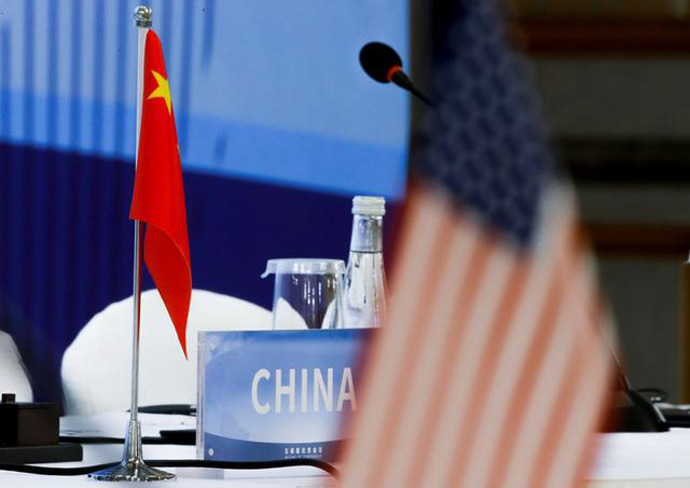
Since last autumn, China-U.S. relations have gradually moved toward stabilization, with a nascent momentum of constructive engagement emerging. Against this backdrop, U.S. President Donald Trump paid a state visit to China from May this year, marking the first state visit by a U.S. president to China in nine years.
During the visit, the two heads of state and their teams held extensive, candid, in-depth strategic consultations on the global situation and China-U.S. relations. The two sides reached an important consensus on building a constructive bilateral relationship of strategic stability, and they agreed to expand exchanges and cooperation across a wide range of fields, including diplomacy, defense, trade, public health, agriculture, tourism, people-to-people exchanges and law enforcement.
In September, Chinese President Xi Jinping is expected to pay a state visit to the United States at the invitation of Washington. Toward the end of the year, as the APEC and G20 summits are held in the two countries, the two heads of state are expected to meet again on the sidelines.
At a pivotal moment marked by shifts in the global landscape and the respective development trajectories of both countries, emerging changes and new dynamics in China-U.S. relations are expected to produce a positive and significant impact on the overall bilateral relationship, strategic nuclear relations and the broader regional strategic environment.
First, unlike the characterization of a “relationship of strategic competition,” which generated serious friction and even confrontation between the two countries in the past, the new formulation of a “constructive relationship of strategic stability” is intended to promote the positive, healthy and sustained development of the overall relationship. It encompasses all major dimensions of bilateral relations, including the countries’ strategic nuclear relationship. However, it should be noted that this strategic nuclear relationship is not identical to traditional nuclear strategic stability. The two should not be conflated.
Second, as two-way diplomatic and military-to-military dialogues resume and are strengthened, exchanges in areas related to nuclear strategic stability are expected to gradually advance. These may include the resumption of the China-U.S. Arms Control and Nonproliferation Consultations, the restoration and strengthening of bilateral crisis management mechanisms and dialogue channels and the enhancement of confidence-building measures.
In addition, the two sides may explore and initiate dialogue on the military applications of artificial intelligence, on cybersecurity and on space security. Such exchanges are expected to have a positive and important impact on maintaining strategic stability.
Third, in the field of strategic security, Track II dialogues are expected to receive greater support and more guidance from authorities on both sides. Track 1.5 dialogues may also be resumed in the near future. Advancing such dialogues is of crucial importance, as they can serve as a useful platform and lay the groundwork for the restoration and strengthening of official Track I strategic security dialogues.
Fourth, the sustained and stable development of China-U.S. relations is also expected to contribute to greater stability in the strategic security environment in East Asia and the wider Asia-Pacific region. Over a prolonged period, the deterioration of the relationship has placed many countries in the region—most of which prefer not to take sides in great-power competition—in an increasingly difficult position. This situation may see some improvement going forward. Cooperation between China and its neighboring countries is likely to be strengthened, and regional multilateral dialogues may gain additional vitality and space.
At the same time, relations between U.S. allies in the region and China may also experience some degree of improvement. Collectively, these developments could help to curb the momentum of nuclear proliferation.
However, while acknowledging the positive implications of all this, it is also necessary to recognize that the extent of stabilization and improvement in China-U.S. relations remain limited. To achieve a constructive relationship of strategic stability characterized by cooperation as the mainstay, competition within proper limits, manageable differences and an expectation of peace, both sides will need to overcome a wide range of obstacles and commit to sustained, long-term and demanding efforts.
First, China and the United States continue to suffer from a serious deficit of mutual trust, and the significant uncertainty surrounding the Trump administration’s policies is likely to become a major obstacle to the implementation of the existing consensus. In addition, whether the administration will become a lame duck after the midterm elections is also a key concern for the Chinese side.
To address this severe trust deficit, the top priority for both sides should be to translate the consensus reached by the two heads of state into concrete actions as soon as possible.
Second, government officials on both sides, particularly military personnel, may lack sufficient experience in conducting bilateral engagements and confidence in achieving meaningful progress through dialogue, because many dialogue and exchange mechanisms have been suspended for years. Beyond economic and financial dialogues, whether the two sides can effectively restore and strengthen exchanges across various fields in the coming months, especially military-to-military dialogue, will serve as an important test of their ability to implement the consensus reached by their leaders.
Third, during the China-U.S. summit, the Chinese side placed particular emphasis on the Taiwan question and reiterated its consistent position. But Trump made no explicit commitments on this issue. In a news briefing, Foreign Minister Wang Yi stated that China felt the U.S. side “understands China’s position, attached importance to China’s concerns and does not approve or support Taiwan independence.” Yet in remarks made after leaving China, Trump sent seemingly contradictory signals. He indicated that he did not wish to see Taiwan independence and that he would not send troops to engage in conflict across the Taiwan Strait, but he later suggested that he might speak with Lai Ching-te regarding issues related to U.S. arms sales to Taiwan.
Looking ahead, whether the United States will uphold the “one China” policy as articulated in the three Joint Communiques, exercise extreme caution in handling the Taiwan question and avoid crossing China’s red lines will be a key factor in determining whether or not meaningful progress can be made toward a constructive China-U.S. relationship of strategic stability.
Fourth, for a long period of time, the U.S. has expressed strong interest in establishing a dialogue on strategic stability with China in the nuclear domain. However, serious differences persist between the two sides regarding the definition and content of strategic stability, including key issues such as nuclear policies and transparency. Conditions are not yet mature for launching such a dialogue in the near term. The proposal repeatedly raised by Trump for a trilateral nuclear dialogue of the United States, Russia, and China is even less realistic. Since China’s nuclear arsenal is not comparable in scale to those of the United States and Russia, the nuclear arms reduction process between Washington and Moscow constitutes the primary prerequisite for advancing global strategic stability.
Against this backdrop, strengthening Track II dialogues on China-U.S. strategic nuclear relations, resuming relevant Track 1.5 exchanges and conducting intergovernmental dialogues on nuclear security should serve as transitional steps toward the formal launch of a dialogue on strategic stability. Ensuring that this process begins, rather than being indefinitely delayed, will require the assent of both sides.
In sum, over the next two and a half years, China-U.S. relations will face both opportunities and challenges. At least this year, and particularly given the three forthcoming meetings between the two heads of state, the opportunities appear to outweigh the challenges, and relations are expected to continue moving forward. This window of opportunity should be seized, as doing so can lay a new foundation for elevating the relationship to a higher level in the years ahead.
