

If China and the United States can build on the positive momentum created through leader-level diplomacy, improving communication and crisis-management mechanisms, and can continue achieving practical outcomes, then the idea of a constructive strategic stability relationship will solidify.
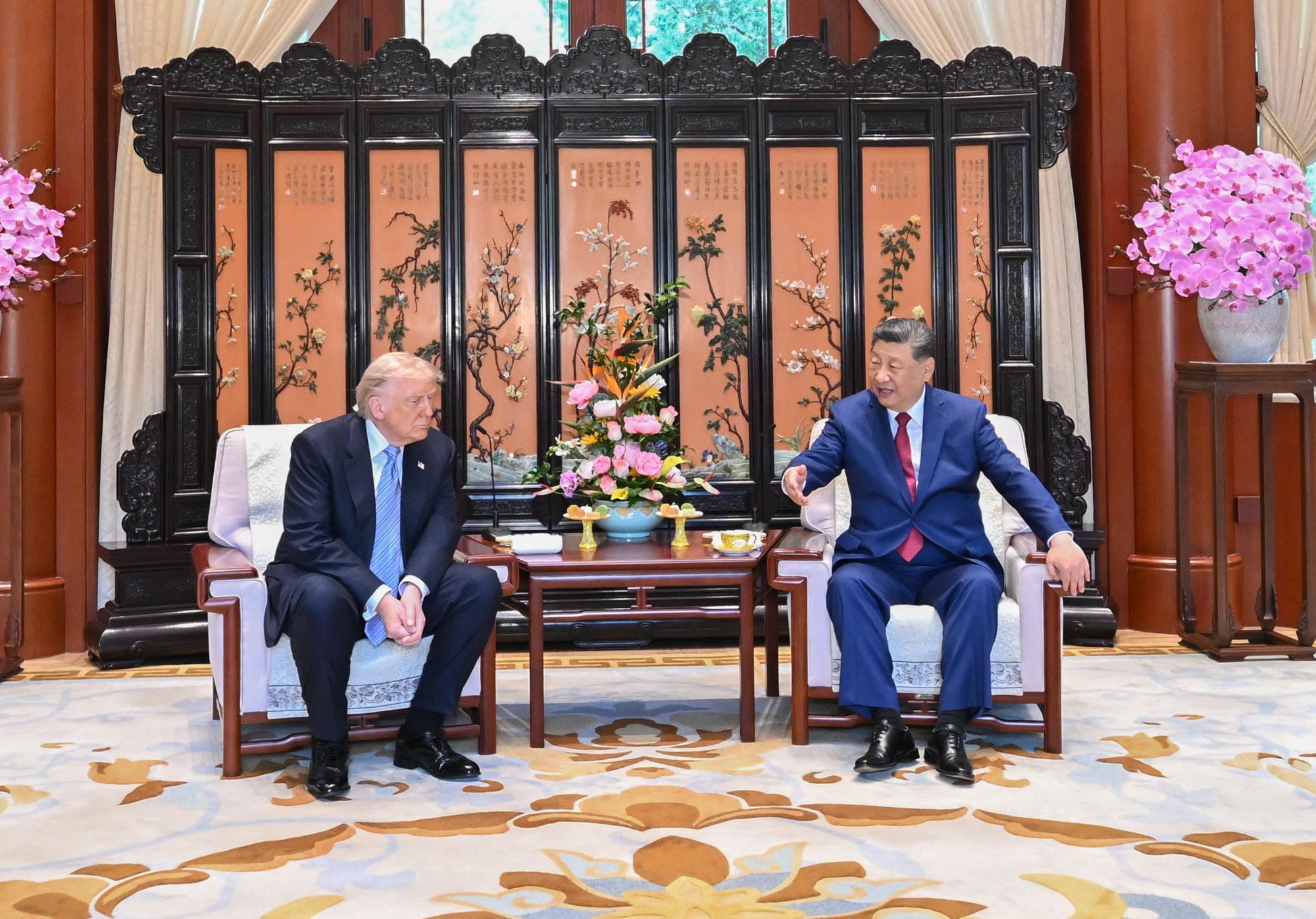
Xi Trump Summit. Chinese President Xi Jinping and U.S. President Donald Trump had a private meeting in the Zhongnanhai, Beijing on May 15 , 2026.
On May 13 and14, Chinese and U.S. leaders met in Beijing and agreed to advance what both sides described as a “constructive relationship of strategic stability.” The phrase was among the summit’s most consequential outcomes. More than a diplomatic slogan, it offers a new conceptual framework for managing bilateral ties in the years ahead and suggests, after several rounds of friction and strategic rivalry, that Beijing and Washington are beginning to develop a new shared understanding of how to define and handle their relationship.
Historically, the two sides have struggled to agree on an overarching characterization of bilateral relations. During the Obama administration, China proposed building “a new model of major-country relations,” centered on “non-conflict, non-confrontation, mutual respect and win-win cooperation.” Washington, however, never fully embraced the concept.
Later, during Donald Trump’s first term, “strategic competition” became the organizing principle of America’s China policy. Although the Biden administration adjusted the tone and methods of engagement, it largely retained the same strategic logic. Throughout this period, Beijing consistently argued that competition should not define the entirety of the relationship nor become the sole framework through which China-U.S. ties are understood.
After multiple rounds of friction and interaction, the two sides jointly introduced the concept of a “constructive strategic stability relationship” at this summit. It is the first time Beijing and Washington have reached a substantive consensus on how to define the overall nature of bilateral ties, while also injecting a new sense of cautious optimism into the future. This concept carries at least three important implications:
First, it emphasizes that the primary goal is to avoid conflict and preserve peace. “Strategic stability” was the phrase originally used to describe a stable condition among nuclear powers aimed at preventing war, especially nuclear war. It later expanded into a broader framework encompassing crisis management, arms competition and the controllability of strategic interactions. Applying this concept to China-U.S. relations suggests that both sides recognize that, as the world’s two most important major powers, they must prevent disagreements from escalating into confrontation and avoid having crises spiral out of control through institutionalized communication and risk-management mechanisms.
Second, it reflects a renewed understanding by both sides of the global significance of China-U.S. relations. Strategic stability is a concept with considerable weight. Using it to define bilateral ties indicates that both countries fully recognize that China-U.S. relations concern not only their own national interests but also directly affect the stability of the international system, global economic development and the trajectory of major international and regional issues. Stability is therefore not only a bilateral necessity but also a shared expectation of the international community.
Third, the word “constructive” gives the concept a more positive and dynamic meaning. It suggests that what China and the United States seek is not merely a minimum level of stability aimed at avoiding conflict, nor a short-lived warming following a single summit, but rather a form of institutionalized stability that requires sustained efforts and joint shaping by both sides. This includes not only managing differences, but also expanding areas of cooperation and accumulating more positive experience in fields such as trade, people-to-people exchanges, AI governance and global governance.
At a deeper level, the introduction of a constructive relationship of strategic stability is an attempt by China and the United States to move beyond the previous narrative framework centered primarily on strategic competition. The Trump administration’s acceptance of the concept of strategic stability suggests that U.S. policymakers are beginning to recognize that China-U.S. relations cannot be fully defined through bilateral concepts such as zero-sum competition or strategic containment. As the world’s two largest economies and permanent members of the UN Security Council, China and the U.S. bear irreplaceable responsibilities across a wide range of global issues. The essence of the relationship therefore includes not only competition and disagreements between the two countries but also the practical need and responsibility to maintain international stability and provide global public benefits.
For a constructive strategic stability relationship to truly take shape, the key for a constructive relationship lies in whether both sides can build mutual trust, expand areas of cooperation and translate the political consensus reached by the two leaders into concrete outcomes through sustained pragmatic cooperation and institutional communication. In the economic and trade sphere, China and the U.S. have already reached agreement on establishing trade and investment councils and will further expand mutually beneficial economic cooperation. In the counternarcotics field, the two sides will also deepen cooperation on the basis of existing progress.
Going forward, the two countries should continue producing visible, tangible and sustainable outcomes in traditional areas such as trade, counternarcotics and people-to-people exchanges, thereby increasing the positive elements within the relationship. At the same time, they should consider establishing and improving more dialogue, coordination and crisis-management mechanisms in key areas to provide more stable institutional support for ties.
In the fields of global governance and emerging technologies, China and the U.S. possess broad space for cooperation. Governance of artificial intelligence is one notable example. At present, track-two dialogues between the two countries on AI safety and risk governance continue to advance and have already generated a certain degree of policy consensus. In the future, the two sides could further cooperate on issues such as military AI risk management, the misuse of AI by non-state actors, the protection of critical infrastructure and the development of global AI governance rules. As conditions mature, they could also consider establishing intergovernmental working mechanisms to help translate track-two outcomes into official track-one cooperation.
The introduction of a constructive relationship of strategic stability, however, does not mean that China-U.S. relations have fully escaped risks and challenges. On one hand, viewing China as America’s primary strategic competitor remains a relatively solid bipartisan consensus within the United States. This also explains why, even after the summit, many voices in American public discourse continue to interpret China-U.S. interactions through the lens of winning and losing.
Under this framework, the fundamental logic of U.S. China policy has not undergone a substantive change, and the Taiwan issue remains its most sensitive dimension. Although Trump maintained an overall cautious posture on Taiwan during his visit to China, pro-Taiwan forces within the United States have not weakened, and congressional pro-Taiwan factions—as well as China hawks—continue pressuring the executive branch. Going forward, whether the United States continues arms sales to Taiwan or expands U.S.-Taiwan interactions will continue to directly affect the stability of China-U.S. relations. In addition, if Congress once again advances China-related legislation, or if relevant agencies adopt more confrontational measures, bilateral relations could face renewed turbulence.
On the other hand, America’s domestic political cycle, particularly the upcoming 2026 midterm elections, will continue shaping the Trump administration’s China policy. At present, Trump faces political pressure over issues such as Iran, energy prices and the domestic economy. If the economic and counternarcotics outcomes produced during this visit help improve economic and social conditions domestically, stable China-U.S. relations could become a political asset for Trump.
Yet as the midterm elections approach, China-related issues are still likely to reemerge as important tools for both parties to mobilize voters. Although election outcomes are ultimately determined mainly by domestic issues, the China factor has become deeply intertwined in many American domestic debates and will likely be pushed back to the center of the U.S. political agenda.
Overall, the idea of a constructive relationship of strategic stability provides a new lens through which to observe and understand the relationship. For a long time, many voices within the United States and the broader international community have been accustomed to interpreting China-U.S. interactions through the language of competition, winning and losing or even who prevails over whom.
This new framing suggests that China-U.S. relations cannot simply be defined as a zero-sum game nor understood solely through the prism of bilateral gains and losses. Because they are the world’s two largest economies and most influential major powers, stability in their interactions does not mean one side wins while the other loses. Rather, it reflects a willingness by both sides to acknowledge the existence of competition and disagreements while also seeking to create a more stable environment for development through risk management and expanded cooperation.
Viewed beyond the bilateral level, the significance of strategic stability extends far beyond improving ties, per se. Stable relations help reduce uncertainty within the international system, ease volatility in global markets, lower the risk of escalation in regional flashpoints and provide greater space and resources for global governance. Whether in sustaining global economic growth and supply chain stability or addressing global challenges such as climate change, public health and AI governance, stable China-U.S. relations would benefit both the international community and third-party countries. In this sense, strategic stability is not about who wins and loses but rather suggests a process of mutual benefit and shared gains that serves the interests of all sides.
Chinese President Xi Jinping is expected to visit the United States this fall. If both sides can build on the positive momentum created through leader-level diplomacy, further improve communication and crisis-management mechanisms and can continue achieving practical outcomes in areas such as trade, people-to-people exchanges and global governance, then the idea of a constructive strategic stability relationship will gain a firmer practical foundation. For China and the United States, this would help steer bilateral relations toward a healthier, more stable and more sustainable trajectory. For the wider world, it would likewise be a welcome development, injecting positive momentum into international stability and global governance cooperation.
