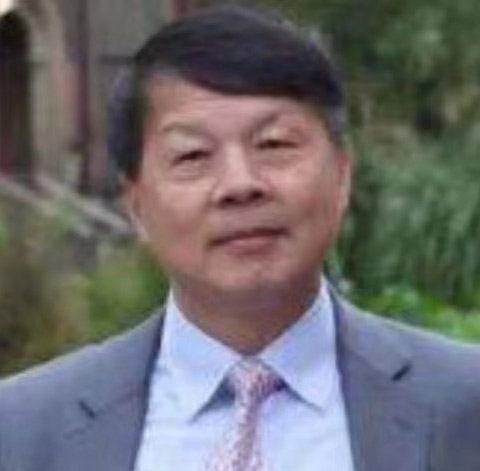
Xiao Qian, Deputy Director, Center for International Security and Strategy at Tsinghua University
May 11, 2026
As discussions grow around the upcoming visit by U.S. President Donald Trump, much attention has focused on tariffs, trade, and semiconductors. Many expect that artificial intelligence will also feature prominently on the agenda.

Sun Chenghao, Fellow, Center for International Security and Strategy of Tsinghua University; Munich Young Leader 2025
May 11, 2026
Looking back over the past period, even as technological competition between China and the U.S. has intensified, the two sides have also made some constructive progress in cooperation on artificial intelligence (AI).

David Shambaugh, Gaston Sigur Professor and Director of China Policy Program at George Washington University, Distinguished Visiting Fellow at Hoover Institution of Stanford University
May 04, 2026
When Presidents Xi Jinping and Donald Trump meet in Beijing on May 14-15, both are looking to stabilize the volatile and fraught U.S.-China relationship. Significant and diverse differences between the two sides will endure long beyond the summit meeting, but overall stabilization and progress on ten specific policy areas is achievable.

Zhang Monan, Deputy Director of Institute of American and European Studies, CCIEE
Apr 27, 2026
After the 2024 presidential election in the United States, a rising political right wing in Silicon Valley formed a “tech-political complex” with the Trump administration. Centered on tech acceleration and tech nationalism, it is pushing for military-civil integration, technological blockades against China and deregulation of the technology sector.

Christopher A. McNally, Professor of Political Economy, Chaminade University
Mar 27, 2026
Advances in AI and robotics, highlighted by rapid progress in China, are driving a “Robot Revolution” that will reshape work, production, and global power. Countries that lead in developing humanoid robots are poised to gain major economic and strategic advantages.

Philip Cunningham, Independent Scholar
Mar 06, 2026
Chinese AI startup Moonshot’s chatbot Kimi closely mirrors Anthropic’s Claude, highlighting how imitation, distillation, and API compatibility have become common practices in the global AI race. The episode underscores how cost, geopolitics, and weak cross-border enforcement shape AI competition alongside innovation.

Xiao Qian, Deputy Director, Center for International Security and Strategy at Tsinghua University
Mar 06, 2026
The Munich Security Conference reveals a shift in transatlantic ties as AI security becomes central to global debate. Europe is increasingly linking AI policy to technological autonomy, seeking to balance cooperation with the United States while strengthening its own strategic capabilities.

Jake Sullivan, Former U.S. National Security Adviser, Professor at Harvard Kennedy School
Jan 13, 2026
In November 2024, US President Joe Biden and Chinese President Xi Jinping made their first substantive joint statement about the national-security risks posed b

Jianyin Roachell, Transatlantic Digital Debate Fellow and Research Associate at Max Planck Institute of Geoanthropology
Jan 09, 2026
As artificial intelligence rapidly expands, the United States and China face similar sustainability challenges, but their responses differ starkly — shaping AI’s long-term environmental footprint.

Li Yan,, Director of Institute of Sci-Tech and Cyber Security Studies, China Institutes of Contemporary International Relations
Dec 10, 2025
The success of the Manhattan Project was the result of specific historical conditions. Its model of concentrating resources to achieve a single technological breakthrough doesn’t fit the characteristics and competitive landscape of the AI era.