
In less than two years, Trump launched attacks against the liberal agenda in nearly every field and put a significant dent in the economic, cultural, social, political and military progress of the last 50 years. And he paid a price on Tuesday.
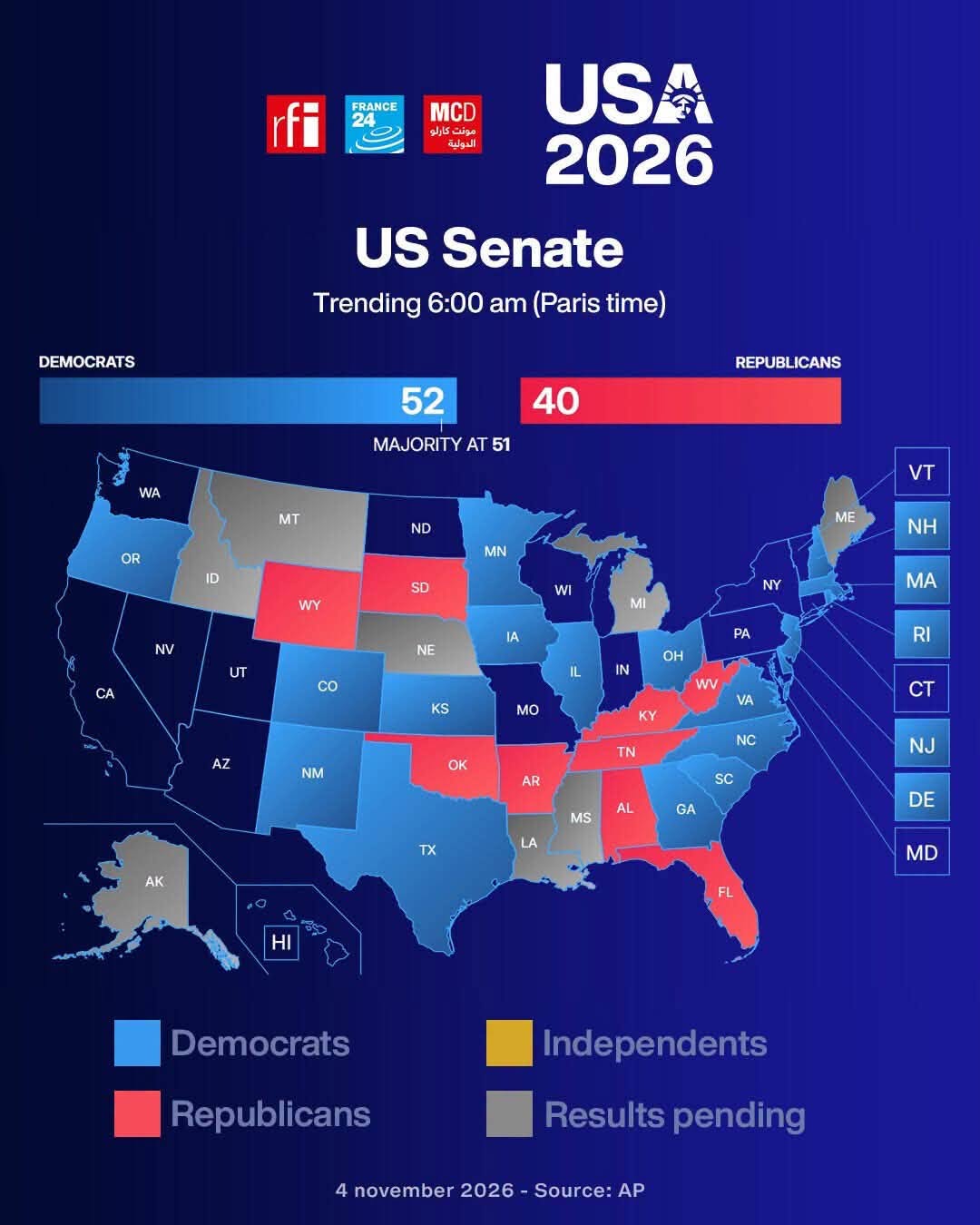
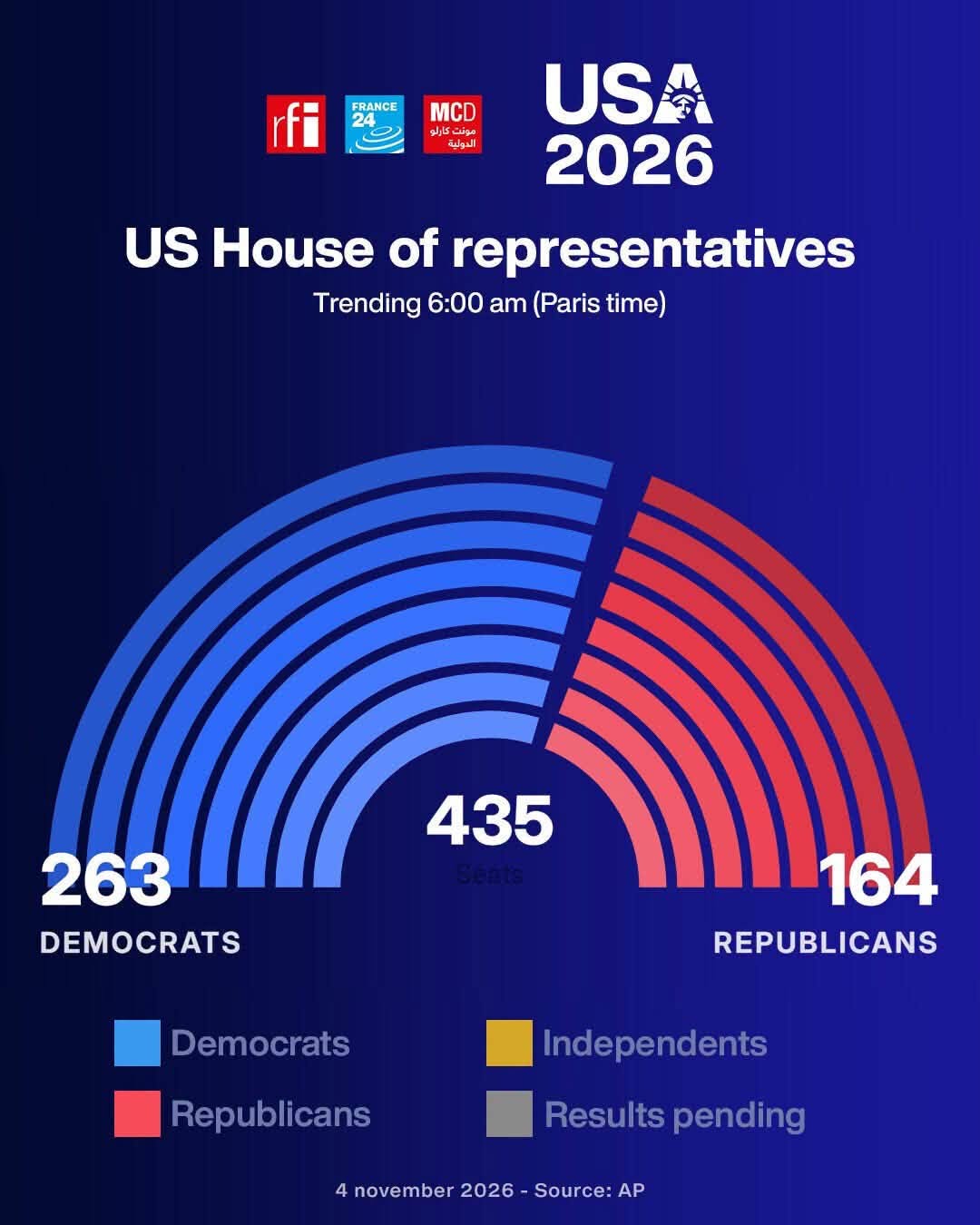
On Nov. 3, United States held its midterm election, with all 435 House seats and 35 of 100 Senate seats at stake. According to the latest projections by CNN, the Democratic party will flip control of both the House of Representatives and the Senate in a resounding and historic victory.
As of this writing, the Democrats had flipped seven Republican-held seats in the Senate, and obtained 25 pickups altogether and therefore will control both chambers of Congress. Actually, long before the elections, many experts and institutions had predicted a “blue wave,” if not “blue tsunami.”
Five factors contributed to the huge Republican loss:
Historical pattern of the “president's party curse” in midterms. According to the American Presidency Project at the University of California, from 1934 to 2022 the president’s party lost an average of 27 seats in the House and three in the Senate. From Bill Clinton to Joe Biden, four out of five presidents lost the House majority in their first midterm, with the sole exception being George W. Bush in 2002. This historical pattern provided strong support for Democratic prospects this year.
Unpopular presidents don’t always try to make the midterms a referendum on their presidencies. But this year, President Donald Trump pleaded from rally to rally that voters do just that. “Pretend I’m on the ballot, because essentially I am on the ballot,” he said, showing unwavering faith in his own star power.
However, many Republican candidates chose to distance themselves from Trump just in case his unpopularity might drag their campaigns down. As the dust began to settle, Trump appeared in an interview with Fox News and said he didn’t see the GOP losses “as a hit on me.” He even claimed on Truth Social: “I wasn't on the Ballot and if I was, we would have won in a landslide!” He refused to take any blame for the Republican Party’s disaster.
Trump's approval ratings at historic lows. Presidential approval ratings are among the most important indicators for midterm outcomes because they are typically important indicators of the incumbent party's performance. In the lead-up to the Tuesday’s elections, Trump's approval ratings were extremely low. According to the latest national poll jointly released by The New York Times and Siena College, only 36 percent of likely voters approved of Trump's performance, while 59 percent disapproved. Voters are dissatisfied with his handling of the economy, the Iran war and with high oil prices. Trump has one of the lowest approval ratings of any modern president, with individual polls ranging from the mid- to high-30s. Low approval historically virtually always presages major losses for the president’s party.
A rare foreign-policy-driven midterm. Traditionally, midterm elections are focused on domestic issues, which means local issues rather than U.S. foreign policy will be more important in voters’ minds. However, this year voters increasingly connected Trump’s trade policies and the Iran war with higher prices and economic insecurity. Thus the think tank Chatham House in the United Kingdom called the 2026 midterms a rare “foreign policy election.” Its argument was not that most voters ranked the Iran war first, but that the war and tariffs had become economically visible through inflation and living costs.
Economic figures seldom lie. The U.S. consumer price index rose 3.4 percent year-on-year in August, while real average hourly wages fell 0.3 percent year-on-year. Democrats have argued that Trump had made America unaffordable and had lost touch with the needs of voters. They have accused his administration of corruption and described the Iran war as ill-planned and unnecessary. Many exit polls showed that the cost of living remains the top concern for voters, and rising gas prices, tariffs and the ongoing war in Iran factor into their economic woes.
Structural advantage for Democrats due to shifts in voter demographics. Pew research found in early October that voters ages 18 to 29 preferred Democrats over Republicans by a two-to-one margin (51 to 23 percent). Voters 30 to 49 also tilted toward Democrats (43 to 35 percent).
The AP Voter Poll drew a similar conclusion: About 7 in 10 voters under 30 nationally said they supported the Democratic candidate in their local U.S. House race, while about 3 in 10 say they preferred the Republican. The survey suggests Republicans may have lost the ground Trump gained with Hispanic voters in 2024, as about one-third of Hispanic voters said they backed the Republican in the race. Roughly 4 in 10 voted for Trump two years ago, but about 6 in 10 Hispanic voters nationally said they voted for the Democratic candidate in the race.
About 7 in 10 Hispanic voters said Trump’s policies had worsened economic conditions in the United States. One article in The Economist said that higher price for food and fuel hit Hispanic voters particularly hard, and housing costs hit Asian voters disproportionately. However, these two groups are the most dynamic swing voters: Their combined share of the electorate is about 21 percent, but they turned against Trump in early 2025. The margin of support for Democrats has risen by 17 points among Latinos and 14 percent among Asians since 2024.
Education level is another important factor in voting behavior. Research suggested that 70 percent of college graduates, compared with 38 percent of those with a high school education or less, were thinking a lot about the election. Midterm voting typically favors better-educated, Democratic-leaning voter groups, thus providing the party with an additional structural advantage.
Republican's election rule changes failed to deliver. During Trump’s second term, the administration and much of the Republican Party pursued a coordinated set of election-related changes: documentary proof of citizenship for voter registration, tighter mail-in voting rules, aggressive maintenance of voter lists and an unprecedented mid-decade redistricting drive. The stated rationale was election integrity; the practical political objective was to reduce Democratic-leaning participation and protect the GOP’s narrow House majority.
The strategy partially succeeded at the state level, where Republican legislatures enacted restrictive voting laws and drew more maps favorable to Republicans. But at the federal level it largely failed: The SAVE Act stalled in the Senate, courts blocked central parts of Trump’s election-related executive orders, and Democratic counter-redistricting in California offset much of the Republican map advantage. By October, the redistricting “firewall” had also been eroded by Trump’s low approval, Democratic national momentum and declining Republican support among Latino voters.
According to CNN, Republicans’ redistricting efforts totally collapsed under the blue wave: The party’s gerrymandering strategy largely backfired as Democrats maintained control of at least nine of the 15 districts targeted by GOP redistricting efforts and flipped at least four seats. This demonstrated that a party can gain short-term protection through map-drawing, but it becomes more vulnerable when demographic or political change moves faster than the map.
One analyst said that it was long expected that Democrats would retake the House or even Senate majority, but the scale of their victories on Tuesday exceeded even the rosiest projections from party officials. What needs to be remembered is that just two years ago, when Trump surprisingly came back and became president again (with both popular votes and electoral votes), he believed that he had a mandate from the American people. But in less than two years, he launched attacks against the liberal agenda in nearly every field and put a significant dent in the economic, cultural, social, political and military progress of the last 50 years. People’s memories do not last long and they lack patience. When politicians don’t deliver on their promises, voters’ minds change swiftly. That’s a lesson Trump forgot, and one the Democrats now need to remember.
