
The visit of Japanese Prime Minister Sanae Takaichi to the United States showcased the internal solidarity of the alliance. But an official U.S. report warned Tokyo against escalating tensions with China.
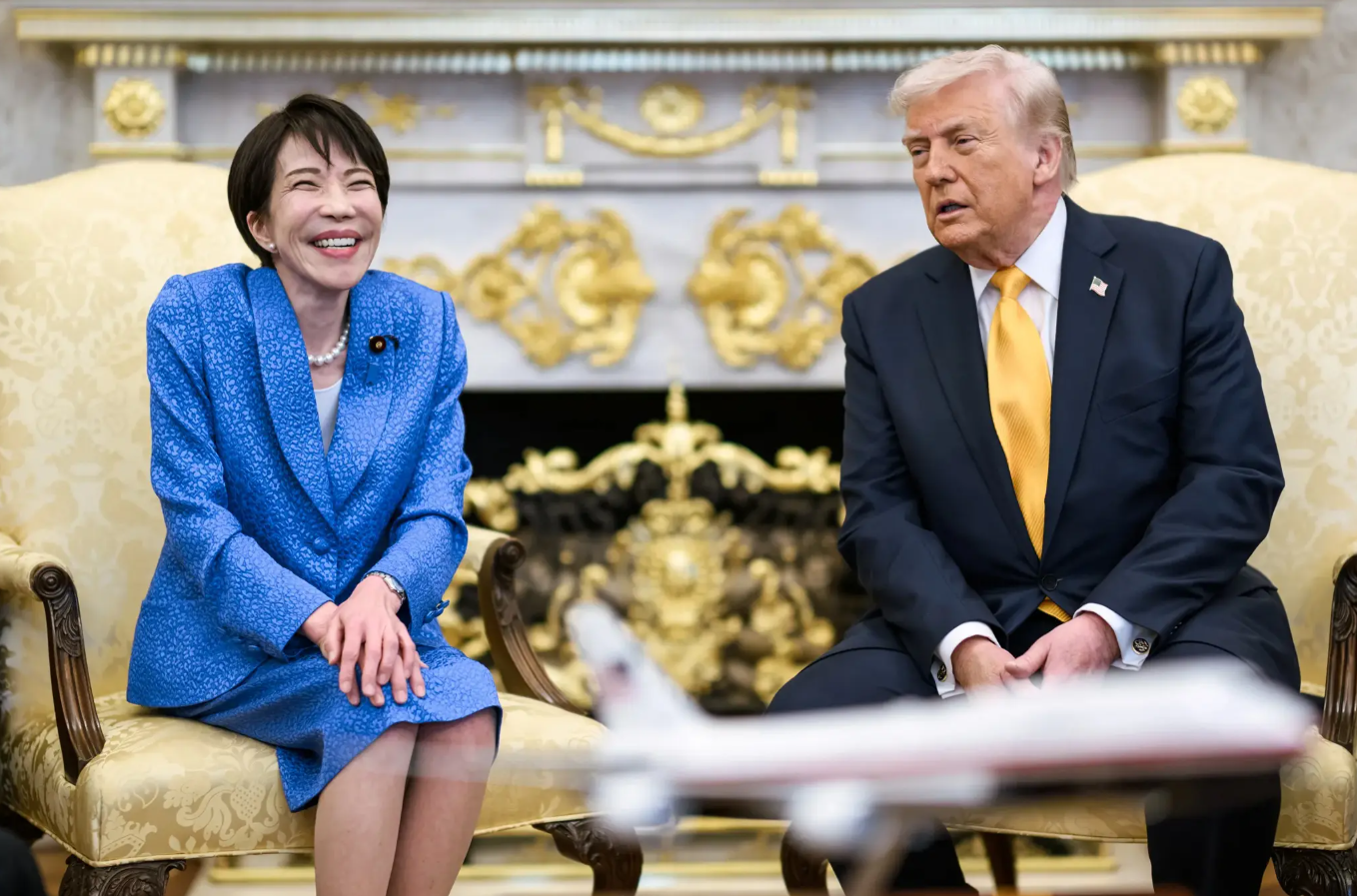
On March 19, 2026, Japanese Prime Minister Takaichi Sanae arrived in Washington DC for her summit with U.S. President Donald Trump.
Japanese Prime Minister Sanae Takaichi’s visit to the White House featured mutual praise and a conspicuous show of alliance. Takaichi declared: “Only Donald can bring peace and prosperity to the world,” while Trump welcomed the arrival of “a very special person” who had secured an election victory by numbers “that nobody’s ever seen in Japan before.”
How should this U.S.‑Japan summit be understood? In my view, it was glamorous on the surface, but substantive in its impact.
The glamourous aspect manifests in three aspects:
First, the visit was marked by a high‑level diplomatic reception protocol. Although the Japanese prime minister is not a head of state, the reception was conducted at a level equivalent to a state visit, with the White House even hosting two banquets.
Second was the notable acceleration of the typical diplomatic schedule. Takaichi’s visit took place within five months of her taking office. While there have been precedents of newly appointed Japanese prime ministers visiting the U.S. shortly after assuming office, it is highly unusual that in October 2025, just one week after Takaichi took office, Donald Trump visited Japan. Such reciprocal visits between the two nations’ leaders within less than half a year are exceedingly rare.
Third, the public messaging around the visit appeared to elevate Japan while downplaying Europe. During the meeting, Trump remarked that Japan differs from NATO and expressed confidence that it would act responsibly and make contributions. Before Takaichi secured her historic election victory with a stable majority of three-fourths of the parliamentary seats, Trump had already voiced strong support. Her U.S. visit seemed to mark another highlight in her career.
Despite of the mutual flattery in diplomatic rhetoric and the theatrics of warm embraces, Takaichi’s visit in essence amounted to a profound experience of the “Trump shock,” manifested in three dimensions:
First, the DNI’s report indirectly undermined the premise of Takaichi’s Nov. 7 remarks on Taiwan. On March 18, the same day she departed for her visit to the White House, the U.S. national intelligence office released its 2026 threat assessment. The report explicitly rejected the widely circulated claim over the past half-decade that China will attack Taiwan by 2027. It said there is currently no such plan. It also warned that should a military conflict occur, it would inflict unprecedented economic damage on China, the United States and the global economy.
In recent years, Japan’s policy moves—whether defining China as an “unprecedented strategic challenge” in national security documents, easing the Three Principles on arms exports, increasing defense spending and military capabilities or reinterpreting the right of collective self-defense—have all been justified, to a considerable extent, by the so-called China threat, particularly the narrative of a 2027 attack on Taiwan. By dismissing this claim, the U.S. government has effectively dealt a fundamental blow to the underlying premise of Takaichi’s speech in November.
Second, the U.S. has signaled reluctance to be drawn into growing China‑Japan tensions, which in effect serves as a warning to Japan. The report noted that Takaichi’s statements linked a Taiwan contingency to a crisis that would threaten Japan’s survival and suggested the possibility of Japanese military involvement. This was a significant shift by a sitting Japanese prime minister. It amounts to a clear rebuttal of Tokyo’s claim that her remarks did not alter Japan’s long-standing position on the Taiwan question.
The report also detailed some of the stringent countermeasures Beijing could make, and warned that should tensions escalate Beijing would intensify such measures. This indicates that the U.S. is unwilling to be drawn into a China‑Japan conflict that Tokyo might proactively provoke.
Third, was the sudden shift in the agenda of the meeting. Takaichi’s original plan for the visit was to place the U.S.‑Japan alliance at the center to enhance deterrence of China, specifically by seeking Trump’s explicit or implicit endorsement of her Taiwan‑related statements. However, U.S. military actions against Iran redirected the agenda toward the Middle East. Trump called on countries, including Japan, to dispatch warships to escort commercial ships in the Strait of Hormuz, thus redirecting the focus.
Before Takaichi’s visit to the United States, many international affairs experts had worried that she might face an awkward moment at the White House, similar to the “Zelenskyy moment.” In this sense, her visit was a success. Yet behind this success lay the political deterrence and diplomatic warning that the threefold Trump shock delivered to the alliance. Takaichi’s remarks on Taiwan broke with Japan’s long‑standing strategic ambiguity on the issue. With Washington continuing to maintain its own ambiguity, Takaichi’s statement clearly crossed a line. Within the alliance, Washington seeks a controllable Tokyo, not a reckless ally. Washington may reserve for itself the privilege of being unpredictable toward its allies, but it expects a high level of predictability from Japan.
In 1972, Richard Nixon did not inform Japan of the U.S. move to improve relations with China, resulting in the so-called Nixon Shock, a lasting trauma in Japanese diplomacy. Today, Japan appears to be confronting a similar predicament. For a Japan that seeks greater strategic autonomy, pursuing that objective at the expense of its relations with China will only lead to Japan’s growing marginalization within the trilateral dynamics between itself, China and the United States.
