The upcoming Trump-Xi summit may yield few concrete breakthroughs, with much about both the substance and presentation of the meeting still uncertain. Maintaining the relative stability achieved at their last meeting in Beijing may be the central outcome as the two sides navigate continuing differences over trade, rare earths, artificial intelligence and other issues.
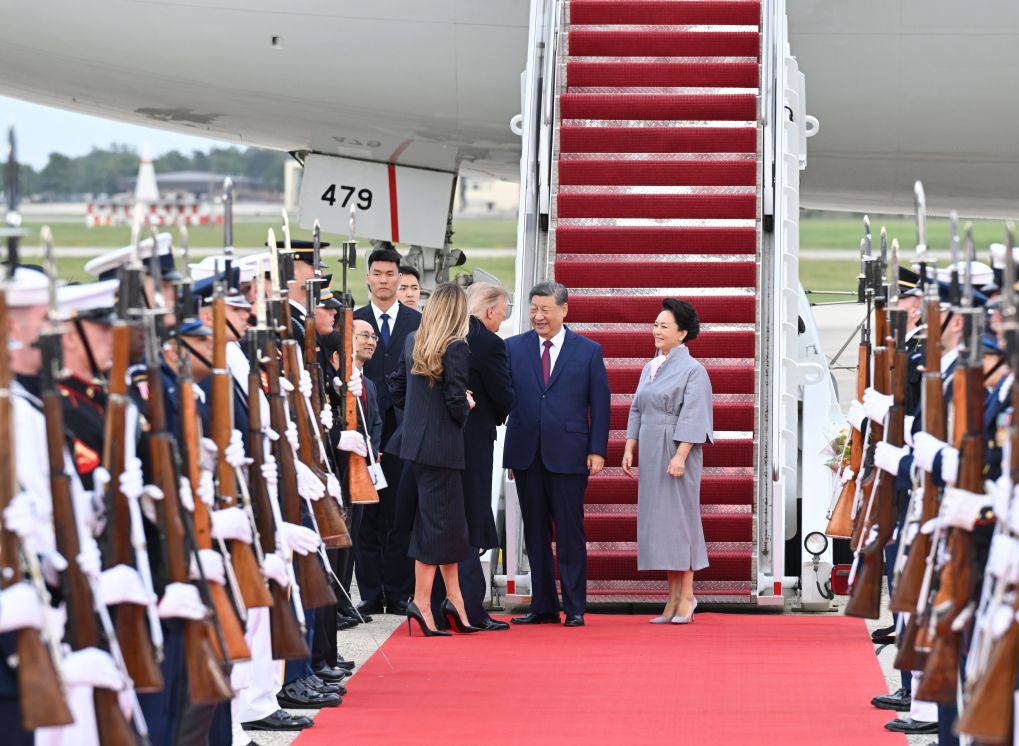
U.S. President Donald Trump treated Chinese President Xi Jinping to a rare personal airport welcome, September 23, 2026.
On September 24 Chinese leader Xi Jinping will visit the White House for the first time since 2015 (when he publicly promised President Obama in the Rose Garden that China would neither “militarize” the South China Sea nor engage in economic espionage, both of which occurred). The U.S.-China relationship has evolved considerably, and largely competitively, since then. Of course, President Xi has met several times with Presidents Trump and Biden in the interim, most recently during President Trump’s state visit to Beijing in May.
The May 2026 summit in Beijing did successfully succeed in lowering the hotly competitive temperature in the bilateral relationship, with the two leaders projecting bonhomie and proclaiming a relationship of “constructive strategic stability” (建设性的中美关系战略稳定). The May meeting was light on concrete achievements but it did achieve the stabilization both governments sought after a very rocky and tense decade. This included extending the truce in the tariff war and continuing exports of Chinese “rare earth” processed minerals that the two leaders agreed when they met in Busan, South Korea on October 30, 2025.
The central challenge (and likely outcome) of this summit is to continue to project a new normalcy in bilateral relations. Less than one week away from the summit, many details surrounding the meeting remain unclear. As was the case with the last one in Beijing, the photo optics will be carefully choreographed to capture the two leaders projecting their statesmanship—although President Xi’s appearances will be limited to the White House (whereas President Trump appeared in a variety of locations in Beijing). The reason for these limited appearances by Xi is because the White House cannot control the venues and the transportation routes the way that the Chinese government did in Beijing (and President Xi would likely be subjected to hecklers and protesters along the way). Of course, the two leaders will review an honor guard on the South Lawn, they may appear together on the Truman Balcony, and there will be a formal dinner for 100 guests in the state dining room—but where will Xi stay, what route will his motorcade take to the White House (to avoid demonstrators), where in the White House will the two sides hold their plenary meetings (likely the East Room), will Xi give a public speech, will the two presidents take unscripted questions in a press conference, will Xi visit any other American cities (Seattle?), and so on.
While these logistical questions will affect the symbolic optics of President Xi’s state visit, the substance of the visit remains similarly unpredictable. Will the two sides again formally proclaim a relationship of “constructive strategic stability” (the Chinese interpretation) or will the American side succeed in adding “on the basis of fairness and reciprocity” (as it did after the Beijing summit in May)? What specifically does “strategic” (战略) mean? The Chinese side has interpreted it to be “comprehensive” (综合) governing all aspects of the relationship, while various U.S. officials have limited the term to refer to either the diplomatic, commercial, or security components of the relationship.
While it is anticipated that the truce in tariffs on $30 billion in reciprocal imports reached in Busan and Beijing will be extended, the situation concerning China’s export restrictions on processed rare earth minerals is less clear and recent reports are that the two sides are haggling over this issue. In December 2025, Beijing proclaimed a one-year moratorium on these exports, which is due to expire this December. These critical minerals are integral to the manufacture of a wide range of technological products from laptop computers to a variety of military equipment. It is not expected that significant Chinese purchases of American goods will be announced, although this may be possible in the areas of agriculture and aerospace.
In their Beijing meetings the two sides agreed to establish a Board of Trade and Board of Investment, neither of which have made any progress since, and they identified military-military exchanges and law enforcement coordination as two areas for improvement, and again not much has occurred since. So, in these areas, perhaps there may be some forward movement coming out of this summit.
Clearly, the most major pressing issue of the day and on the bilateral agenda concerns artificial intelligence (AI). The two sides are racing for comparative advantages in developing and scaling these technologies, while U.S. public concerns about the existential dangers of AI and the outcry against AI data centers grow daily. In some ways, AI is the “low hanging fruit” for the two leaders to agree to some kind of public pronouncement—which would be welcomed worldwide.
Thus, going into the Washington summit, much remains uncertain—but experts’ expectations remain low.
Also of relevance is the international context with which other leaders enter their meetings. Xi Jinping is riding high diplomatically, its economy and society appear stable, and China seems to be a more internationally responsible actor in today’s turbulent world. To be sure, China too has its domestic problems (some structurally chronic and deep), and many nations don’t trust Beijing—but compared with Trump and the United States, Xi and China appear to be paragons of stability, responsibility, and international activism. Just in recent weeks, Xi has been globetrotting and meeting with dozens of world leaders—while Trump stays home, remains mired in his conflict with Iran, aggravating relations with European allies and Canada, refusing to offer the support for Ukraine that it needs to defend against daily Russian ballistic missile and drone attacks on civilian targets, while fretting about the upcoming midterm elections and lashing out on his social media account. Trump may not know it but he enters his meetings with Xi on the back foot, while Xi strides confidently at home and abroad.
