
For China, a prerequisite is characterizing the overall kind of relationship the two sides have before specific issues can be discussed. The United States has often taken the opposite approach, starting with results in specific areas, then expand. Now the two sides seem to be nudging closer.
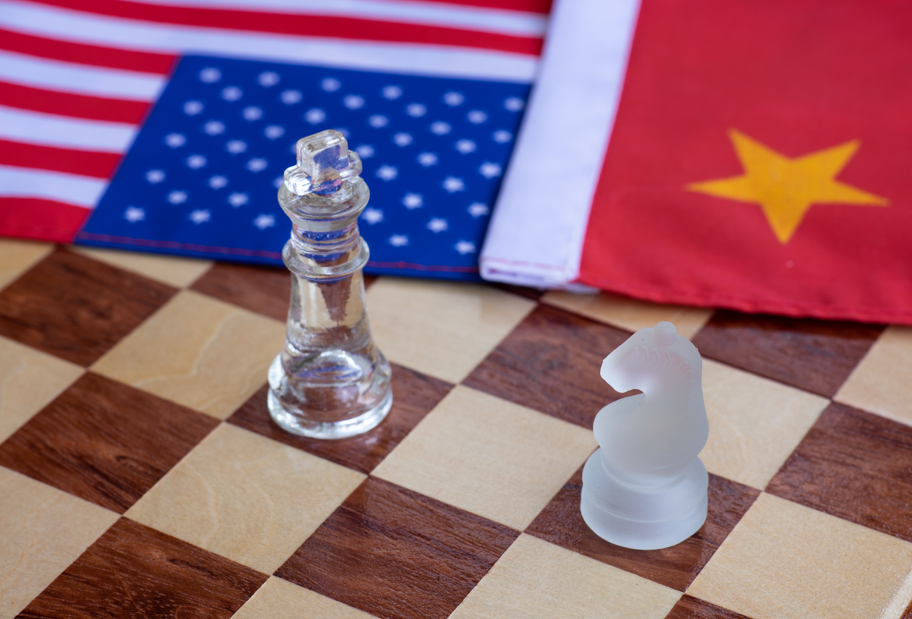
Recently, the presidents of China and the United States agreed to define the building of “a constructive relationship of strategic stability” as a new positioning for China-U.S. relations. It has sparked extensive discussion in the American strategic community.
In my exchanges with American scholars, I found that some welcome the idea, believing that stability serves the interests of both sides. But there are also skeptical voices. Some argue that the framework is essentially a strategic trap set by China for the United States and is designed to buy China more time for development. Others believe that strategic stability is a concept rooted in Cold War nuclear deterrence and should not be used to guide China-U.S. relations now. Still others question whether such a framework can endure over the long term.
These debates reflect a deeper anxiety within the American strategic community about the future direction of China-U.S. relations. Yet from a longer-term perspective, the real question is not whether constructive strategic stability is perfect, but whether, after more than a decade of friction, competition and crises, China and the United States have found a framework that better meets the needs of reality than one that is defined merely by competition.
First, it should be recognized that reaching consensus on this framework was no easy task. Over the past decade or more, China and the U.S. have experimented with different ways of defining their relationship. Since the first Trump administration, strategic competition has gradually become the dominant narrative in U.S. policy toward China. Competition does reflect part of the reality of bilateral relations, but it does not answer the more important questions: Is it appropriate to define China-U.S. relations through competition? And how should the competitive side of the relationship be managed?
Experience has shown that when competition expands into trade, technology, investment, supply chains, education, people-to-people exchanges and even ideology, emphasizing competition alone does not bring stability. Instead, it can easily increase the risks of misperception and confrontation.
The Biden administration’s framework—described as “competition, cooperation, and confrontation”—attempted to preserve room for cooperation alongside competition. But in practice, competition kept expanding while the space for cooperation was continuously squeezed. Responsibly managing competition remained more of a policy objective than a stable framework for guiding the operation of bilateral relations.
It is against this backdrop that China and the United States began searching for a new strategic positioning. Rather than seeing constructive strategic stability as an entirely new invention, it should be understood as a realistic choice formed through years of exploration by both sides.
Second, it does not accord with the facts to regard the new framework as either a unilateral victory for China or a unilateral concession by the United States. In fact, strategic stability is not an expression unique to China. It is worth noting that U.S. Secretary of State Marco Rubio had previously used the term to describe the current state of China-U.S. relations, saying that the two sides had reached a state of strategic stability. Official U.S. statements have also repeatedly used the terms “stability” and “constructive.” This suggests that stability is not a concept imposed by China on the United States but rather a consensus gradually formed through long-term interaction.
Viewed through the evolution of the concept, this in fact reflects mutual adjustment. China emphasizes “constructiveness,” while the United States stresses “reciprocity” and “fairness.” The final formulation is not the unchanged version of either side, but the result of negotiation between the two.
More important, this process reflects a convergence in the thinking of both sides. For a long time, China has tended to favor establishing a strategic position first and then promoting specific cooperation. In China’s view, relations between major countries must start with the overall kind of relationship the two sides have before specific issues can be discussed. The United States has often taken the opposite approach. Washington has long believed that the two sides should first achieve results in specific areas, accumulate trust through cooperation and then gradually form a broader strategic framework.
One important reason China-U.S. relations repeatedly fell into deadlock over the past few years was that both sides insisted on their own logic. Yet judging from a series of recent interactions, both sides have begun to moderately adjust their preferences. On one hand, China has accepted the need to achieve concrete outcomes in specific areas such as trade, investment and market access. On the other, the United States has accepted the importance of first establishing a strategic framework.
Recently, the two sides have not only discussed strategic stability but also promoted progress on specific issues such as trade, investment, supply chains and fentanyl. In the future, China and the United States may also achieve more on issues such as extending the trade truce, opening markets, strengthening investment, adjusting export control policies and encouraging people-to-people exchanges. In this sense, “constructive strategic stability” is not the result of one side prevailing over the other but the product of mutual adjustment.
Third, the concept of “strategic stability” should not be understood only through the logic of Cold War nuclear deterrence. Some American scholars argue that strategic stability can only be used to describe a relationship of mutually assured destruction between nuclear powers, and is therefore unsuitable as an overall framework for China-U.S. relations.
This understanding is too narrow. It is undeniable that strategic stability originally emerged in the field of nuclear arms control. But with the evolution of international relations, strategic stability as a guiding concept for China-U.S. relations has long gone beyond the nuclear issue itself. It now places greater emphasis on a stable strategic relationship between two major powers.
Today, the factors affecting the stability of China-U.S. relations are far from limited to nuclear weapons. The Taiwan question, technological competition, artificial intelligence, cybersecurity, supply-chain security, investment restrictions, trade and economic frictions and regional hot spot issues may all become new sources of risk. If instability arises from multiple domains, stability must also have a broader meaning.
Therefore, constructive strategic stability is not a simple transplantation of the Cold War concept of nuclear stability into contemporary China-U.S. relations. Rather, it seeks to build a broader form of stability: maintaining strategic communication, avoiding the escalation of misperceptions, preserving crisis-management mechanisms, ensuring that competition remains within manageable limits and working to create space for necessary cooperation.
Finally, when it comes to whether this framework can be sustained over the long term, perhaps the question itself is framed in the wrong way. No framework in international relations can remain effective forever. Whether it was the U.S. policy of detente during the Cold War or the engagement strategy after the Cold War, each had its own historical limitations. The real question is not whether this framework can last 10 or 20 years but whether it is better than the existing alternatives.
The experience of the past decade or so has shown that expanding competition has not generated more trust, increasing restrictions have not eliminated interdependence between the two sides and frequent crises have not strengthened strategic confidence. On the contrary, they have often created new uncertainty and increased the risk of miscalculation. Stability, therefore, is never a benefit for one side alone; it is a public good in bilateral relations.
The standard for evaluating constructive strategic stability should not be whether it can solve all problems but whether it can create a more predictable and manageable environment for the two countries. Some American commentators worry that China will use stability to buy time to develop its own strength. But if stability truly gives China room for development, it also gives the United States time to adjust its policies, enhance its competitiveness, repair its alliances and advance domestic reforms. Ultimately, the future of China-U.S. relations cannot be built on the basis of either side “defeating” the other.
For Washington, instead of dwelling on who first proposed the concept of constructive strategic stability or the question of whether it is a strategic trap set by China for the United States, it would be more useful to think seriously about how to make use of this hard-won window of stability to promote more concrete outcomes and build more mechanisms. After all, the value of any strategic framework lies not in the concept itself, but in whether it can create a more stable, predictable and constructive future for relations between the two countries.
