
The meeting of two presidents created a certain degree of stability and opened up possibilities for cooperation, but China-U.S. relations remain fundamentally fragile. Nudging the relationship in a constructive direction will require that both countries continue in good faith.
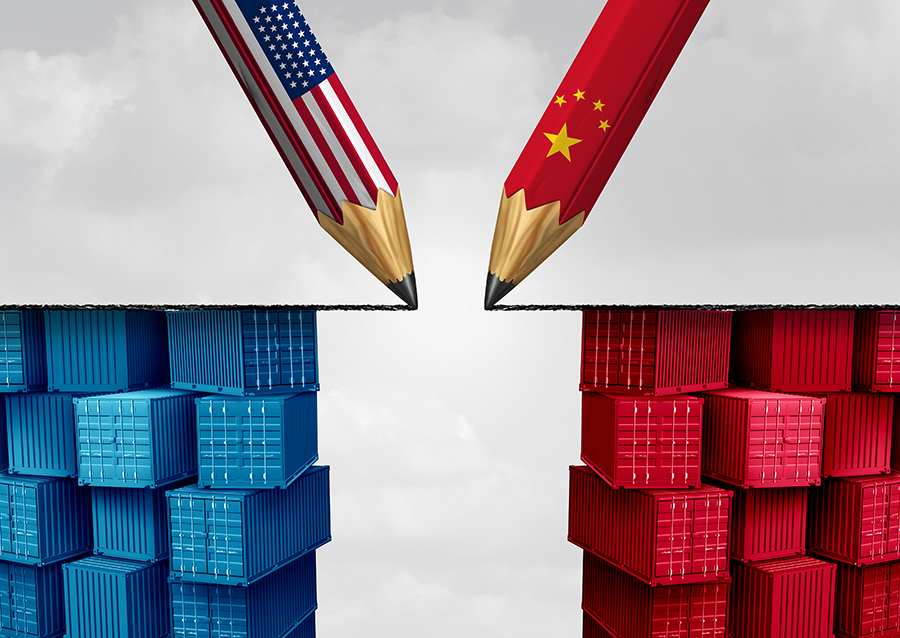
The summit held in Beijing by the leaders of China and the United States attracted global attention. Yet the outcome left many observers disappointed: There was no comprehensive trade agreement, no joint communique, no progress on the Taiwan question and no coordinated action to promote a cease-fire in Iran. How, then, should this summit be assessed? What historical significance should be attributed to it? And how might it shape the trajectory of China-U.S. relations?
Evaluating the summit
Two contrasting views have emerged regarding the recent China-U.S. summit. One regards it as highly successful, while the other sees it as the opposite.
Those who see success highlight the following points:
First, the two sides reached a strategic consensus. They agreed to build a relationship of “constructive China-U.S. relationship of strategic stability.” It is rare for Washington to explicitly accept a Chinese proposal regarding the direction of bilateral relations. This sets the tone for the relationship in the coming years, which is expected to be marked by “healthy competition, stable interaction, and mutual benefit.”
Second, progress was achieved in economic and trade cooperation. The two sides reached some commercial agreements regarding China’s purchase of American agricultural products, civil aviation aircraft and crude oil and the United States pledge to provide China with civilian aircraft components and engines, helpful to stabilize expectations surrounding bilateral economic and trade ties.
Third, breakthroughs were made in bilateral economic and trade management. The two countries agreed to establish trade and investment councils to deal with routine bilateral trade and investment issues, which could help prevent the escalation of frictions and promote cooperation.
Fourth, people-to-people exchanges were once again high on the agenda. Both sides agreed to promote and deepen exchanges in areas such as education, tourism and local-level cooperation, thereby strengthening the social foundation of bilateral relations.
Fifth, the two sides expressed willingness to cooperate on international issues. They expressed willingness to strengthen communication and cooperation on a wide range of issues, including promoting a cease-fire between Russia and Ukraine, work toward reopening the Strait of Hormuz, preventing proliferation of weapons of mass destruction and managing the risks associated with artificial intelligence.
Sixth, the atmosphere of the summit was cordial. Public remarks by the two leaders were friendly and positive, clearly expressing a willingness to manage differences, seek stability and promote cooperation, something relatively rare in recent years of official bilateral interactions.
Seventh, both sides confirmed that the two leaders would commit to three additional high-level exchanges within the year, including a state visit to the United States by President Xi Jinping in September at the invitation of the U.S. side. This provides a political foundation for the stable development of bilateral relations.
In short, supporters of the “successful” view believe that the summit consolidated the recent trend toward stabilization and pointed the way forward for the development of China-U.S. relations over the coming years.
On the other hand, those who view the summit as unsuccessful point to a different set of facts.
First, no comprehensive trade agreement was reached.
Second, no joint communique was issued after the summit, suggesting that major differences on some fundamental issues persist.
Third, U.S. concessions fell short of Chinese expectations. Contrary to what many Chinese observers had hoped, the United States made no substantive concessions on the Taiwan question. Phrases such as US “not supporting Taiwan independence,” “opposing Taiwan independence” or “supporting China’s peaceful reunification” did not appear, nor was there any US commitment to reduce arms sales to Taiwan.
Fourth, Chinese purchase orders also fell short of U.S. expectations. China’s purchases of American agricultural products did not significantly exceed previous levels, and China agreed to purchase only 200 Boeing aircraft rather than the 500 previously rumored.
Finally, U.S. restrictions on high-tech exports to China remained unchanged.
All things considered, however, the summit was still a success. The disappointment felt by some observers stems from the unrealistic expectation that a single summit could resolve all structural problems between the two countries. Such expectations themselves are detached from reality.
Any accurate assessment of the summit must take into account the broader context in which it occurred. After years of tensions and confrontation, China-U.S. relations have become saturated with suspicion and hostility, and taking a tough stance toward the other side had become the dominant approach in bilateral dealings. After Donald Trump returned to the White House, the two countries even engaged in an intense tariff war. Despite some recent signs of stabilization, frictions and uncertainties remain substantial.
It was against this backdrop that the summit achieved positive results outlined in the previous passages and laid a foundation for stabilizing bilateral relations over the coming years—that is, during the remainder of the Trump administration. It created the possibility that China-U.S. relations could shift from comprehensive confrontation toward dispute management and cooperation promotion. This in itself is a remarkable achievement.
Historical significance
The historical significance of the summit is also widely discussed. Some believe that, as the summit marked the first visit to China by a U.S. president in nine years, it reversed the downward trajectory of bilateral relations and even signaled the possibility of a “G2” arrangement to manage world affairs. In this view, the summit’s significance is comparable to that of Richard Nixon’s historic visit to China.
A closer analysis, however, suggests that such an assessment may be overstated. Nixon’s visit to China broke through more than two decades of isolation between the two countries and opened an entirely new era in the development of bilateral relations. By comparison, although the recent summit helped stabilize China-U.S. relations, it did not fundamentally alter the long-term trajectory of the relationship. Therefore, it is not appropriate to say the meeting was historic on the level of Nixon’s visit.
Looking ahead
Although the summit has helped stabilize bilateral relations, China-U.S. relations will remain beset with multiple challenges in the future, and overall prospects remain far from optimistic because of a range of major challenges.
First, structural contradictions remain acute. The United States still harbors deep anxiety and concern over China’s rise. As China rapidly catches up in areas such as advanced manufacturing and high technology, and as the gap in national strength narrows, such anxiety is likely to intensify further in the United States.
Against this backdrop, Washington will likely further increase high-tech export controls and supply chain security measures. In response, China is likely to accelerate indigenous innovation and consolidate its own advantages. Consequently, tensions and frictions in these areas are likely to persist and even worsen.
Second, cooperation remains extremely difficult. After a prolonged period of confrontation, the two sides now suffer from a profound trust deficit. Under the circumstances, even cooperation on issues where both countries share common interests will face considerable domestic resistance and significant implementation difficulties.
Finally, the domestic political atmosphere in the United States remains highly unfavorable. A tough stance toward China remains the prevailing consensus in Washington and there is limited support for Trump’s relatively pragmatic China policy in the policy circles. Consequently, certain individuals within the government are likely to undertake measures to undermine bilateral cooperation.
Meanwhile, Congress will likely introduce more anti-China bills and resolutions. Frictions between China and some U.S. allies may also place additional strain on the bilateral relationship as in the case of recent China-Japan conflict over Japanese Prime Minister’s provocative remarks on Taiwan. Finally, as long as U.S. overall objective strategic competition with China remains unchanged, bureaucracies will introduce policies to implement the goal, policies China will interpret as confrontational, thereby undermining the stability of relations.
In sum, the summit has indeed created a certain degree of stability and opened up possibilities for cooperation, but China-U.S. relations remain fundamentally fragile. Nudging the relationship in a constructive, stable and sustainable direction requires the leaders of both countries to continue managing bilateral ties from a strategic perspective. It also requires greater efforts, both inside and outside the two governments, to implement consensus, manage differences and build mutual trust. The road ahead remains long. Only by moving toward each other can the two countries ensure steady and lasting progress.
