
After one month of hostilities and no exit plans, the lethal costs of the U.S.-Israel joint war against Iran are global. How will the crisis reverberate against the backdrop of elevated U.S.-China relations?
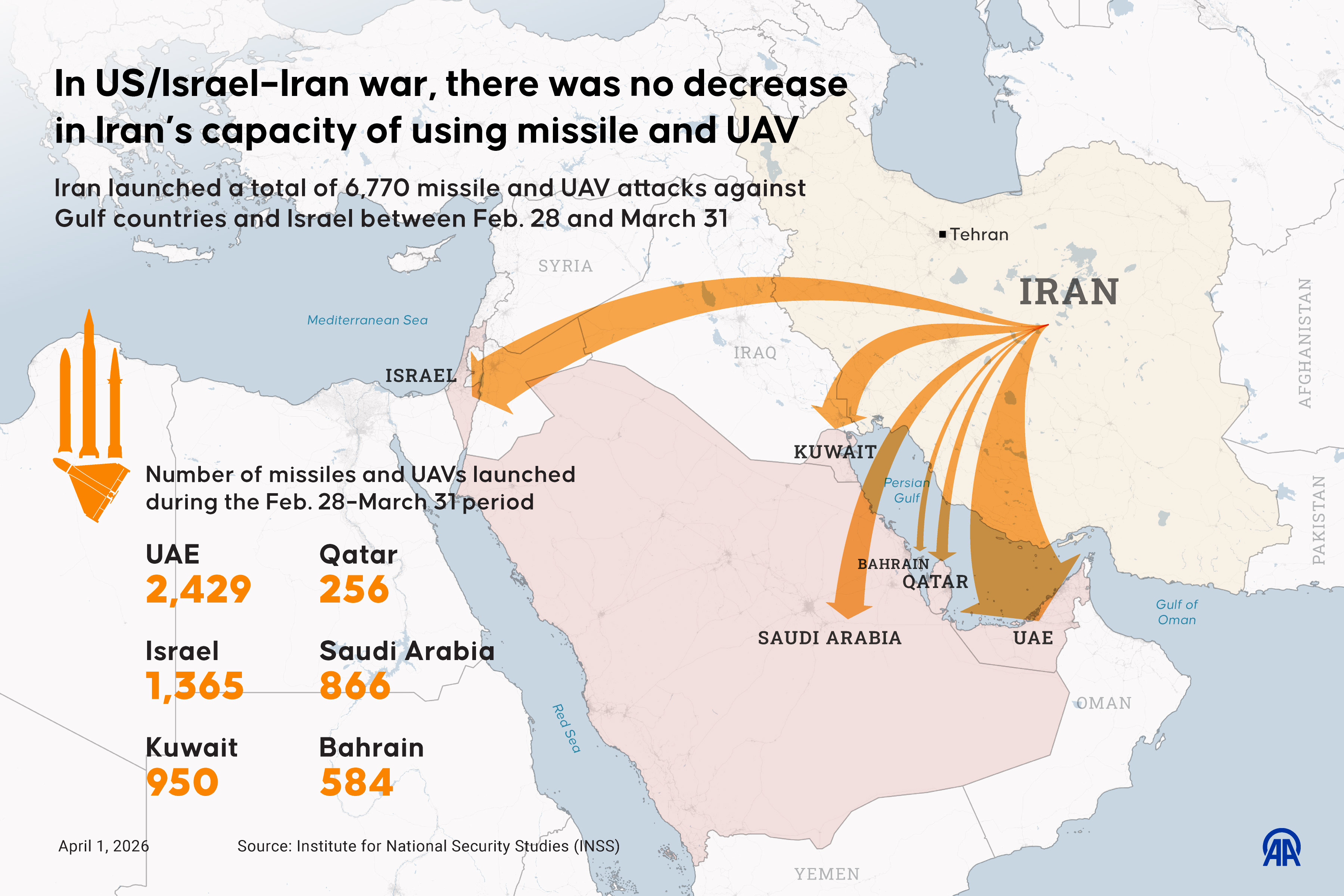
Graphics: Anadolu Agency (AA)
Originally set for March, the high-stakes summit between U.S. President Donald Trump and Chinese President Xi Jinping was postponed for about "five or six weeks," due to the U.S. focus on military operations in Iran.
The delay suggests that the Trump administration grossly underestimated Iran's resilience.
The summit will take place under the shadow of the worst energy crisis since the 1970s.
U.S.-China stakes in the crisis
The crisis itself illustrates the differential stakes the two major powers have in the outcome. U.S. military exposure is high, due to its military bases and fleets in the Gulf, whereas China's armed presence is minimal. As a result, the U.S. strategic position is militarily stretched, whereas China's is economically exposed.
Furthermore, U.S. energy vulnerability is low, thanks to its domestic production. By contrast, China's energy exposure is high, due to its import dependency. Accordingly, the U.S. is only moderately exposed to an adverse economic impact in the Gulf, whereas in China that effect will be more substantial.
Even if the Trump administration's initial “decapitation” strike succeeded tactically, as its proponents argue, it has failed strategically. The Iranian leadership remains intact and the command dispersed.
After one month of the unwarranted war, the U.S. enjoys escalation dominance, but it has been stalemated. US and Israel have air superiority, yet Iran retains strategic denial via missiles, proxies, and Hormuz leverage.
Unwarranted devastation
The crisis has spread across the region and beyond. It has caused a severe disruption to global oil flows, threatening 20% of global consumption — some 20 million barrels per day — that typically passes through Hormuz. Over 94% of normal traffic through Hormuz collapsed already in mid-March.
In one of the largest energy shocks since the 1970s, oil has soared by more than 50%, up to $110-120, with supply down by 11 mb/d (million barrels per day). The global system has suffered a highly adverse impact with airspace closures, rerouted shipping, and data infrastructure hits.
In Iran alone, some 1,900-3,500 people have been killed, with up to 17,000-20,000 wounded. The U.S.-Israel strikes have caused widespread damage, with more than 90,000 civilian installations hit, including schools, hospitals, and residential buildings.
Over 3.2 million people are internally displaced in Iran, primarily fleeing major urban centers. In Lebanon, that figure is over 1-1.2 million; that's every fifth or sixth Lebanese.
A Two-Month War Scenario
At the end of March, the White House assessed that a mission to pry open Hormuz would push the conflict beyond his timeline of 4-6 weeks. As a result, President Trump reportedly told his aides that he’s willing to end the war without reopening the chokepoint. Let’s presume the report is not fake news and the war will continue toward the end of April.
From the military perspective, the U.S. continues its air and missile war, even if the naval campaign to reopen Hormuz may or may not intensify. Limited ground and Marine deployments may or may not occur. If Americans engage, Houthis in Yemen and Iraqi militias join in the conflict.
Despite Trump's repeated "mission accomplished" claims, there is no decisive victory. Gradual attrition prevails as Iran's infrastructure continues to be degraded.
War fatigue rises in Israel, where anti-government demonstrations escalate. Iranian missile barrages have depleted Israel's stockpile of high-end interceptors, forcing a shift toward rationing and relying on less capable systems.
In the U.S., the Pentagon continues to downplay the costly toll of Iranian missiles, even though by late March many of the 13 military bases in the region used by U.S. troops were ”all but uninhabitable.”
Oil price stabilizes around $120–150, but remains volatile. The supply disruption is persistent.
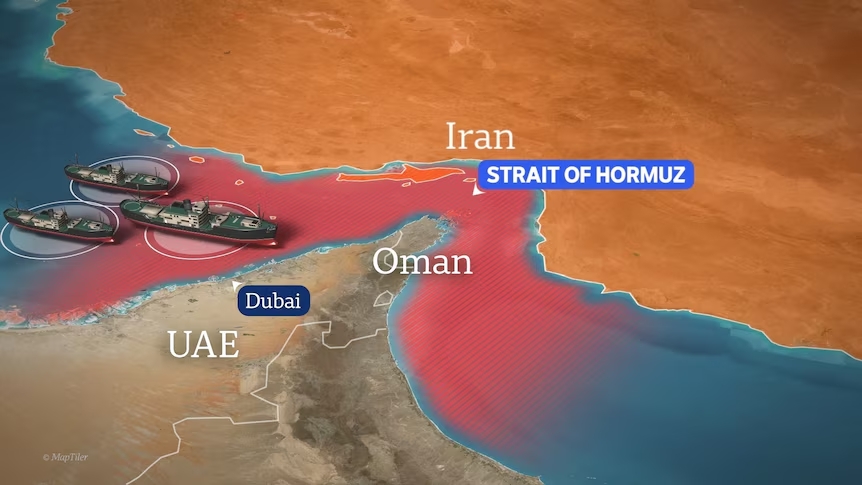
Strait of Hormuz
Spillovers changing the region
After one month of hostilities, every country in the primary battlefield — Iran, Lebanon, Syria, Iraq and Israel — is likely to suffer an adverse GDP impact of up to -6 to -30%.
In most Gulf states, that impact is already at -3 to -12%, which threatens to defer the ambitious modernization projects in the region for years.
In the proximate Middle East, most economies, including Egypt, Turkey and Jordan, are taking hits of -2 to -6%. When such negative shocks come after two years of regional stabilization by Israel with U.S. support, it leaves these countries vulnerable.
By the end of April, the regional impact is likely to amount to -4% to -7%. Add another month and it will climb to -6% to -12%. Gulf economies alone could see a plunge of −5% to −15% in severe scenarios.
Some are indirectly affected via an inflation shock (Morocco, Tunisia). Big Gulf actors like Saudi Arabia, UAE and Qatar benefit from price gains, but suffer from disruption.
Several economies - Iraq, Jordan, Gulf states - cope with high stress, due to fiscal strains and security pressures.
Only low-exposure gas exporters like Algeria benefit in the short-term, but no regional state is immune to rising fiscal pressures and geopolitical risks.
If hostilities prove extended, Lebanon and Yemen will teeter at the edge of state or infrastructure breakdown. The same goes for Iran, as long as the White House mistakes PM Netanyahu's ambitions with U.S. national security.
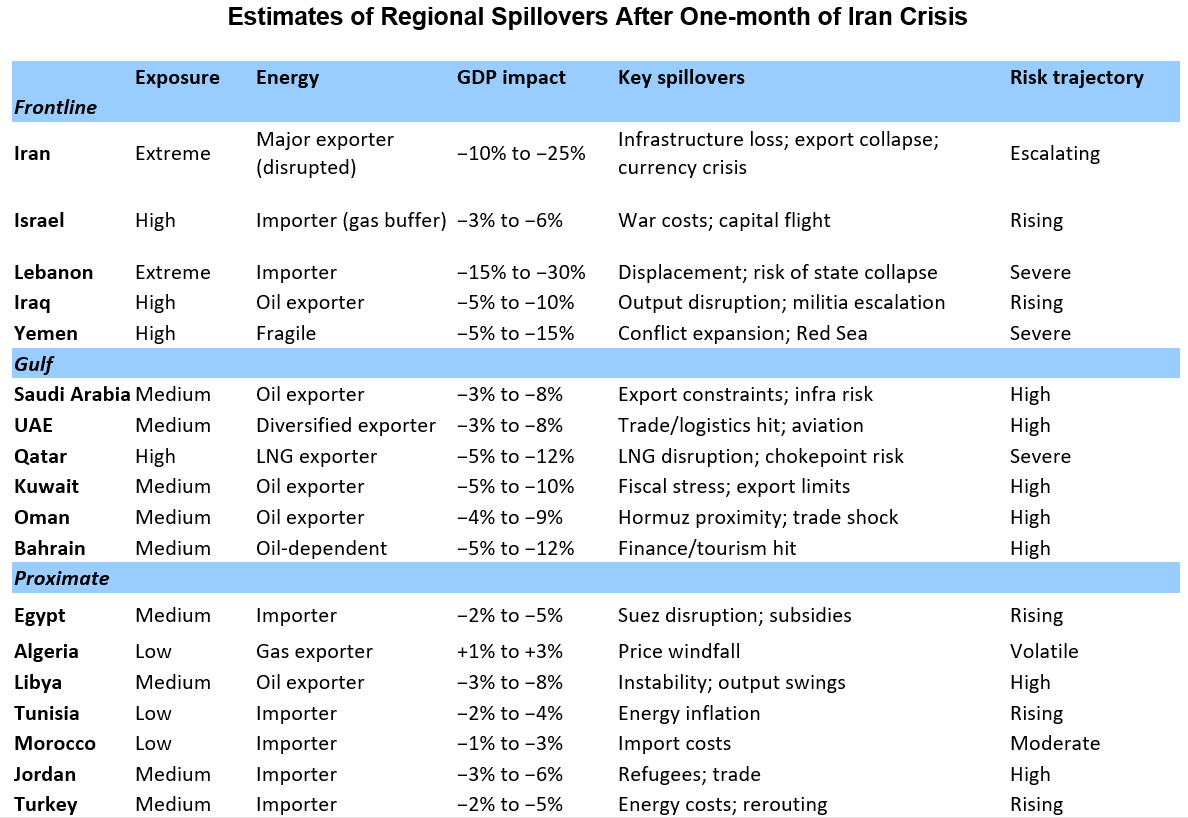
The key determinants of the regional spillover feature direct exposure (military strikes/proximity), energy exposure (oil/gas export/import sensitivity), the 2026 GDP impact (estimated range under current conditions) and risk trajectory (direction if war persists).
Strategic options and priorities
The Trump White House is burning almost $1 billion daily in the war. Critics argue that the first month of spending totals close to $37 billion. The administration is seeking $200 billion supplemental funding from the Congress. By contrast, China avoids war costs but must absorb energy and trade shock.
In a two-month war the U.S. pays in strategy (overextension), whereas China pays in economics (energy shock).
What about the next four weeks?
In terms of its strategic options, the U.S. seeks to keep Hormuz partially open. It could release some of its stockpile of crude oil to mitigate economic shocks. It can push non-MENA supply (U.S. shale, Atlantic basin). In the short term, it can tolerate high prices to avoid deeper entanglement.
China, too, can draw down reserves. It can also secure long-term contracts (Russia, Central Asia). It could quietly buy discounted Iranian barrels. And it can engage in limited escort and diplomacy to stabilize energy flows.
Regarding their respective postures in the Middle East, the U.S. is likely to persist in what it calls controlled escalation. China will stress its role as a non-military actor. It will focus on diplomacy and economic ties. It will position as a mediator and avoid security commitments.
Washington’s priority is — or at least should be — not to get trapped in MENA. By contrast, China's priority is to let the U.S. absorb the security costs, while avoiding sanctions and escalation in bilateral relations.
What if regional war lingers
If diplomacy fails, regional war emerges as an alternative scenario, as hostilities escalate from Iran and Lebanon to Gulf, Iraq, Yemen, even beyond. A sustained closure of Hormuz would amplify the supply shock undermining global prospects.
The number of deaths doubles, regional displacement exceeds five million. Brent oil climbs to $120-150, even $150-200 in the worst scenarios. If infrastructure is damaged, far greater losses loom ahead.
Some analysts declare it's the 1970s déjà vu all over again. They are wrong. Since the global economy is today more integrated, the negative ramifications will reverberate worldwide, not just regionally. Even in the most benign scenario, the world economy will pay a hefty price, through the prolonged high-cost equilibrium.
The Iran crisis has exposed the region’s structural contradictions. On the one hand, the Gulf is an energy superpower (40% global gas reserves). But it is also a highly fragile, chokepoint-dependent system. In this delicate equilibrium, Hormuz holds systemic leverage because it controls both oil exports (Gulf states, Iraq, Iran) and liquefied natural gas (Qatar).
The lesson is simple but harsh: With energy disruption everyone loses, as the region morphs from an energy exporter hub to a geopolitical shock epicenter.
