
Dear Focus Reader,
U.S. Secretary of State Marco Rubio and Chinese Foreign Minister Wang Yi held a call yesterday ahead of the potential summit between Presidents Donald Trump and Xi Jinping later this month. During the call, Wang said Taiwan remains the "greatest risk" to U.S.-China relations, and reiterated that Beijing opposes any form of external support for the island.
He urged the U.S. to "handle the Taiwan issue with prudence" and avoid actions that could escalate tensions. Washington, in turn, emphasized the importance of maintaining stability in the Taiwan Strait and reiterated its longstanding position on cross-strait peace and security.
The call comes amid continued U.S. engagement with Taiwan, including ongoing arms sales, security assistance, and expanded training cooperation. At the same time, China has sustained military pressure on the island through regular air and naval activity near the island, including incursions into Taiwan's air defense identification zone and patrols in the Taiwan Strait.
Meanwhile, Washington and Beijing also traded public criticism this week following developments related to Panama Canal-linked port infrastructure. U.S. officials raised concerns about Chinese involvement in port operations tied to the canal and issued a joint statement with a group of regional partners, including Bolivia, Costa Rica, Guyana, Paraguay, and Trinidad and Tobago, criticizing the developments as a "blatant attempt to politicize maritime trade" and raising concerns about the neutrality of a key global shipping route.
Chinese officials responded separately, rejecting the characterization and accusing the United States of "hypocrisy," while opposing what they described as interference in other countries' internal affairs.
Learn more on international relations by exploring our latest Focus content, including topics on India's global strategy, tariffs, and more.
The percentage of Southeast Asian respondents who expressed concern that U.S.-China great power competition is destabilizing the region, according to the State of Southeast Asia: 2026 Survey Report.
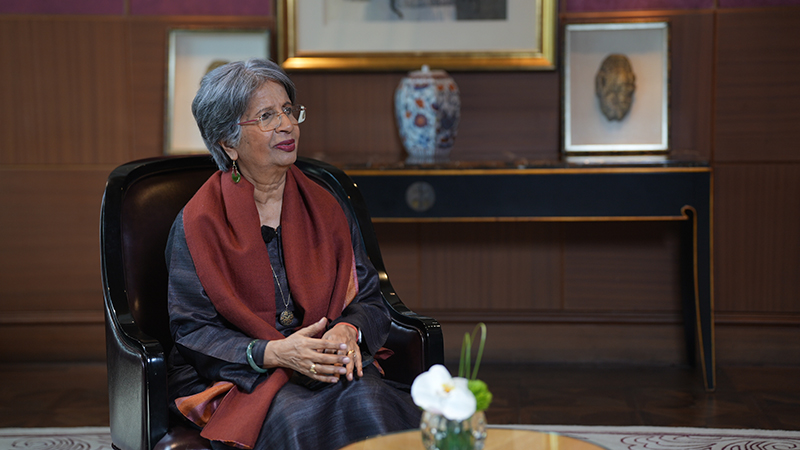
Learn more in "Southeast Asia Seeks Stability Amid Uncertainty," by Du Lan, Deputy Director at Asia-Pacific Institute, China Institute of International Studies
The DNA of Hong Kong | Art Dialogue
Watch VideoHow will Hong Kong shape the future of global art? At the 3rd U.S.-China Art Dialogue, cultural leaders examined how Hong Kong navigates the balance between local identity and global influence.
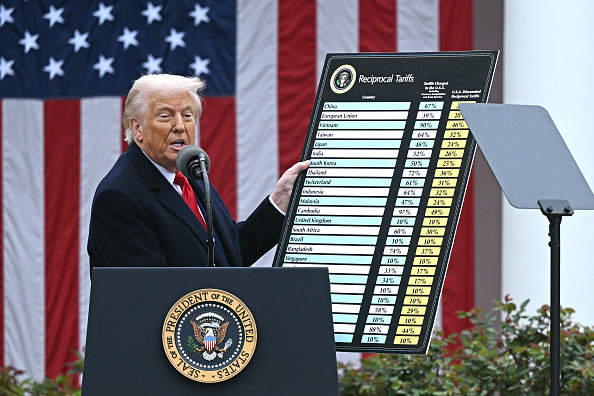
In our Focus Insights section, we featured an article by Sebastian Contin Trillo-Figueroa, Geopolitics Analyst in EU-Asia Relations, on how Trump's "Liberation Day" tariffs reshaped global trade dynamics, weakened U.S. alliances, and shifted strategic competition toward supply chains and critical materials.
We want to hear from you!
Have tariffs become an ineffective tool of economic statecraft in an era where control over supply chains and critical inputs defines global power?
Submit your thoughts to USeditor@chinausfocus.com for a chance to be featured in next week's Focus This Week.
useditor@chinausfocus.com for more info.
Powered by
Prepared by China-US Focus editorial teams in Hong Kong and New York, this weekly newsletter offers you snap shots of latest trends and developments emerging from China and the U.S. every week. It is a community space to exchange thoughts and ideas about the China-U.S. relationship and beyond.
- 2026-04-24 Focus This Week: Under Pressure
- 2026-04-17 Focus This Week: China’s Diplomatic Push
- 2026-04-10 Focus This Week: Uneasy Peace
- 2026-03-27 Focus This Week: Beijing Bound
- 2026-03-13 Focus This Week: Targeting Stability
- 2026-03-06 Focus This Week: Tehran Tensions
- 2026-02-27 Focus This Week: Tariff Turnaround
- 2026-02-13 Focus This Week: A Critical Period
- 2026-02-06 Focus This Week: The Telephone Hour
- 2026-01-30 Focus This Week: Balancing Acts
- 2026-01-23 Focus This Week: Delicate Equilibrium
- 2026-01-16 Focus This Week: Trade Winds
- 2026-01-09 Focus This Week: Sovereignty at Stake
- 2025-12-19 Focus This Week: Between the Lines
- 2025-12-12 Focus This Week: Strategic Realignments
- 2025-12-05 Focus This Week: Cooperation on Track
