
Li Zheng, Assistant Research Processor, China Institutes of Contemporary International Relations
Sep 07, 2026
The two countries need to establish their Zeus’s Law, preventing strategic rivalry from escalating without limit and avoiding the idea that undermining the other side’s sense of security can somehow serve as a source of one’s own security.

James Chau, President, China-United States Exchange Foundation
Jul 22, 2026
This has been an extraordinary summer of sports: from the Knicks to Wimbledon, and Spain’s win over Argentina at the World Cup. More than just a series of separate experiences, this festival of games has reminded me that rules and fair play are what make sport an arena of governed joy—and a spirit we might adopt as we re‑think U.S.–China relations.
Zha Daojiong, Professor, Peking University
Jul 06, 2026
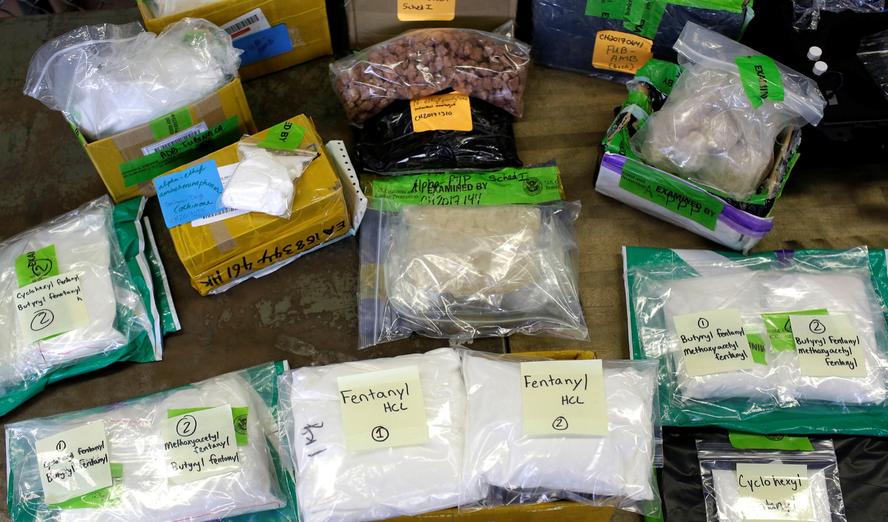
Although the issue was absent from the headline highlights of the May 2026 U.S.-China summit, commitment to fentanyl cooperation may prove one of the most substantive areas of action under their agreed framework of “constructive strategic stability”. U.S. readouts from the summit recognise “progress in ending the flow of fentanyl precursors into the U.S.”, reflecting satisfaction with the implementation of an agreement reached at the November 2025 summit in Busan, South Korea. The bolstered cooperation between the two great powers will have a significant impact on drug control in Southeast Asia.
May 04, 2026
Sun Chenghao, Fellow, Center for International Security and Strategy of Tsinghua University; Munich Young Leader 2025
Li Yijie, PhD candidate in International Relations, Tsinghua University’s School of Social Sciences
Mar 29, 2026
What matters most for China is not whether the United States is in decline but how to understand a country that seeks to shape history while being no longer willing to bear the costs under the old rules. The United States today stands at a historic crossroads. To understand, one must begin with this fundamental reality.

Ted Galen Carpenter, Senior Fellow, Randolph Bourne Institute
Sep 26, 2025
The conduct of the Trump administration seems to show that traditional methods of keeping up appearances of cordial relations are no longer in the playbook, threatening U.S. hegemony by sabotaging its own image.
Chen Jimin, Guest Researcher, Center for Peace and Development Studies, China Association for International Friendly Contact
Apr 15, 2021
U.S. core national interests are defined by the new administration as safeguarding American strength, promoting power sharing to U.S. advantage and upholding a stable and open international system.
Philip Cunningham, Independent Scholar
Mar 26, 2021
Large gaps between ambassador appointments can cause significant challenges for the next diplomat. As the next U.S. ambassador sent to Beijing is determined, they should look to past successes like James Lilley to understand how to engage with China.
Tao Wenzhao, Honorary Member of the Chinese Academy of Social Sciences; Fellow, CASS Institute of American Studies
Mar 25, 2021
China-U.S. relations will not continue down the path of the Trump regime, nor will they return to the ways of Obama. Instead, the relationship will enter a long-term phase of competitive co-existence characterized by mutual dependence, where common interests will present opportunities for collaboration.
Back to Top

- China-US Focus builds trust and understanding between the U.S. and China through open dialogue among thought leaders.