Trump’s trip to China signals the start of a new trade relationship, anchored in good economic fundamentals that are solid, stable and sustainable. Both countries stand to benefit, as does the rest of the world in terms of peace and prosperity.
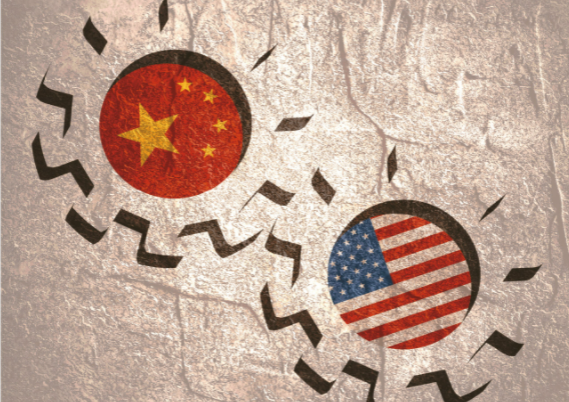
The successful China trip by U.S. President Donald Trump has been hailed not only in China and the United States, but also by the world over. The key achievement was the new strategic relationship between the world’s two most important economies—a constructive China-U.S. relationship of strategic stability.
Over the past decade, China has worked hard with the the United States to form a new type of big country relationship, one of non-conflict, non-confrontation, mutual respect and peaceful coexistence. Washington, on the other hand, has positioned China as its largest competitor and rival, and at times, as the world’s greatest geopolitical threat.
The new relationship is defined as constructive, with cooperation as the mainstay. It is a healthy stability, including competition within proper limits. It is a kind of stability in which differences can be managed and peace can be expected. As both President Xi Jinping and Trump have set the tone, the next three years or more will witness a stable bilateral relationship, with growing cooperation and effective management of differences. Xi said this year, 2026, will be a historic landmark year.
As ballast supporting this new relationship, China and the United States have promised some deliverables. They agreed to advance pragmatic cooperation and maintain the hard-won momentum in bilateral ties, China’s Ministry of Commerce said on Saturday, noting that the two sides have reached preliminary consensus in several areas, including to continue implementing the outcomes reached in previous consultations, and they also formed a positive consensus on relevant tariff arrangements.
In addition, they agreed to establish a board of trade and a board of investment to address concerns in those realms. Through the board of trade, they will discuss tariff reductions on certain products and in principle agreed to lower tariffs on products of mutual concern on an equivalent scale. They will substantially advance the resolution of some non-tariff barriers and market access issues involving agricultural products. Arrangements were also reached on China's procurement of aircraft from the U.S., with the U.S. supplying aircraft engines and parts to China.
Major challenges
While all this is well-begun, both China and the United States are facing major challenges, with hard work ahead.
First, it is imperative to check the free fall of bilateral trade that was largely caused by tariffs and other trade restrictions. Since the beginning of 2025, when Washington launched its tariff war and imposed rules governing specific products, two-way trade experienced an unprecedented setback.
According to the U.S. Department of Commerce, during Q1 this year, U.S. imports from China had plummeted by 40.7 percent year-on-year, to $60.9 billion, just 7.5 percent of total U.S. imports. During the same period, Mexico, Vietnam and Taiwan saw exports to the U.S. rise by 5.1 percent, 40.8 percent and 97.9 percent, respectively. Taiwan displaced the Chinese mainland as the third-largest exporter to the United States. Compared with Q1 2022, total U.S. imports were up by 5.1 percent. The mainland’s share in total U.S. imports fell from 17.7 percent to 7.5 percent, with 10.2 percentage points lost. During the same period, Mexico, Taiwan and Vietnam combined added 11.8 percentage points. Hence, with the mainland’s trade flow restricted, U.S. imports globally continued to grow via a shift of supply chains from China to Mexico and parts of East Asia.
Similarly, Chinese customs data show that during the during the January-April period this year, the mainland’s exports to the U.S. fell by 10.2 percent, yet grew 14.5 percent worldwide, with fast export growth to EU (up 19.0 percent), ASEAN (up 19.1 percent) RCEP partners (up 17.9 percent) and Belt and Road countries (up 16.0 percent). A different supply chain shift appeared, changing from the U.S. to the European Union and RCEP countries, China’s global export growth actually accelerated.
A mirror of this supply chain shift also appeared in U.S. exports to China. According to China customs, during the January-April period this year, Chinese imports from RCEP partners (ASEAN 10 plus Japan, South Korea, Australia and New Zealand) were up 30.3 percent, accounting for 36.0 percent of total imports to China, while the U.S. share fell to a meager 4.6 percent. Hence, the United States is no longer an important supplier for China.
In short, the fast-weakening interdependence has reduced the market needs for each other’s products. For instance, Boeing aircraft, American soybeans and oil are not greatly needed by China, as alternate resources are available. The 200 Boeing aircraft deal is still at an initial stage, compared with the firm 300 Boeing aircraft agreement during Trump’s first China trip in 2017. The soybean deal is still pending, as China has plenty from Brazil.
Hard work ahead
To restore bilateral trade and repair the supply chain, both sides should resolutely say no to all destructive measures—tariffs first of all. The newly created board of trade needs to work toward a total scrapping of unilateral duties. As the 301 and 232 tariff is imminent, based on the U.S. domestic political agenda, the board needs to reach a new, constructive mechanism—an exemption for any new unilateral tariffs, and if any are imposed, that they be agreed mutually. It is expected that, by the end of 2026, the monthly two-way trade volume should get close to 2024 levels and by the end of 2028 close to a historic high.
Unilateral trade restrictions are a distortion of competition. The management of competition by the board of trade, should be based on relevant multilateral rules and rules agreed by both sides. In fact, the U.S unilateral ban or restrictions on integrated circuits to China, has not been effective. During the first four months of this year, Chinese IC exports shot up by 83.7 percent, to $103.53 billion, with the whole year expected to break the $300 billion mark. China’s IC imports also shot up by 47.8 percent year-on-year to $181.85 billion, with the whole year set to exceed $500 billion—which is by far the world largest chip market. The biggest beneficiaries are Japan, South Korea and Taiwan, with the U.S. sidelined.
Why not change to a different policy? The board of trade should create task forces for each of the sensitive or national security relevant technologies or products, and seek win-win measures with due consideration for national security.
New engines for success
China and the United States should work together to find new engines of future cooperation so they can succeed together—cooperation in mutual investment and trade in frontier industries represented by AI, big data, quantum telecom and new energy.
The two countries are by far the world most powerful AI leaders. The Hurun data show that the total number of unicorn companies worldwide in 2025 hit 1,523, with almost 1,000 appearing since 2020. Of the total, the U.S. accounted for 758, or half the world total; China had 343, half the U.S. number, but double the EU and United Kingdom combined. The U.S. and China account for the top 10 AI companies globally. Hurun noted that never has such a vibrant and fast innovating technology spread over the world. The U.S. is undoubtedly the world leader, but China is growing amazingly fast and has even larger potential. Currently, China accounts for 60 percent of world AI patents and 75 percent of clean energy patents. Jensen Huang, CEO of NVIDIA, has said that without China, the American AI industry would not succeed.
As in the past, Apple, Tesla, NVIDIA, AMD, Qualcomm, Meta, Intel and other American tech giants are fully encouraged to grow in both America and China, not separately but in a complete global ecosystem in which both America and China are integral parts. In that event, both China and the United States will share the same supply chain and the benefits. The relationship will undoubtedly be constructive, cooperative, strategic and stable. Both America and China will be winners. China will continue to provide the best market access and invite others to participate in its reform and opening-up.
In this regard, the new board of investment should lose no time in encouraging mutual investment. U.S. investment in China could focus on frontier industries: AI, integrated circuits, big data and biotechnologies. Its investment in the U.S. could cover not only new energy and other green technology but also traditional industries, including steel and automobile industries in America’s rust belt.
China has sufficient capability in the modernization of traditional industries and related infrastructure. Trump has demanded that Japan invest $550 billion in America. Japan does not necessarily have that capacity but China certainly does. The current direct investment stock by China in the U.S. is approximately $90 billion. It is desirable to increase that to $300-500 billion in 10 years.
The other way is also anticipated. Total U.S. direct investment in China could increase from the current $130 billion to around $300 billion or even $500 billion in 10 years. In that event, the bilateral relationship between China and the U.S. will be anchored on economic fundamentals—solid, stable and sustainable. Based on that ballast, the overall China-U.S. relationship will be solidly constructive and stable, thus benefiting both countries and supporting world peace and prosperity.
