
The Strait of Hormuz crisis is driving a new era of geoeconomics shaped by national security, trade disruption, and coercive power. The resulting energy shock is accelerating the global shift toward green energy and increasing China’s influence in the emerging economic order.
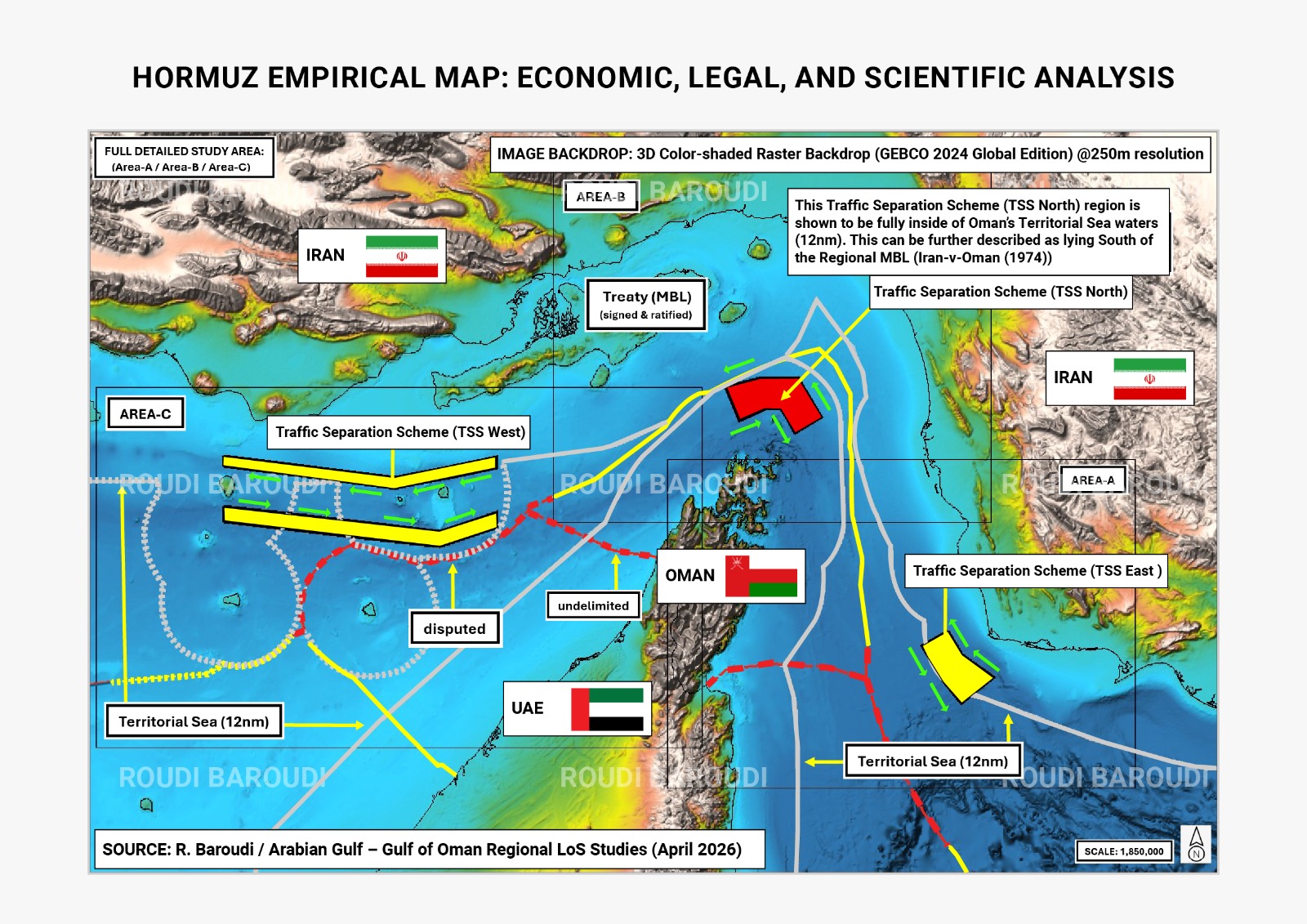
(Graphics: Roudi Baroudi)
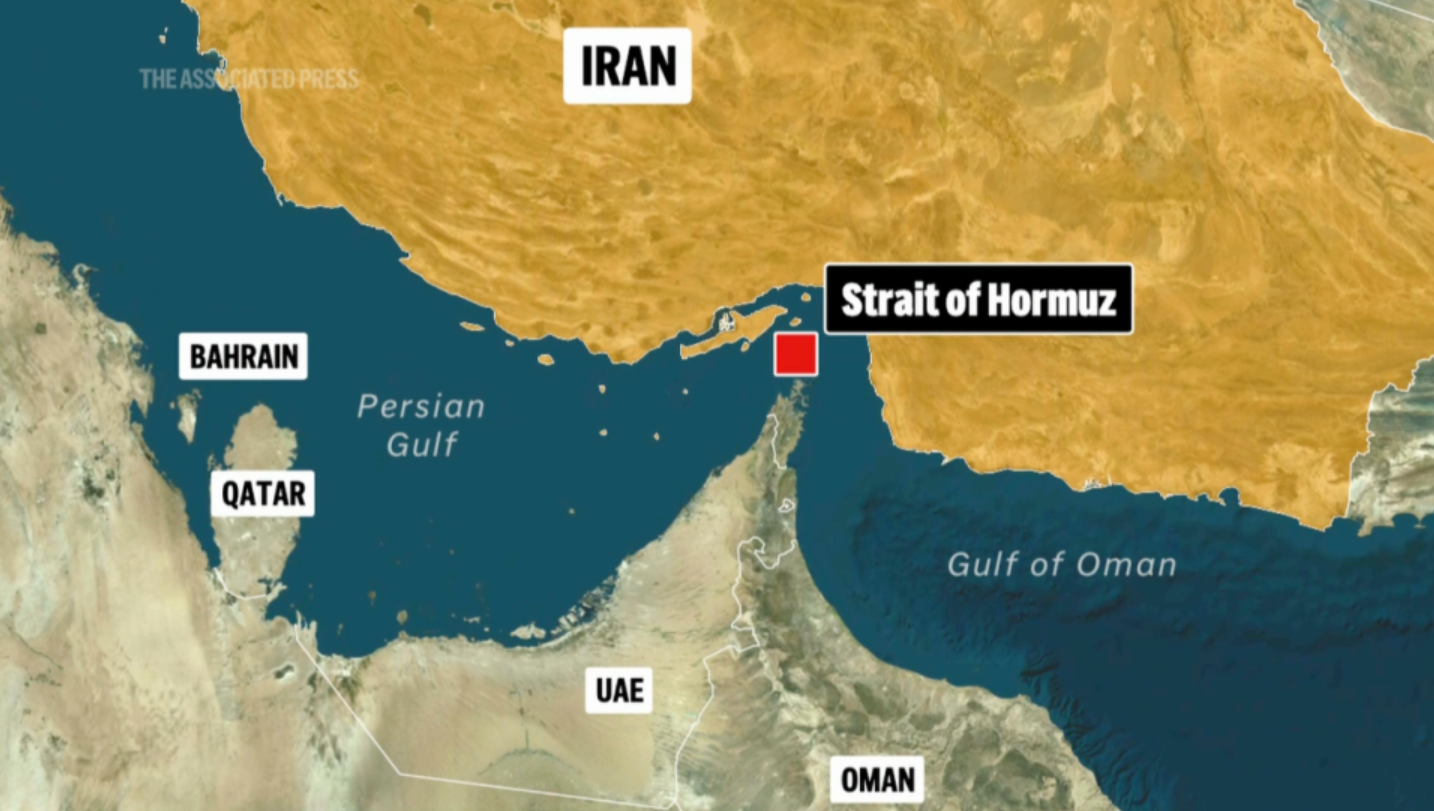
On May 1, 2026 U.S. President Donald Trump wrote to congressional lawmakers declaring that American military action against Iran had "terminated.” As the President is under pressure to seek congressional authorization for the war, this move likely implies – it is difficult to read the President – that U.S. bombing of Iranian targets will not resume.
Nevertheless, the Strait of Hormuz remains blockaded by both the United States and Iran with only limited work-around solutions available for the export of key commodities from the Persian Gulf. These range from oil and gas to helium and fertilizers. The hot war might be over, but the economic war continues.
While the present arrangement of a ceasefire is now perhaps less fragile – Iran is unlikely to attack Gulf neighbors without armed aggression from Israel and the United States — the basic problem the war created remains. To use a new acronym popular in financial markets, we are facing NACHO – Not a chance Hormuz opens! And without a quick and full opening the world will run out of key commodities, especially oil and gas, necessitating massive price spikes to destroy demand.
In fact, regardless of when the Strait opens, the aftermath of the war and resulting commodity shock will usher in a new era of geoeconomics that will reshape the very basis of the global economy. First and foremost is the ascendance of the logic of national security and national self-sufficiency in everything.
Established norms around sea borne traffic, indeed trade more generally, are all being securitized. Tariffs and industrial policy have already made a massive comeback over the past ten years, undermining most tenets of the free-trade Washington Consensus so popular thirty years ago. The best one can hope for is an era of managed trade that allows most basic trading relations to continue.
Alas, a far more concerning trend is emerging: the use of actual armed force to reshape global trade, especially the use of naval blockades to force policy adjustments on weaker adversaries. That reminds one of the “gunboat diplomacy” practiced in the 19th Century. It constituted then the pursuit of foreign policy objectives with naval power.
The Opium Wars (1839–1860) are one quintessential example of gunboat diplomacy, as Britain used its superior Royal Navy to force China into accepting unfair trade terms and cede Hong Kong. Similarly, American Commodore Matthew Perry’s "Black Ships" compelled Japan to end two hundred years of isolation in 1853. The ships fired blank shots with their new and advanced Paixhans guns, displaying their superior power to the shocked Japanese in Edo Bay.
There is little doubt that such tactics are growing in prevalence again. Instituting naval pressure tactics, especially blockades, constitutes a form of coercive diplomacy utilizing the direct threat of force without engaging in full-scale, declared war. The United States has now employed such to enforce an "oil quarantine" on Venezuela, another oil quarantine to force the end of Communism in Cuba, and a final one to pressure Iran over the Strait of Hormuz and its nuclear program.
Hormuz, however, is a magnitude larger than the other actions. First, much more critical trade flows through the Strait; second, given the present stalemate and the history of U.S.-Iran relations, the stand-off could last for months – Iran knows that, even in a weakened state, it can impede the Strait at will, giving it immense leverage that its leaders didn’t dare use before the war.
Finally, this all creates a nightmarish scenario of massive short-term economic dislocations that are systemic and global in nature. How severe these dislocations will be is difficult to judge at present. Reactions in financial markets have been contained so far, though real pain is spreading in poorer economies dependent on Middle Eastern commodities. What is more certain is how this shock will trigger a wave of adjustments to every single country’s geoeconomic outlook longer term.
Oil exporters not dependent on the Strait of Hormuz, including in part Saudi Arabia, are likely to see an immediate windfall. Those dependent on the Strait, such as Iraq, Kuwait, and the UAE, are likely to undertake massive infrastructure investments to move product. But the most severe dislocations will hit oil and gas importers. These will be forced to make wrenching adjustments.
These adjustments are likely to even spill over to the United States. Although flush with oil and gas, global price movements for petroleum products have a big influence on the U.S. economy due to high fossil fuel consumption. Moreover, the AI boom is based on the investments of hyperscalers to build massive data centers. These centers require equally massive amounts of energy to run. Unless paired with solar, wind, and battery power arrangements, hyperscaling might fall victim to high fossil fuel prices. This is especially the case since not all data centers can be close to available natural gas sources in North America, but will have to be located nearer to major urban agglomerations along the coasts.
Put differently, even the United States is likely to be forced to move aggressively toward a new energy system or risk falling behind in the AI race. The closing of the Strait of Hormuz is therefore generating another major geoeconomic implication: the acceleration of the green energy transition.
Perhaps nothing would seem more enticing now than an array of solar panels, perhaps paired with wind turbines, and a large battery installation to store and provide power. Such arrangements are not only becoming price competitive with gas and coal generated power, but require no additional energy inputs once built, only the maintenance of equipment. Many economies short of oil will thus be enticed to aggressively move in this direction.
This in turn implies that whoever possesses the technology and resources to accelerate the green energy transition stands to gain. In this light, Beijing’s decision to aggressively pursue green technologies stands as truly prescient.
Nonetheless, China remains the globe’s largest oil importer and is critically exposed to the Strait of Hormuz short-term. It is thus likely that China’s energy transition will be put on steroids, with even larger investments in nuclear energy, battery storage, and hydro-electric projects already in the mix.
The most wrenching adjustments in this transition will hit those economies heavily exposed to imported oil and gas from the Gulf. This is primarily developing economies, including in South and Southeast Asia, Africa, and to a lesser extent Latin America and Europe. They are likely to follow in China’s footsteps now that green energy solutions are available, cost competitive, and can be scaled rapidly.
Accordingly, the blockage of the Strait of Hormuz is likely to create an unintended benefactor: Chinese makers of the most cost-effective green energy solutions available on Earth. In fact, by now Chinese manufacturers dominate this large field, creating an industrial ecosystem of specialized suppliers that is overtaking others in experience and know-how.
In an ironic twist, China over the coming decade is likely to emerge as a global provider of true energy security, allowing other economies to transition away from fossil fuels. But it will also create a new dependence on Chinese technology and know-how, putting China at the very center of the new geoeconomics moving beyond fossil fuel dependency.
