In 2025, Ukraine gradually changed from a battlefield confrontation to a complex contest centered on cease-fire terms, postwar arrangements and the responsibilities of the world’s major powers. The war in Ukraine did not end in 2025, but a new reality was clearly defined.
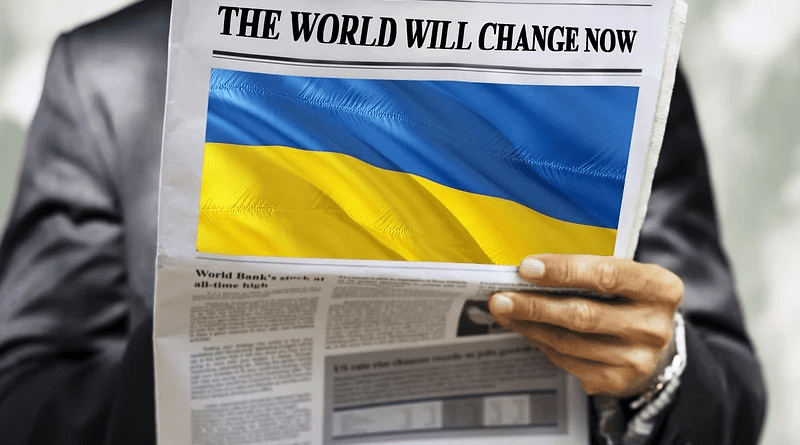
2025 has come to an end, and yet the war in Ukraine has not. But its nature has changed. The course of the war is no longer defined so much by battlefield developments as by attrition, stalemate and diplomatic maneuvering, combining to produce a state of “unresolved war.” Peace remains elusive, and the impact of the war has spilled over into the world, profoundly shaping the strategic choices of major powers and the evolution of the global order.
On the battlefield last year, Russia continued to upgrade its infantry infiltration, drone operations and electronic warfare tactics. However, constrained by manpower shortages and mounting socioeconomic pressures, its offensive were largely characterized by incremental gains rather than strategic breakthroughs. Meanwhile, Ukraine maintained stability along the front lines through its defensive system and localized counterattacks; but prolonged attrition eroded its military resources and political resilience.
Against this backdrop, diplomacy has once again emerged as a key variable shaping the long-term trajectory of the war. The Ukraine issue has gradually shifted from a battlefield confrontation into a complex contest centered on cease-fire terms, postwar arrangements and the responsibilities of the world’s major powers.
Russia’s constraints
Russia's strategic objectives remained largely unchanged last year. It made any cease-fire contingent on the fulfillment of its political conditions, particularly concerning the Donbas region. The Putin administration emphasized that if Kyiv refused to resolve these issues politically, Russia would continue to pursue its objectives militarily.
However, data reveal the true cost of a protracted war. According to statistics from the Institute for the Study of War, Russia advanced approximately 5,000 square kilometers throughout the year, while its cumulative casualties exceeded 380,000. At the current rate of advance, it would take about two years to achieve full control of the Donetsk region. This underscores how military force has become a high-cost, low-efficiency strategic instrument.
Economic pressures are also mounting. The growth dividends brought about by surging military spending have clearly diminished, and the burden of war is beginning to spread to the social sphere. Data from the KSE Institute show that the value of liquid assets in Russia’s National Welfare Fund has declined by approximately 57 percent since the outbreak of the war. Meanwhile, comprehensive Western sanctions on technology, equipment and exports have exacerbated the long-standing problems of underinvestment and technological lag in Russia’s energy sector. As of 2025, power shortages have poses a potential systemic risk, requiring both expanded generating capacity and more robust demand-side management.
The data do not suggest that Russia will make concessions, but they clearly show that its strategic flexibility is being steadily eroded.
Peace talks, limited alignment
Lat year was a year of highly active peace diplomacy. After the Trump administration took office, Washington quickly adjusted its policy toward Russia, shifting from the comprehensive isolation of the Biden era to direct dialogue. Trump spoke with Putin on the 23rd day of his second term and held 10 conversations with him over the course of the year.
At the beginning of 2025, Washington attempted to use a partial cease-fire as a starting point for negotiations, focusing on energy infrastructure and the security of Black Sea shipping lanes. While the so-called Easter ceasefire proposal in April failed to gain traction, it signaled the possibility of limited coordination between the two sides on specific issues. In May, after Russia rejected a 30-day unconditional cease-fire, the United States adjusted its approach, turning instead to summit diplomacy and multilateral consultations to advance negotiation.
In November, Washington proposed a 28-point peace plan more aligned with Russia's concerns. This was later revised into a more balanced 20-point plan in response to strong opposition from Ukraine and Europe. This plan covers cease-fire monitoring, security guarantees, election arrangements, the establishment of economic zones and the management of the Zaporizhia nuclear power plant. According to the negotiating parties’ assessment, consensus has been reached on 90 percent of the provisions, with the main points of contention remaining the territorial arrangements in the Donbas region and control of the nuclear plant. This suggests that the parties are not rejecting peace but fundamentally disagree on the cost of peace.
Evolution of the global order
In 2025, the Ukraine war emerged as a crucial juncture for the evolution of the global order.
For the United States, the focus of diplomacy has clearly shifted from exporting values to pursuing a transactional logic, and from serving as a long-term guarantor of the world order to acting as a selective intervenor. This shift has loosened the rigid constraints of the postwar international system and accelerated the multipolarization of world politics.
For Europe, the global security structure is undergoing profound changes. In June, the NATO summit in The Hague reached a historic agreement, with all member states except Spain committing to increasing defense spending to 5 percent of GDP by 2035. This target is far higher than the 2 percent standard set in 2014 and is expected to unlock trillions of euros in new defense investment. In December, Washington explicitly demanded that Europe take over most of NATO’s conventional defense capabilities by 2027, warning that the United States might reduce its investment otherwise. Although the Europeans generally view this timeline as too aggressive, related military and industrial deployments have clearly accelerated.
For Russia, diplomatic strategy is becoming increasingly pragmatic. Because food is more difficult to sanction than energy and directly addresses the needs of developing countries, food diplomacy has become a strategic tool for Moscow to fill its energy gap. Russian Deputy Prime Minister Dmitry Patrushev said that Russia’s food exports are projected to reach 53 to 55 million tons between July 2025 and June this year, enabling it to sustain its influence in Africa, the Middle East and BRICS countries.
Against the backdrop of weakening constraints in the traditional world order and rising risks of conflict spillover, China’s four global initiatives—on development, security, civilization and governance—provide a clear framework for its diplomacy, allowing it to prioritize risk control and cooperation in a highly uncertain international environment. These initiatives also introduce predictable, institutional and constructive forces to support the stable operation of the international order.
An end to the war in Ukraine did not come in 2025, but a new reality was clearly defined: Global stability is being redefined as a “fringe peace” through costly stalemates and limited compromises. It indicates that war is no longer merely a matter of victory or defeat but a choice about the kind of order the world will follow. If major powers fail to establish a new balance between their strategic responsibilities and long-term international stability, then it will not be Ukraine alone but potentially all of humanity that stands on the precipice.
