
The U.S.-Israel war with Iran is exposing widening reluctance among American allies to support the conflict, signaling potential erosion in U.S. global influence. At the same time, moves to bypass the U.S. dollar in oil trade, amid growing Chinese involvement, could challenge the petrodollar and reshape the global energy order.
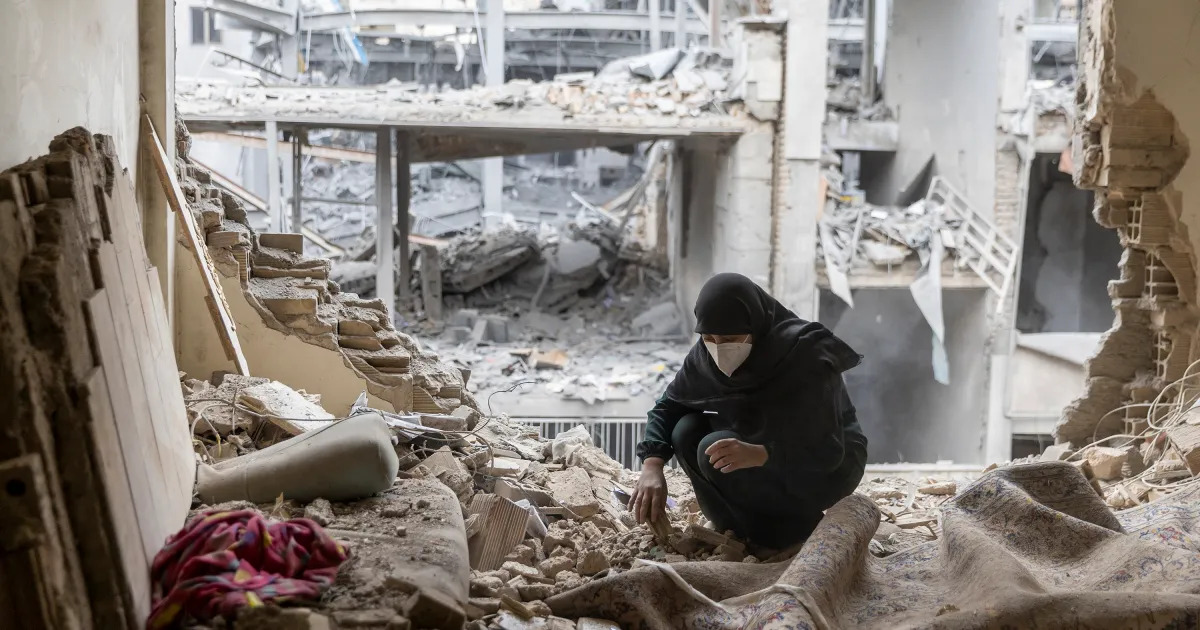
Two developments tied to the intensifying war in West Asia may shape the United States’ long-term global appeal: how its allies react, and whether the conflict diminishes the role of the U.S. dollar in the region’s petroleum transactions.
Cracks in the alliance
The reluctance of U.S. allies to be sucked into a war they did not sign up for is ominous. Despite suffering collateral damage from Iranian attacks on U.S. military bases they host, America’s Gulf allies are staying out of the U.S. and Israel’s war against their neighbor. They bore the brunt of Tehran’s reply to joint U.S.-Israel bombing raids. These affluent monarchies saw their petroleum exports curbed, their energy facilities damaged or threatened, and flights to and from their cities disrupted, affecting tourism and business confidence. Washington’s pledge to protect them is also put into question. U.S. military bases became big fixed targets for Iran’s asymmetrical arsenal of missiles, drones, and proxy groups. Arab partners are expending their own inventory to thwart Iranian drones and projectiles entering their airspace or territory to hit U.S. targets, including U.S. military infrastructure and diplomatic missions. Thus, security recipients are rising up to protect the assets of the supposed security guarantor, as well as their own.
While Iran’s conventional military suffered major losses, the U.S. and Israel’s capacity to intercept Iranian drones and missiles is being stretched. This means regional allies, whose own supplies are also running low, have to step up. Despite condemning Iranian sorties on their soil, several Gulf states denied Washington's use of their territory or airspace to carry out raids against Iran. They are wary that doing so may make them fair game for Tehran’s retaliation. Israel’s hit on the South Pars field and Iran’s strike against Qatar’s Ras Laffan, two major natural gas complexes, expose the region’s petroleum infrastructure to hostilities, further upsetting global fuel prices. Assassination of foreign leaders and attacks on nuclear facilities and non-military targets, including critical energy hubs, violate international law and norms and risk igniting unrestricted war. Attack on Iran’s Natanz and Israel’s Dimona town, near the country’s undeclared nuclear site, escalates the conflict and courts a possible nuclear disaster. Arab allies are put in a bind – not privy to how the war began and oblivious of how it will end. If they enter the war and Washington eventually exits, they will be left to pick up the ashes after the dust settles from an indefinite war.
In the 1970s, Riyadh and other members of the Organization of Petroleum Exporting Countries (OPEC), including its fellow Arab neighbors, agreed to sell oil in U.S. currency in return for protection. This laid the foundation for the petrodollar, which became a key pillar of America’s global ascendancy. Arab countries became the biggest buyers of American arms and gave the U.S. a massive strategic footprint to project power in West Asia and beyond. Sovereign wealth funds and private capital from Gulf partners became big investors in the U.S. Several Arab armies joined the U.S.-led multinational coalition in the First Gulf War, liberating Kuwait from Iraqi occupation. Bahrain and the United Arab Emirates signed the U.S.-brokered Abraham Accords, normalizing ties with Israel, a staunch U.S. staunch ally. Bahrain, Jordan, Kuwait, Qatar, Saudi Arabia, Turkey, and UAE joined President Donald Trump’s bold Board of Peace initiative, despite concerns it may challenge the United Nations. These decades-old partnerships are now under strain from a lack of consultation, shifting war aims, and the prospect of being dragged into a protracted conflict.
The reticence goes beyond West Asia. European countries like Spain and Switzerland refused access to their territory or airspace for American aircraft and ships bound for operations against Iran, opposing U.S. pretext. Other NATO allies also pushed back against pressure to take part in the war. After offending allies – calling Canada the 51st U.S. state, asking Denmark to cede Greenland, and bypassing European partners in dealing with Moscow to end the Russia-Ukraine War – Trump’s demand for allies to help is falling on deaf ears. Other Indo-Pacific allies, such as Australia and Japan, also seem unenthusiastic about deploying vessels to reopen the Strait of Hormuz. This is despite relying on energy shipments that pass through this vital chokepoint. Some allies set some conditions before sending ships to help reopen the strait, including a ceasefire and a clear international mandate. Pakistan, India, Turkey, and China negotiated safe passage for their cargo. France and Italy may follow suit. This may hollow out U.S. calls for allies to send naval escorts to break Tehran’s blockade of this key waterway, where a fifth of the world’s oil shipments transit. It is not so much a victory for Iran as it is a signal of America’s waning appeal.
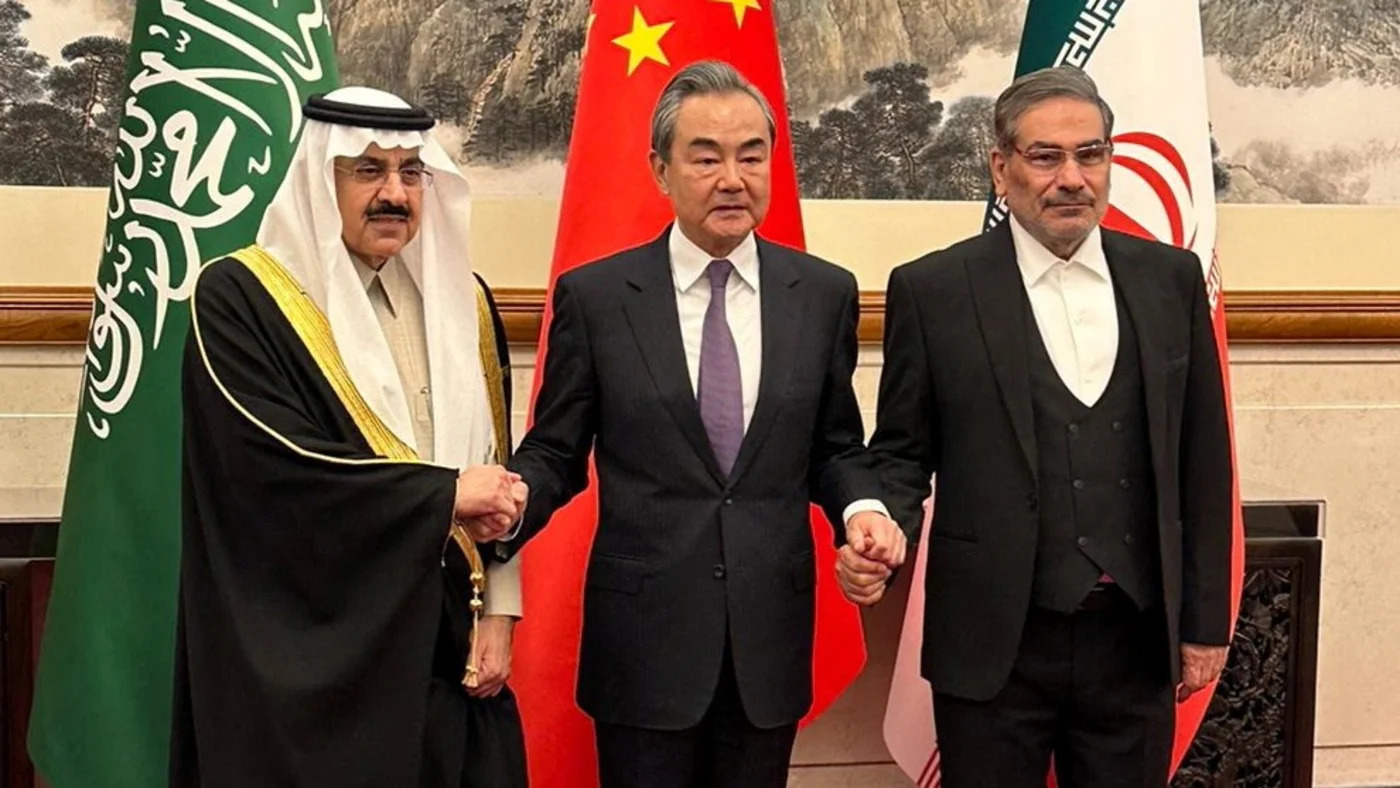
China’s Saudi Arabia-Iran Mediation in 2023.
China's Foreign Minister Wang Yi with Saudi Arabia's Musaad bin Mohammed al-Aiban and Iran's Ali Shamkhani, in Beijing on March 10, 2023.
Displacing the petrodollar
More disturbing for the U.S. is Iran’s proposition that tankers will be allowed passage if the trade is denominated in Chinese yuan, undercutting the petrodollar. Whether the move was meant to spite America or a calculated ploy to get Beijing’s backing as the war enters its fourth week, the implications are profound. China’s influence in West Asia is already growing, going beyond economics, and Iran is a key partner. China is the biggest buyer of Gulf petroleum and is an emerging investor in infrastructure, renewables, and technology. Bahrain, Iran, Iraq, Israel, Jordan, Kuwait, Oman, Qatar, Saudi, Turkey, and UAE are members of the Beijing-backed and headquartered Asian Infrastructure Investment Bank (AIIB). Many joined the Belt and Road Initiative. The first China-Arab Summit was held in Riyadh in 2022. Iran joined the Shanghai Cooperation Organization (SCO) in 2023, with Bahrain, Qatar, Saudi Arabia, Turkey, and UAE as dialogue partners.
Beijing mediated the 2023 Iran-Saudi rapprochement, announcing the country’s readiness to wade into the region’s convoluted geopolitics. Iran and UAE became new members of the expanded BRICS in 2024, with Saudi Arabia considering joining. All these show strong foundations and significant progress in Beijing’s foray into West Asia, challenging the longstanding U.S. position in this energy-rich but volatile region. Recognizing how financial interdependence is being weaponized, BRICS is discussing an alternative payment system to bypass the greenback. Big energy consumers are leading the way in buying petroleum in their own currencies. India made its debut crude oil transaction in rupees with UAE in 2023, the same year China made its first cross-border oil payment using digital yuan. The raging war may accelerate de-dollarization, especially if more players follow suit. However, Trump threatened BRICS members with steep tariffs should they proceed. The US president also said he may delay his visit to Beijing as it pushes its Asian peer competitor to help reopen the Hormuz Strait.
The U.S. may have squeezed out China in Panama and Venezuela, putting on notice other Latin American countries with growing ties with its Asian rival. It may be hoping for the same result in Iran, only that Tehran did not fold so easily, and hostilities have lasted longer than initially expected. However, the decapitation model that worked in Caracas did not work in Tehran. Arming Kurds raised concerns about fanning sectarian conflict that may plunge the region into more bloodletting and instability from refugee flows and a power vacuum that extremists may exploit. Iraq, Afghanistan, Libya, and Syria offer cautionary tales.
A prolonged irregular war plays into Iran’s advantage. America’s failure to protect Arab partners and European and Asian allies’ indifference to Washington’s demands portend the decline of U.S. leadership. Major energy importers cutting deals with Iran to ensure safe passage of their oil and gas supplies may be the clincher. The erosion of the dollar’s dominance in facilitating commodity trade, notably oil and gas, may not necessarily propel the rise of the petroyuan. Other countries may float other local currency transactions. Notwithstanding its intentions, China may not want to appear as actively pushing for it, though it stands to benefit from such a seismic shift. Rivals long grumbled about the dollar’s privileged status. The escalating war may just give them another chance to diminish reliance on US notes.
