
Whether assessing the prospects of the war in Ukraine or predicting the trajectory of relations between the United States and Russia, U.S. policy discussions have generally revealed a cautious, realistic tone: The war is unlikely to end quickly, and the rupture in the international order is widening.
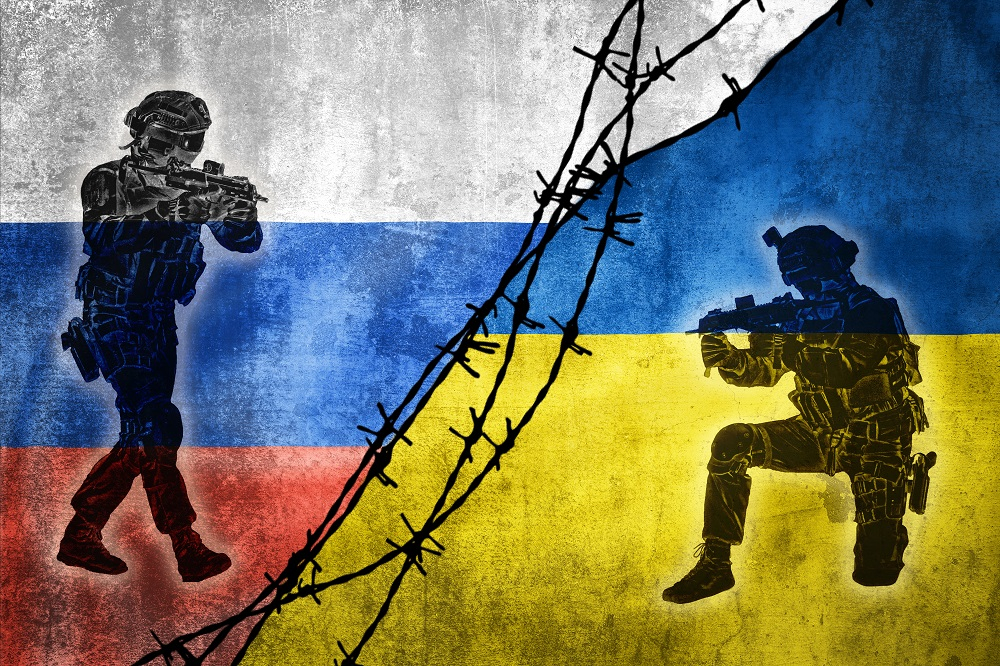
At the invitation of Eurasia Group, I joined a delegation on a research visit to the United States in early February. We visited several leading American think tanks and research institutions. and after intensive and candid exchanges a tentative impression began to take shape: Against the backdrop of the protracted war in Ukraine, the American strategic community faced a complex situation marked by the overlapping strains of a drawn-out conflict, mounting disorder in the arms control regime, and emerging fissures within its alliance system.
Whether in assessing the prospects of the war in Ukraine or predicting the trajectory of U.S.-Russia relations, the policy discussions generally revealed a cautious and realistic tone: The war is unlikely to end quickly, and the rupture in the international order is widening. This judgment not only shapes policy choices in Washington but is also reshaping the strategic landscape across the Eurasian continent.
Ukraine cease-fire elusive
Regarding the Ukraine issue, a prevailing assessment has gradually emerged in U.S. strategic circles that the possibility of a comprehensive cease-fire in the short term is slim. Debate over whether to pursue de-escalation through negotiations now centers more on how pressure should be apportioned—whether greater leverage should be directed at Ukraine, or whether sustained and robust constraints should continue to be imposed on Russia. A common concern is that offering Moscow substantial concessions on core issues potentially invites even greater demands down the line.
Meanwhile, the prolonged war has afforded Ukraine a certain degree of strategic maneuvering space. But many analysts believe that even if even if Kyiv were to make concessions on territory the war would not end, as the underlying security structure and strategic objectives of the parties involved remain fundamentally unchanged.
From a battlefield perspective, the view that any near-term breakthrough in Russia-Ukraine negotiations is unlikely is widely shared. One line of analysis suggests that as long as the war of attrition grinds on and the pace of external support changes, the balance on the ground could still shift in ways more favorable to Russia. Although Russia has paid a heavy price in manpower and economic terms, there is currently no systemic domestic pressure sufficient to compel a change in its strategic course. In contrast, Ukraine faces more direct and immediate constraints in terms of manpower and air defense capacity.
Of course, the domestic political cycle in the United States introduces additional variables into the trajectory of the war. Shifts in the power structure within Washington could produce ripple effects that influence both the tempo of policymaking and the scope of diplomatic maneuver.
Treaty expires, an era ends
The expiration of the New START Treaty undoubtedly exacerbated the uncertainty surrounding the international security environment. The treaty’s greatest value lay not only in capping the number of strategic nuclear warheads at 1,550 but also in its highly institutionalized verification mechanism, allowing the United States and Russia to conduct on-site inspections in a relatively short timeframe and thereby maintain strategic transparency and predictability.
The expiration of the treaty reduces strategic transparency, inevitably heightening incentives for nuclear force expansion and intelligence spending, which in turn drives up defense costs and deepens mutual distrust. On a broader level, the recent U.S. withdrawal from or weakening of multilateral mechanisms has also diminished its institutional influence to some extent, generating long-term impacts on its own interests and the stability of the international order.
Many observers believe that a subtle shift is underway in the global strategic focus, with a more diversified approach to diplomatic interactions among certain traditional allies signaling a loosening of the international structure.
Irreversible U.S.-Russia hostility
The view that U.S.-Russia relations are unlikely to thaw in the short term has become fairly entrenched. From Russia's perspective, the West is expected to maintain its strategic containment for a considerable period, and the foundation of mutual trust has been badly eroded, both through economic sanctions and geopolitical maneuvering. Even within the United States, there is little support for a substantial reset of relations with Russia under current circumstances.
Of course, there is also the view within policy discussions that if the war were to end, there might still be limited room for functional cooperation between the U.S. and Russia, especially in the economic and commercial fields. This idea remains largely theoretical, with little grounding in current real-world conditions.
Eastward shift for Russia
Against the backdrop of the Ukraine war, Northeast Asia’s strategic position, as seen within Russia, has shifted, transforming from a relatively straightforward regional energy market into a key component of its national security strategy. Consequently, Northeast Asia has become an important arena for Moscow to counter the U.S., Japan and South Korea. At the same time, Russia’s economic and trade relations with Japan and South Korea have contracted significantly, increasing its reliance on cooperation with China, North Korea and Mongolia. Constrained by its economic and military strength, however, Russia’s strategic space in Northeast Asia remains relatively limited, taking on a primarily defensive and counterbalancing character.
Central Asia: No vacuum
Relations between the United States and Central Asian countries are progressing steadily, though without any significant breakthroughs. President Donald Trump’s engagement with the region is primarily channeled through the C5+1 dialogue mechanism, with his primary interest centered on accessing regional resources, but this this reflects a broader and more ambitious vision, not simply a commercial proposition. Of course, Trump’s emphasis on strengthening ties with Central Asian countries is a positive signal, and some American companies are beginning to expand their presence in these countries.
While the war has somewhat affected Russia’s image, the assessment that Russia is rapidly losing influence in Central Asia has not gained widespread consensus. It’s true that the conflict has shaped perceptions among the peoples of Central Asia, particularly because of the rhetoric of some Russian nationalists, which has intensified negative sentiments and encouraged a desire to keep a greater distance from Moscow. However, from a structural standpoint, Russia remains deeply embedded in the region’s security, labor and economic networks, constraining the strategic options available to countries in the region.
From arms control to the strategic dynamics of Central Asia, the U.S. strategic community is finding a more fragmented and uncertain international environment. Because of practical constraints, this article can only present some observations drawn from interviews and exchanges. With the war still raging and the rifts widening, it is hoped that these reflections can provide a useful perspective on the current fragmentation of the international order.
