
U.S. strikes on Iran that killed Supreme Leader Ali Khamenei redirected American military resources and attention from the Indo-Pacific to the Middle East. This shift allows China to strengthen its strategic position in Asia while the United States becomes absorbed in a secondary conflict.
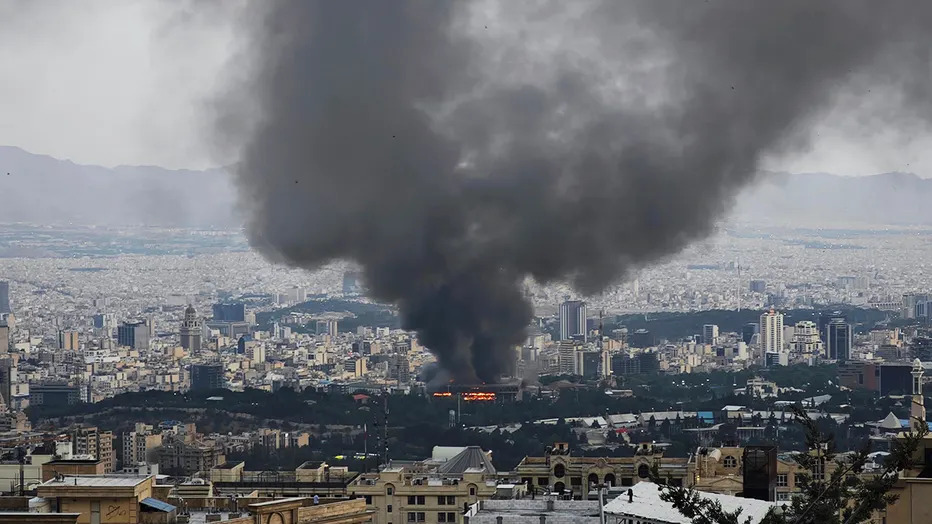
The most consequential beneficiary of Operation Epic Fury fired no missile, deployed nobody, and spent nothing.
When the United States and Israel struck Iran on 28 February 2026, killing Supreme Leader Khamenei, Washington committed military capital, diplomatic credibility, and finite munitions stocks to a theater that does not determine the balance of power between the U.S. and China. Beijing committed nothing and gained considerably. Understanding why requires looking past the battlefield entirely.
Indeed, the starting point is not the strikes themselves but what preceded them.
Before the first missile hit Iranian soil, the situation was not one of diplomatic collapse. Iranian officials had publicly indicated that a nuclear agreement was reachable; Omani mediation had produced progress on enrichment limits and expanded international monitoring. Washington struck while talks were working.
That sequence matters because of how it reads to the roughly one hundred governments that have not chosen sides in the Washington-Beijing rivalry. For Delhi, Ankara, Riyadh, and Brasília, the chronology delivered a legible conclusion about the conditions under which the U.S. terminates diplomacy through force. And Beijing was provided with a useful narrative: the extent of American reliability as a negotiating partner.
This points to something liberal-institutionalism identifies: the competition between the U.S. and China is fought simultaneously in the judgments of governments deciding, across years, whose commitments they trust. The principle of self-defense rests on the existence of imminent and overwhelming threats that leave no alternative response. When military action occurs while negotiations remain active, governments observing the episode draw their own conclusions about how that standard applies.
International law depends on the credibility of the major powers that invoke it, and credibility is assessed comparatively. China’s accumulation of influence across the Global South rests substantially on positioning Beijing as the stable, predictable partner against an “American Pacifier” whose commitments arrive wrapped in conditions and whose diplomacy can end without warning. Operation Epic Fury reinforced that positioning at no cost to Beijing.
The deeper framework, however, is structural realism, which treats great-power competition as a contest over the distribution of material capabilities and political attention. States erode their position when they commit resources to peripheral conflicts while their primary competitors concentrate on the decisive theater.
Paul Kennedy identified this as “imperial overstretch,” the mechanism through which dominant powers have historically degraded their own primacy, not through defeat in the battles that mattered most but through cumulative exhaustion in the ones that did not. The U.S. is conducting a large-scale military campaign in the Persian Gulf. Meanwhile, China continues consolidating power across Asia-Pacific. That asymmetry structures everything else.
In this light, two American carrier strike groups are operating in the Middle East while the only permanently forward-based U.S. carrier in the Pacific remains in maintenance at Yokosuka, Japan. Deterrence functions through the perceived availability of force at the moment an adversary is calculating whether to move. When carrier groups redeploy toward the Arabian Gulf, governments in Tokyo, Seoul, and Taipei revise their estimates of how quickly American reinforcements could arrive.
The munitions problem compounds this. The war consumes the specific systems an East-Asia contingency would require: Patriot interceptors, THAAD missiles, Tomahawk cruise missiles, precision-guided munitions. Expanding production takes years and procurement budgets follow the war already underway, not the contingency being planned for. Every missile shot over Iranian territory affects the Davidson Window, the period of maximum vulnerability for a Taiwan eventuality identifying 2027 as a peak risk period.
The counterargument in Washington that eliminating Iran as a threat frees American power to concentrate elsewhere, has been tested twice in living memory.
In 2001, Afghanistan was supposed to be a focused, finite operation against a broken state: it lasted twenty years, concluding with the Taliban back in Kabul, where they had been when the intervention began.
In 2003, removing Saddam Hussein was supposed to simplify the regional equation; instead it eliminated the principal Sunni counterweight to Iranian influence, created the vacuum that accelerated Iran's expansion across Iraq, Syria, and Lebanon, and anchored American forces in the Middle East for two decades. The assumptions now embedded in Operation Epic Fury are the same: rapid state fragmentation, limited regional escalation, a political vacuum that organizes itself. They were wrong twice. There is no structural reason to expect them to be right a third time.
Furthermore, Iran is not Afghanistan or Iraq in scale, making Donald Trump’s assumptions more fragile. Ninety million people, dense bureaucratic institutions, a substantial ballistic missile arsenal, and armed networks—“Axis of Resistance”—extending from Lebanon to Yemen through Iraq, Palestine and Syria, do not dissolve when leadership is removed. Authority fragments across competing factions, proxy escalation accelerates, and demands for external stabilization accumulate; precisely the conditions that have historically extended American involvement rather than contracted it.
There is, therefore, a consistent pattern, familiar in American foreign policy. The U.S. has demonstrated remarkable capacity to dismantle hostile regimes through airpower and rapid military operations. It has demonstrated far less capacity to manage the political aftermath those operations create. Essentially, Washington has never known how to transit from coercive military campaigns to interact with nationalist politics in states with genuine social depth.
Indeed, external attacks tend to consolidate domestic opinion, strengthen hardliners, and eliminate the political space that moderates need to offer compromise. The Islamic Republic has drawn its legitimacy partly from the narrative of resistance to foreign coercion since 1979. A large-scale American and Israeli strike regenerates that narrative at a moment when it had been losing internal purchase.
In the meantime, China and Russia watch from a position of deliberate restraint. Neither intervened to defend Iran, as neither has intervened militarily to defend any partner subjected to the “Trump Corollary.” Their calculation is straightforward: allowing Washington to exhaust itself against secondary adversaries produces larger returns than direct confrontation.
For governments in the Global South maintaining partnerships with Beijing or Moscow, the implication states that those partnerships carry no military protection against American forces. Chinese and Russian influence rests on political, economic, and diplomatic instruments, not expeditionary guarantees. That this arrangement still works in their favor, that the absence of military commitment does not damage their standing, reflects how well the current situation is arranged for them.
Nevertheless, there is one genuine benefit the U.S. extracts from the campaign. As Russia knows well, large-scale combat produces operational data no exercise replicates: air defense performance under real saturation pressure, command coordination across simultaneous engagements, the conditions under which systems fail. The American military will extract knowledge of real value.
However, simultaneously, Chinese analysts extract knowledge too. A sustained campaign is an extended observation opportunity for the People’s Liberation Army: deployment sequencing, electronic warfare signatures, performance of American interceptor systems under genuine operational stress, points at which air defense saturation produces exploitable gaps. This information feeds directly into Chinese planning for any Asia-Pacific contingency.
Meanwhile, the economic fallout from the war dominates daily commentary: energy volatility, Hormuz shipping disruptions, stalled infrastructure projects including Pakistan’s Gwadar, regional supply chain fractures. These costs are real and they matter for investors and short-term policy analysis. They are not, however, where the war’s deepest consequences accumulate.
The central issue is the redistribution of power between the U.S. and China. Wars that absorb American military attention in the Middle East alter that distribution, while redefining the recalculations of governments deciding whose commitments are reliable.
In this sense, it is worth remembering that great powers rarely lose their position through defeat in a single battle; they lose it when resources, attention, and credibility accumulate in conflicts that their principal competitors are never required to fight. Kissinger warned that America’s greatest vulnerability lies not in military weakness but in strategic impatience.
Operation Epic Fury is a precise illustration of that tendency, and its principal beneficiary is the power that displayed neither. China has not subdued the U.S., yet it watches Washington exhaust itself in a theater Beijing never entered, against an adversary Beijing never needed to confront. Donald Trump called the operation a success. In Beijing, they might agree.
