
The death of Iran’s Supreme Leader Ayatollah Ali Khamenei in U.S.-Israeli strikes has created leadership uncertainty in Tehran, weakened Iran’s regional network of allies, and accelerated shifts in Middle Eastern power dynamics. For China, the conflict threatens energy supplies and Belt and Road investments while potentially expanding Beijing’s diplomatic role if it maintains neutrality and engagement with all sides.
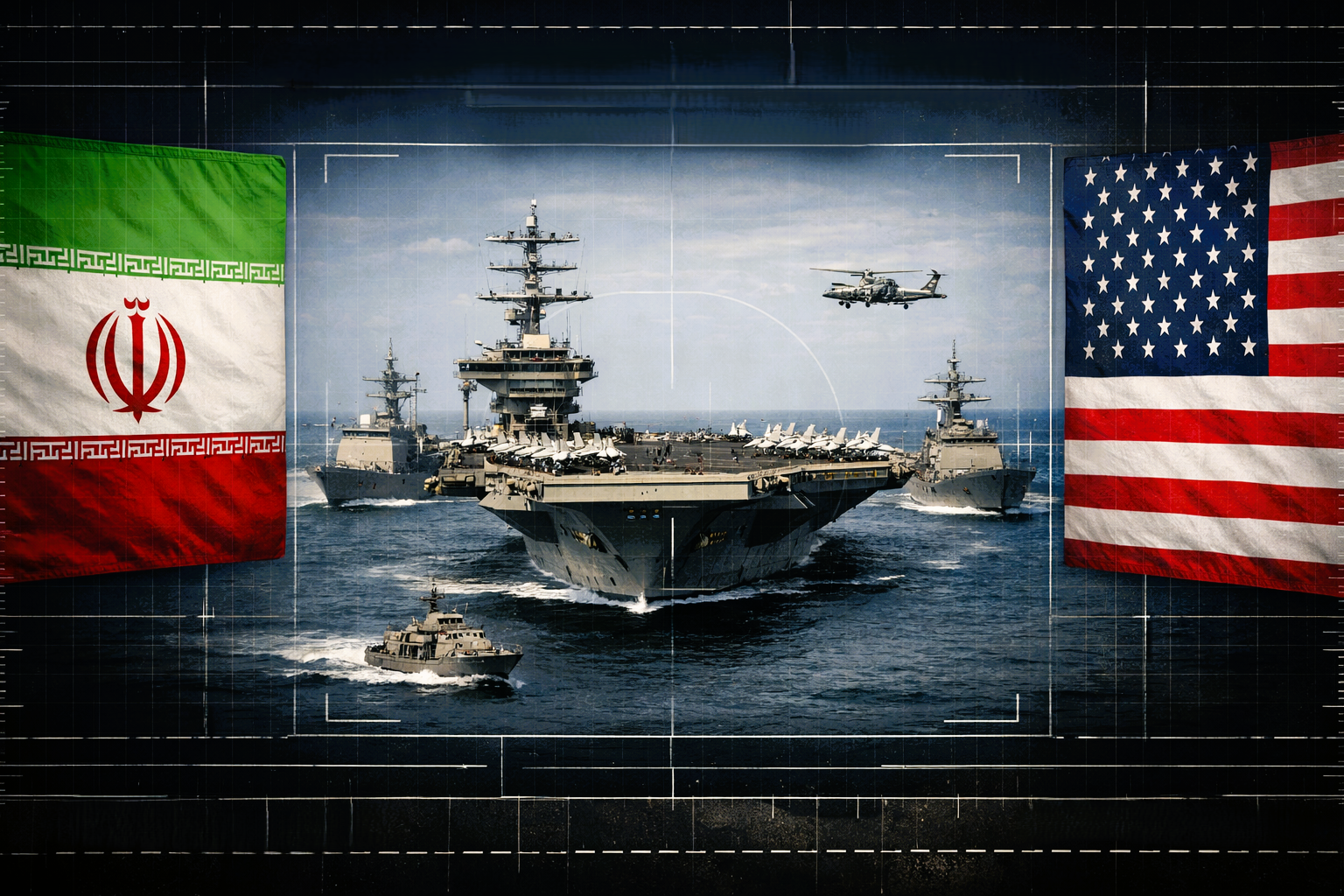
Iranian supreme leader Ayatollah Ali Khamenei was killed in his Tehran residence on February 28 during the large-scale air strikes launched jointly by the United States and Israel. This was an extremely rare incident in modern international relations history — the highest leader of a major country was killed in the country’s own capital by a foreign missile in a precision attack. Many had thought, following the ceasefire agreement between Israel and Hamas that took effect in October 2025, the Middle East might enter a period of relative calm. Yet just five months later, the region appears to be at another crossroads.
What appeared to many observers as a shocking, abrupt, and seemingly easy U.S. success was likely the product of longer-term strategic preparation by the United States and Israel.
Over the past few months, there indeed were on-and-off negotiations and contacts between the U.S. and Iran. After an initial round of indirect nuclear negotiations in early February in Muscat, a second round was expected to take place in Geneva. In retrospect, negotiations may have coincided with parallel military preparations, rather than representing a purely diplomatic track. It is also possible that the United States and Israel were waiting for a favorable operational window for a leadership-targeting strike.
In preparation, the U.S. had completed the largest-scale military buildup in decades in the Middle East — two aircraft-carriers had been in position in the Persian Gulf, and hundreds of war planes had been deployed to the region. This was not a show of diplomatic pressure, but substantive pre-war positioning. Israeli intelligence is particularly noteworthy: the strikes not only eliminated Khamenei, but dozens of ranking Iranian officials, including the Revolutionary Guards Commander-in-Chief and Defense Minister have reportedly been killed. Such precision would have been nearly impossible without in-depth internal intelligence infiltration.
Khamenei’s death has resulted in an unprecedented vacuum in supreme national power in the Iranian political regime. There have been reports that Alireza Arafi was appointed to the leadership council. But this is far from producing a new supreme leader of constitutional authority. With warfare continuing and the national capital under attack, normal operation of the Assembly of Experts composed of 88 religious clerics is almost unlikely. A more likely scenario could be: President Masoud Pezeshkian and establishment veterans such as Ali Larijani jointly form a certain transitional mechanism to nominally preserve the operation of the state, while the Revolutionary Guards hold actual dominance in security and military decision-making. This, however, would be a provisional arrangement likely marked with internal tensions and institutional fragility.
With missile stocks running low, Iran’s counterattacks already show fatigue.
There is a critical background factor for understanding the limitations of this round of Iran’s counterattacks: The June 2025 air strikes, which lasted 12 days, had greatly depleted Iran’s missile stockpile. According to Israeli military intelligence prior to the latest strikes, even without further attacks, it would take months for Iran’s arsenal to restore its pre-strike level of around 2,000 missiles. As a result, when the latest strikes occurred during this recovery period, Iran’s usable missile capacity may have been far below what outside observers expected.
This helps explain one thought-provoking phenomenon: Iran’s retaliatory fire to a considerable degree turned to U.S. military bases in the Gulf region as well as regional U.S. allies like Saudi Arabia, the UAE, Qatar, Kuwait, and Bahrain — intensity of strikes on Israel per se has been evidently weaker than expected. This is a pragmatic compromise when ammunition is in short supply, rather than an adjustment in strategic choice on its own initiative.
Such a choice, however, has a serious strategic cost. Gulf Arabian nations originally maintained a tricky distance between the U.S. and Israel, with some even playing roles as mediators. After being struck by Iranian missiles, countries such as Saudi Arabia and the UAE have quickly turned to explicit condemnation, with Riyadh even claiming to preserve the right to respond to the “aggression.” Iran has pushed the entire Arabian Gulf world to the opposite side with this round of retaliation, which is an irreparable strategic loss.
From a military standpoint, the U.S. and Israel will likely continuously attack all missile-launching silos and firing positions that have been exposed, and deprive Iran of its capabilities for long-range strikes step by step. With every round of depletion, launching resources usable by Iran will become fewer and fewer. This is a war of attrition where Iran is obviously on the losing end. The duration of the conflict may range from two weeks to three months, which rests ultimately on the actual speed of the depletion of Iranian military reserves and the tipping point of its political will.
Regarding long-term impacts on the regional order, Iran’s strategic status as the core node of the “axis of resistance” will suffer structural weakening. Hezbollah had already been seriously wounded before, the Houthis continue to be under pressure, and Hamas’ military capacities have withered dramatically. The system of regional confrontation built around Iran as the core is undergoing systematic collapse. The Middle East is thereby entering a new round of power restructuring, in which competition for regional dominance between Saudi Arabia and Turkey will begin a new phase — an increasingly important factor shaping the region’s future order.
Opportunities and risks co-exist for China.
As for the incident’s influences on Chinese interests in the Middle East, objective assessment is needed.
Short-term shock is real and direct. China has long purchased Iranian oil in large quantities. Such an arrangement has important value for both sides under U.S. sanctions. However, Iranian infrastructure for oil and gas production and export faces risks of military strikes now, the stability of supply has reduced drastically; risk premium of shipping through the Persian Gulf has risen, the number of commercial vessels willing to enter the region have dropped by a great margin, and the cost of China’s purchase of energy resources will increase significantly. Meanwhile, asset security of dozens of billions of U.S. dollars China has invested in Iran in relation to the “belt and road” initiative — covering such areas as oil and gas development, basic infrastructure — faces severe tests. Iran’s position as a critical hub on the westward strategic pathway of the “belt and road” will be greatly compromised as a result of protracted turbulence.
From a broader strategic perspective, however, the crisis also brought China some structural opportunities. With the U.S. involved deeply in the military conflict in the Middle East, and its strategic resources and attention dispersed, this could become a drag on Washington’s ability to continuously mount pressure on China in the Indo-Pacific. More importantly, when all sides need to seek stabilizing forces and diplomatic exits, China’s peculiar diplomatic value becomes prominent — China claims a foundation of traditional cooperation with Iran, maintains profound economic bonds with such Gulf states as Saudi Arabia, and retains channels of dialogue with both the U.S. and Israel. The diplomatic credibility China has accumulated via its facilitation of the Saudi-Iran reconciliation in Beijing in 2023 is the realistic foundation for it playing a constructive role in this round of crisis.
But whether this opportunity could transform into substantive influence hinges on China sticking to one core principle: not openly taking sides, not being hijacked by any side’s interests, and always maintaining sufficient strategic flexibility. When Iran’s power structure is yet to become clear, the wisest choice for China is to keep low-profile communication with all factions in Iran and at the same time enhance relationships with Gulf nations in the manner of “increasing contacts without taking sides,” thus safeguarding and expanding its own strategic space amid the changes with the image as “a responsible stakeholder in regional stability.”
Khamenei’s death opened a Pandora’s Box whose bottom is unfathomable at this point. There has been no lack of war in the Middle East, but the unpredictability of an Iran who has just lost its supreme arbitrator, whose missile stocks are running low, and whose economy is on the brink of collapse will be much greater than in the past. This is a severe strategic test for all actors with significant interests in the Middle East.
