Richard Weitz, Senior Fellow, Hudson Institute
Jul 26, 2016
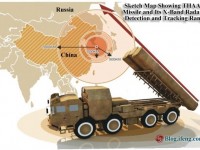
The U.S. Defense Department recently announced that the U.S. Forces Korea Command will station a Terminal High-Altitude Area Defense (THAAD) battery in the Republic of Korea (ROK) as a defensive measure against North Korea. But Russian and Chinese representatives have expressed concern about how THAAD could affect strategic stability, alliance relations, and global influence.
He Yafei, Former Vice Minister of Foreign Affairs
Jul 22, 2016
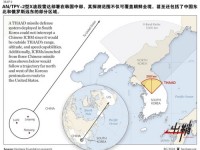
The missile-defense deployment will worsen the bifurcation in East Asia, where regional arrangements for economic growth are shaped with China at its core while regional security architecture is set up with the US-centered military alliances as its foundation. Should this contradictory situation evolve, neither regional economic growth nor security could be sustained.
Shi Yinhong, Professor, Renmin University
Jul 13, 2016
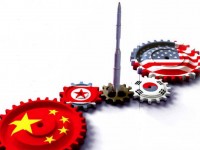
China must keep in mind its significant interests in multiple aspects of the North Korea issue, as it tries its best to balance such interests under difficult circumstances and create conditions for improving China-DPRK ties while preserving its mutual security and stability goals with Washington and Seoul.
Fan Gaoyue, Guest Professor at Sichuan University, Former Chief Specialist at PLA Academy of Military Science
Apr 13, 2016
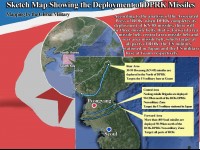
The high-altitude system would achieve none of its stated goals if deployed, but would shake the fragile trust of Beijing and Moscow toward Washington. The US should learn some lessons from the Cuban missile crisis and NATO’s eastward expansion, understand and respect other countries’ security concerns, and take some concrete measures to ease instead of aggravate the tension in the Korean Peninsula.
Fan Jishe, Professor, the Central Party School of Communist Party of China
Mar 14, 2016
Pyongyang should pay a price for its violation of Security Council resolutions, but punishment by itself will not magically solve the nuclear problem. If sanctions could not be translated into a strategic rethink, they will only add more pain to the ordinary North Koreans' already miserable life.
Ted Galen Carpenter, Senior Fellow, Randolph Bourne Institute
Feb 23, 2016
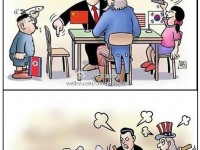
While the world’s attention has been focused on North Korea’s recent nuclear test and satellite launch, important developments regarding the nuclear issue were also taking place in South Korea. Recent developments suggest that the patience of the South Korean people and some members of the political elite is wearing thin.
Feb 22, 2016
U.S. Secretary of State John Kerry and Chinese Foreign Minister Wang Yi will hold talks this week in Washington to discuss how to deal with North Korea's latest nuclear test and launch of a long-range rocket, China's foreign ministry said Monday.
Feb 15, 2016
The United States and China have been in discussions about the possible deployment of an advanced American missile defense system in South Korea, a diplomatic source with knowledge of the matter said Monday.
Doug Bandow, Senior Fellow, Cato Institute
Nov 12, 2015
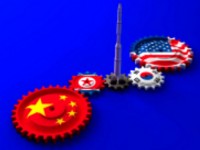
Many U.S. policymakers see China as the answer to North Korean proliferation, but the People’s Republic of China has not yet proved willing to abandon its sole ally. China’s interest is almost purely negative, avoiding what the Democratic People’s Republic of Korea could become.
Doug Bandow, Senior Fellow, Cato Institute
Aug 24, 2015
In Chinese academic and policy circles, emotional attachment to North Korea is steadily draining away, which creates an opportunity for Washington to persuade the PRC to change its policy toward the nation.
Back to Top

- China-US Focus builds trust and understanding between the U.S. and China through open dialogue among thought leaders.