Dan Steinbock, Founder, Difference Group
Apr 05, 2025
After a decade of deglobalization and U.S. geopolitics, globalization is no longer at crossroads, but unraveling. The longer this plunge prevails, the greater will be its costs.
Stephen Roach, Senior Fellow, Yale University
Mar 31, 2025
The world’s major growth engines are about to run in reverse. The policies and uncertainties of US President Donald Trump’s second administration have hit a sluggish global economy with a transformational exogenous shock. Risks are especially worrisome in both the United States and China, which have collectively accounted for a little more than 40% of cumulative global GDP growth since 2010.
He Weiwen, Senior Fellow, Center for China and Globalization, CCG
Mar 31, 2025
Global GDP is likely to shrink again in Q2. Inflation will rise, and real pain will start to set in. Key industries will be disrupted, dragging down production and consumption. The United States may miss its growth target for 2025, and as a new cross-Atlantic trade war looms, growth may slow in the eurozone as well.
Zhang Monan, Deputy Director of Institute of American and European Studies, CCIEE
Mar 20, 2025
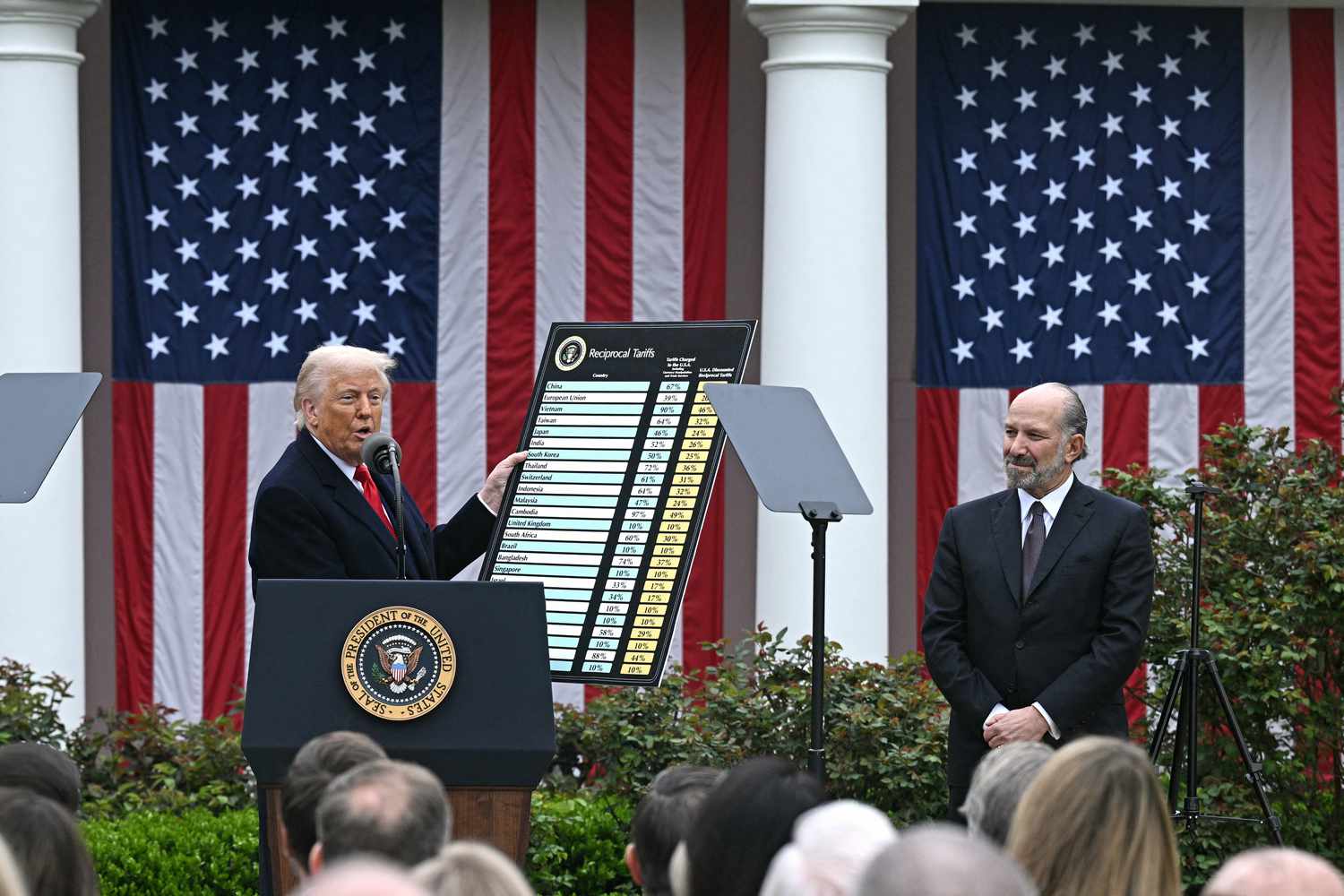
The introduction of reciprocal tariffs represents a pivotal shift in U.S. trade policy. The move from multilateral trade engagements to bilateral or regional agreements is a strategic effort to redefine international trade and ultimately give the United States an advantage.
Dan Steinbock, Founder, Difference Group
Feb 21, 2025
At the wake of the 2008 financial crisis, investor Warren Buffett warned of derivatives as weapons of financial mass destruction. President Trump's "reciprocal tariffs" could have a similar impact on world trade.
Stephen Roach, Senior Fellow, Yale University
Feb 13, 2025
It’s impossible to predict the outcome of a random experiment. Yet that is the task that awaits us as we try to make sense of another Donald Trump era.
Carla Norrlöf, Professor of Political Science at University of Toronto, non-resident senior fellow at Atlantic Council
Feb 13, 2025
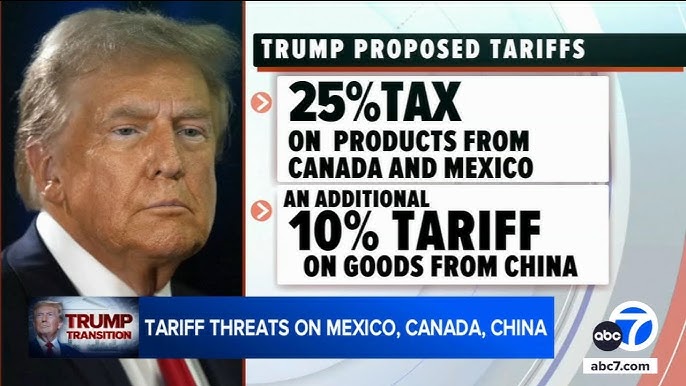
In a dramatic escalation of trade tensions, US President Donald Trump has imposed an across-the-board 10% tariff on goods from China, threatened a 25% tariff on imports from Canada and Mexico, and vowed similar measures against the European Union. His stated objective is to secure deals to halt the flow of drugs and unauthorized immigration into the United States, suggesting that tariffs will now be an instrument of border security. But trade barriers on this scale could destabilize global markets, drive up prices for American consumers, and potentially drag the US – and the world – into recession. In betting that the potential economic fallout is worth the gains in border security, Trump is gambling with America’s long-term influence and prosperity.
Warwick Powell, Adjunct Professor at Queensland University of Technology
Feb 13, 2025
In a social media post on January 30, 2025, US President Donald Trump threatened 100% tariffs on BRICs countries unless they committed to “neither create
Yuan Sha, Associate Research Fellow, Department for American Studies, China Institute of International Studies
Feb 13, 2025
Given the deadly and complex nature of the U.S. fentanyl crisis, overcoming challenges and making the best of cooperation have become daunting tasks. The United States needs to act to stem domestic demand instead of accusing China of complicity.

Dan Steinbock, Founder, Difference Group
Feb 07, 2025
By trying to weaponize the U.S. tariffs on America's big trade partners against China, President Trump is basing bad economics on worse geopolitics. It could prove a costly prelude to a global downturn.
Back to Top

- China-US Focus builds trust and understanding between the U.S. and China through open dialogue among thought leaders.