
Trump’s foreign policy setbacks, particularly with Iran, have complicated his diplomatic agenda and delayed a key summit with China, though both sides remain motivated by domestic and strategic incentives to pursue limited, pragmatic agreements. However, any cooperation will likely focus on narrow, short-term gains, as deep structural rivalry and mutual distrust continue to constrain meaningful long-term rapprochement.
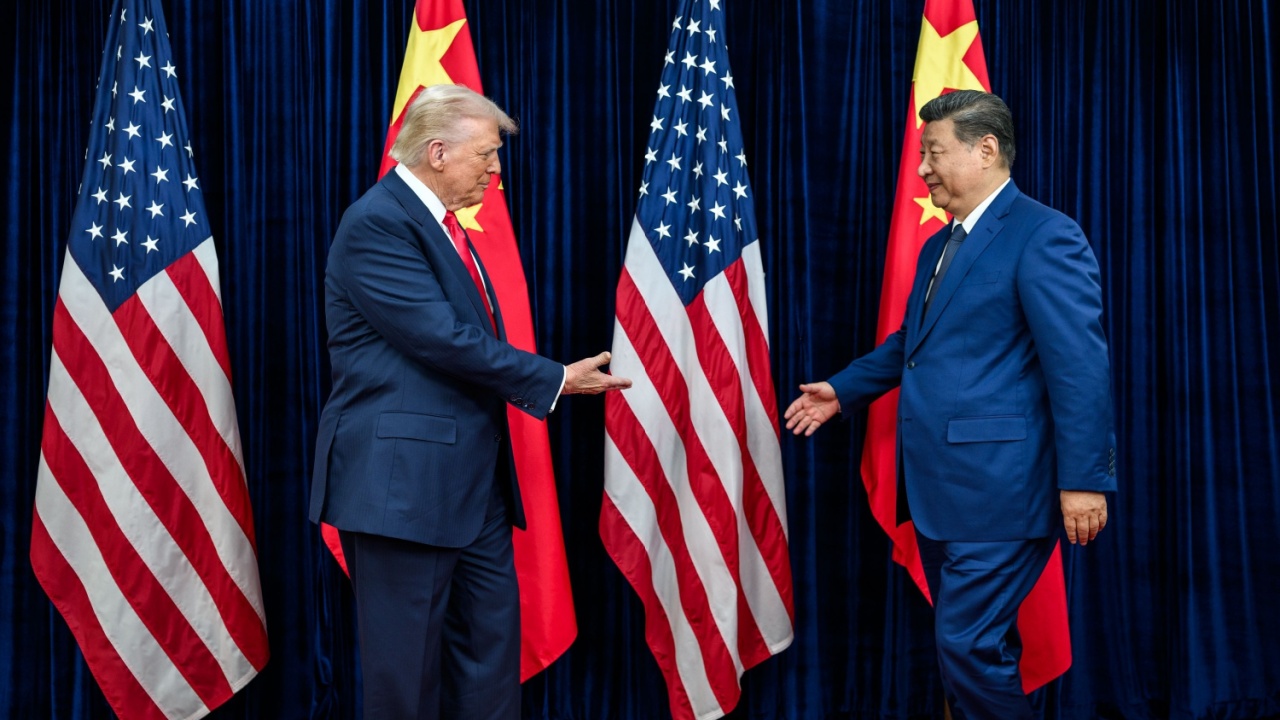
U.S. President Donald J. Trump fancies himself a tremendous dealmaker.
Yet impressive as his dealmaking abilities may be, on Iran, he had fundamentally underestimated the obstinacy of the Iranian regime and overestimated his ability to bring the affair to a close – without significant, self-inflicting harm and inconveniences.
Indeed, one such inconvenience was the postponement of his much-touted visit to Beijing, which would have been the first for a sitting American president in eight years (his predecessor, Joe Biden, did not do so). Whilst the summit between Trump and Chinese President Xi Jinping had been scheduled for the end of March and early April, per the White House’s latest, it has now been postponed to mid-May.
Notably, one cannot rule out the prospects for further postponement – should the extremely fragile, momentary truce in the Middle East be shattered by the unilateral moves of one or more sides to the conflict, or should Trump inadvertently irritate the Chinese through vociferously lashing out, as a means of saving face and rescuing his damaged domestic reputation, the meeting could well be shifted back again.
We should also note that with July 4th this year marking the 250th anniversary of the Declaration of Independence, Trump could be too swamped by the American political calendar to leave the country by the summer.
Why the Show Must Go On
With all that said, both Beijing and Washington are clearly keen on a meeting.
For Trump, stabilising his relations with China grants him the ability to direct his energy – for at least the next twelve months – towards ensuring the victory of personally aligned candidates in the upcoming mid-terms. Given that a Republican loss in the House and an extremely tight toss-up (if not Democrat victory) in the Senate look all but certain, Trump would likely prioritise shoring up his domestic political legacy and financial wherewithal (namely, wealth), by identifying and backing loyalists who would assist him with entrenching the Trump family’s influence, especially after his tenure.
Additionally, locking in a “Great Deal” with China would go some way, in the eyes of Trump’s and his closest advisors’, in cementing his political legacy – after all, he had long maintained that he would be the only American leader in recent political history who could arrive at a strategic modus vivendi with China from a position of strength, as opposed to weakness (from his perspective).
On the other hand, the Chinese leadership eyes with interest the setting of a consistent and predictable short-to-medium-term floor – as much as possible – in its relationship with the U.S. Whilst decoupling is apparently inevitable in domains of sensitive technology and significant value-added, and it would be naïve to see Sino-American relations as trending towards the pre-2017 default – there remains much domestic political and economic upside for Beijing in de-escalating tensions in its periphery, for which Washington’s buy-in remains crucial.
Indeed, this is of particular importance as the 21st National Congress of the Communist Party of China (CPC), due to take place in Q4 2027, is a little over a year and a half away. The operative maxim is “stability over all else” – which reflects, in practice, a carefully calibrated balance between signaling resolve and fortitude on “red-line” issues and offering a degree of tactical flexibility on issues that are not of primary importance.
Low Hanging Fruits and the Upsides of Avoiding Ambitious Outreach
Speculation abounds concerning the likely contents of the meeting.
Some in Taiwan are reportedly concerned by the possibility of a “Grand Bargain” over the island, citing the deeply mercurial and inconsistent attitudes towards American partners and military-security interests held by the president. Others have posited that Trump may strive to cement the ‘Donroe Doctrine’ by affirming China’s and Russia’s claims to their respective spheres of influence – harking back to the neo-Metternichean hypothesis that I examined and rejected as implausible last year.
Such pontifications tend to suffer from shared defects – they overestimate the extent to which preparatory efforts have been or can be made in ensuring that the summit will play out as anticipated; they underestimate both Trump’s (unintended) capriciousness and Beijing’s wariness of such prevarications, and, perhaps most fundamentally, they misconstrue the summit to be one where substantive policies will and can be discussed.
Given the extreme levels of uncertainty and geopolitical flux induced by the White House’s cavalier forays into the Gulf, the Chinese are likely looking to frame their demands and wants through terms that are sufficiently simple that they could be understood by even Trump himself.
On the other hand, Trump is desperately in need of triumphant headlines after his Middle East setbacks – but his weakened grip over his own base could well inject a rare modicum of risk-aversion and conservatism into how he approaches the visit.
In my view, judging from purely openly available information, three low hanging fruits will likely come to the forefront during the two leaders’ discussions – though the extent to which breakthroughs can be achieved remains to be seen.
The first domain where upsides can most feasibly be anticipated comprises the “trade imbalance” – a peculiar obsession of Trump’s that could yield mutually desired outcomes, in the form of increased Chinese investment into non-sensitive sectors in the U.S. (vetted by a bilateral board of trade, staffed with Trump loyalists on the American side) and purchase of American goods, in exchange for Trump’s considerable relaxation to restrictions on semiconductor exports to China.
Another domain where a tentative agreement may be reached concerns energy security. With the Venezuelan card in hand, Trump will likely reach out to his Chinese counterpart to seek assurances concerning Tehran’s weaponisation of the Strait of Hormuz – a ticking timebomb and source of nuisance for the U.S. administration. In exchange for Beijing’s continuation of its efforts in moderating Tehran’s foreign policy, Trump may agree to maintain existing Venezuelan oil exports to China.
A more contentious – though still viable – dimension for negotiation consists of what I term the rare earth-tariff swap. The Chinese leadership remains disturbed – though not existentially so – about the effects of Trump’s vicious tariffs. As such, Beijing may propose a formally binding “circuit-breaker”, linking its supply of rare earths to the level of effective tariffs imposed by the U.S. on Chinese goods: should Trump refuse to drastically lower tariffs on Chinese consumer goods for which few substitute markets can be found, the Chinese will once again suspend the supply of rare earths to American manufacturers and producers.
With the mid-terms looming over the horizon, and at least several years until the U.S. develops a modicum of rare earth self-sufficiency (or independence from China), Trump will almost certainly oblige.
Geopolitical hot-button issues such as Japan and Taiwan could well be raised and discussed cursorily, but no major breakthroughs should be expected along these fronts – there is neither enough time nor trust for meaningfully binding conversations to take place over such agenda items.
The Glaringly Apparent Limits to the Rapprochement
Make no mistake: the fundamentals of the Sino-American relationship have not, and will not shift, even despite the fairly seismic shocks and shifts in global geopolitics over the past sixteen months. The U.S. remains the world’s dominant, albeit weakening, uni-pole; China amounts to an emerging rival in the economic, technological, and security (within Western Pacific) domains, yet lags behind the U.S. in financial prowess and global military reach.
Short of a drastic reconfiguration of these dynamics, the bilateral dynamic will be primarily characterised by structural antagonism – the U.S. establishment is fearful of the implications of a rising China, not despite but because of its coming to realise that the Chinese have in fact managed to pull off impressive advancements across domains ranging from higher education and STEM research to cultural soft power and fostering a middle-class society.
The Chinese leadership remains convinced that vast swathes of the American industrial-military-intelligence-technological complex are bent on kneecapping its progress, and, indeed, undermining the regime’s rule over the country. Whilst Trump may think and behave differently from the “pack”, most observers see him as an aberration, as opposed to a definitive bellwether, of the establishment consensus in the corridors of power in the Capital Beltway. To be hawkish on China remains hugely fashionable across both sides of the aisle.
In short, observers of the Sino-American relationship would do well in remembering the Chinese adage: “No Expectation, No Disappointment”.
