
Dear Focus Reader,
Global leaders are preparing to gather in Shenzhen next week for the Asia-Pacific Economic Cooperation (APEC) summit, where efforts to strengthen regional economic ties will unfold alongside renewed U.S.-China diplomacy. The gathering will bring together representatives from 21 member economies to address trade barriers, economic integration, and the opportunities and challenges presented by emerging technologies.
Ahead of the summit, APEC ministers called for closer cooperation on digital trade and AI, more resilient supply chains, and improvements to the infrastructure and customs systems that support cross-border commerce. The summit will also provide an important opportunity for U.S. President Donald Trump and Chinese President Xi Jinping to build on recent efforts to stabilize bilateral relations.
For Washington and Beijing, the anticipated meeting comes as both countries extend suspensions on a range of trade measures through January 10, 2027. Earlier this week, China announced that it would maintain pauses on additional tariffs, certain export controls, and port fees on U.S.-linked vessels, following a similar move by the United States.
Preparations for the Trump-Xi meeting also advanced this week during a phone call between Secretary of State Marco Rubio and Chinese Foreign Minister Wang Yi. During the conversation, Beijing emphasized strengthening cooperation and managing differences and sensitive issues, while Washington highlighted opportunities to advance peace and denuclearization, including through a possible trilateral leaders' meeting with Russia. The U.S. State Department said both sides recognized the importance of high-level dialogue on these issues, although an official meeting has not been confirmed.
Meanwhile, Treasury Secretary Scott Bessent outlined plans for continued cooperation with China on advanced artificial intelligence. Speaking this week, Bessent said the two countries had established a new dialogue on superintelligence to address shared risks and reduce the potential for misunderstandings. He described plans to exchange practices for evaluating and testing advanced AI models before release, maintain human oversight, and establish a direct channel for notifying each other of serious incidents involving these systems.
Learn more on international relations by exploring our latest Focus content, including topics on geopolitics, global diplomacy, and more.



"The only way to bring prices down in a lasting manner is through diplomatic efforts to end the Iran conflict and restore normal production and trade."
The approximate increase in U.S. goods trade with the five Central Asian countries between 2021 and 2025, rising from $3.28 billion to just over $6.48 billion.
Read more in "Where Will Central Asia's Prosperity Come From?" by Xiao Bin, Deputy Secretary-General, Center for Shanghai Cooperation Organization Studies, Chinese Association of Social Sciences.
Everyday Life as an American Teaching in China | Lauren Hamilton
Watch VideoQuestion of the Week:
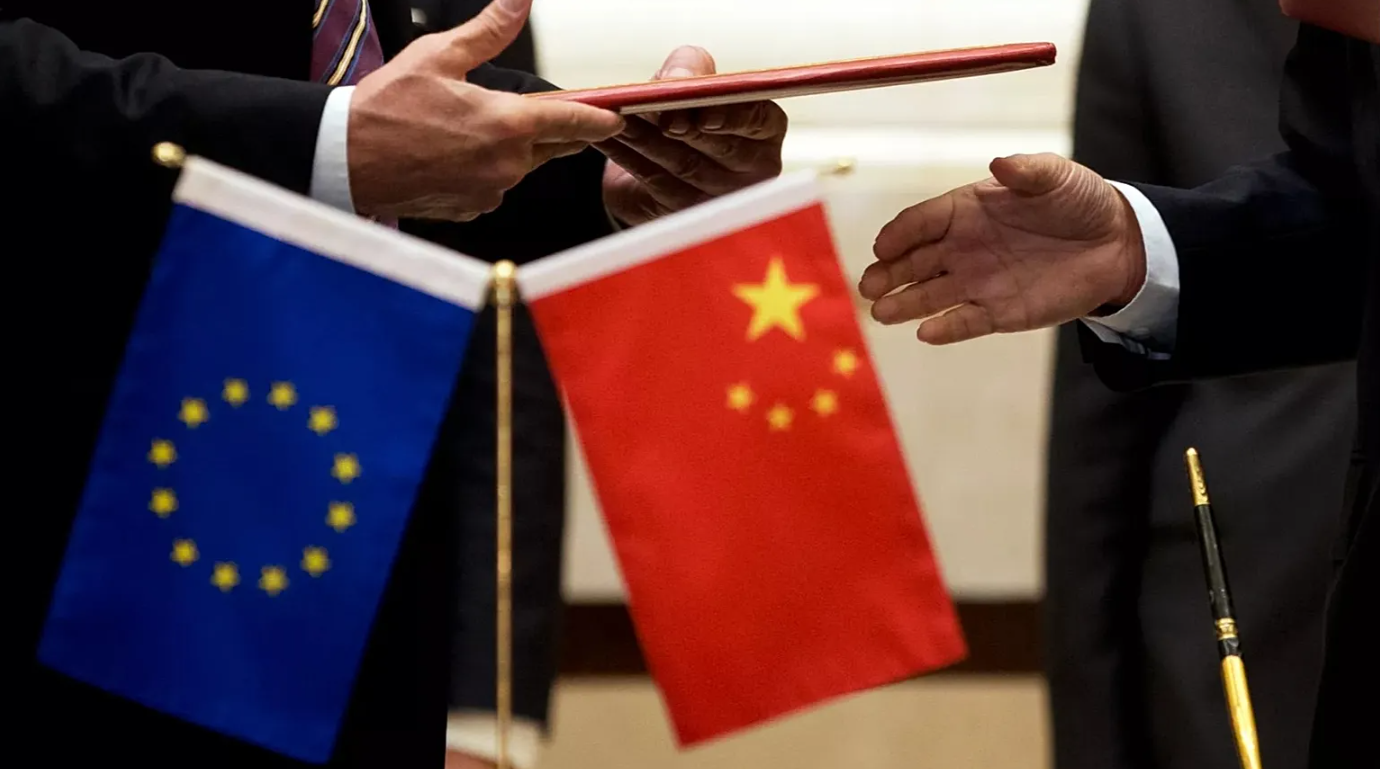
In our Focus Insights section, Brian Wong examines what it would take for China and the European Union to move beyond their fragile trade truce.
We want to hear from you!
What should China and the European Union prioritize to build a more sustainable economic relationship?
Submit your thoughts to USeditor@chinausfocus.com for a chance to be featured in next week's Focus This Week.
useditor@chinausfocus.com for more info.
Powered by
Prepared by China-US Focus editorial teams in Hong Kong and New York, this weekly newsletter offers you snap shots of latest trends and developments emerging from China and the U.S. every week. It is a community space to exchange thoughts and ideas about the China-U.S. relationship and beyond.
- 2026-11-06 Focus This Week: The Next Chapter
- 2026-10-30 Focus This Week: Terms and Conditions
- 2026-10-23 Focus This Week: Managing the Divide
- 2026-10-16 Focus This Week: Navigating New Pressures
- 2026-10-09 Focus This Week: The Tradeoffs Ahead
- 2026-10-02 Focus This Week: Taking the Next Steps
- 2026-09-25 Focus This Week: What Comes Next?
- 2026-09-21 Focus This Week: Ahead of the Summit
- 2026-09-11 Focus This Week: Remembering Tung Chee Hwa
- 2026-09-04 Focus This Week: New Alignments
- 2026-08-28 Focus This Week: Pressure Points
- 2026-08-21 Focus This Week: Shifting Grounds
- 2026-08-07 Focus This Week: Trade Holds Firm
- 2026-07-31 Focus This Week: Keeping Channels Open
- 2026-07-17 Focus This Week: Rising Friction
- 2026-07-10 Focus This Week: Strategic Signals
- 2026-06-26 Focus This Week: Bridging Dialogues
- 2026-06-18 Focus This Week: What's the Deal?
