Ma Jun,, President of Institute of Finance and Sustainability, Former Co-chair of the G20 Sustainable Finance Working Group
Sean Kidney, CEO, Climate Bonds Initiative
Dec 09, 2025
As the United States renounces its climate commitments, a chain reaction of wavering pledges and scaled-back investments by other donors and multilateral institutions has followed. This trend raises the stakes for everyone else, underscoring the urgency of closing the financing gap for climate adaptation and mitigation in the developing world.

Lucio Blanco Pitlo III, President of Philippine Association for Chinese Studies, and Research Fellow at Asia-Pacific Pathways to Progress Foundation
Apr 22, 2025
For many nations, a highly profitable trade relationship with the United States is now no longer a given. With President Trump’s tariff agenda looming over the world, how is Asia planning for a future where the U.S. may not be so open for business?

Joel A. Gallo, CEO, Columbia China League Business Advisory Co.
Aug 28, 2020
Hainan’s attractive geography and proximity to major trade routes create a multitude of economic opportunities for China. A proposed free-trade port on the island could improve access to all it has to offer and create a potential economic boom.
Zhang Monan, Deputy Director of Institute of American and European Studies, CCIEE
Sep 18, 2019
The elimination of tariffs, barriers and subsidies will not only promote fair market competition and end policy distortions but will also greatly enhance the competitive advantage of enterprises. China’s free trade zones should pay heed and embrace such reform.
Joshua P. Meltzer, Senior Fellow, Brookings Institution
Nov 23, 2016
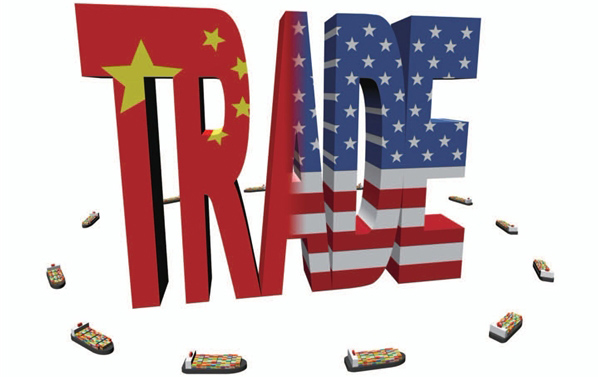
The U.S.-China relationship is complex and often fraught, but getting it right is possibly the most important economic and foreign policy task of any President. The pathway to a more advantageous U.S. economic relationship with China will not be easily forged, but it is vital to the American economy. As China’s President Xi Jinping told Trump recently, a cooperative U.S.-China relationship is the only pathway forward.
Walker Rowe, Publisher, Southern Pacific Review
Nov 06, 2015
For those who oppose the TPP, much as been made of the secret nature in which the treaty was negotiated. Walker Rowe summarizes some major sectors that will be affect by the treaty, and thus trying to influence a rather fractured and unpopular trade agreement.
Dan Steinbock, Founder, Difference Group
Oct 28, 2015
While the U.S.-led Trans-Pacific Partnership has potential to split Asia Pacific, it could be used as a foundation for truly free trade, along with other free trade plans in the region.
Wu Sike, Member on Foreign Affairs Committee, CPPCC
Oct 14, 2015
For China and the United States, a new type of economic and trade relationship with each other is in the best interest of the two major powers, and they should work towards this end. That will require Washington to view the new TTP through the lens of its best economic interests, and join China in creating the world’s largest free-trade zone by around 2030.
Han Liqun, Researcher, China Institutes of Contemporary International Relations
Sep 01, 2015
Whether or not the struggling talks produce an agreement soon, the US and China do not need to be defensive about the TPP. Instead, they should open an obstruction-free channel for dialogue, through which both countries can use anticipatory diplomacy to enhance mutual trust.
Yin Chengde, Research Fellow, China Foundation for International Studies
Aug 12, 2015
Washington’s goals in the Trans-Pacific Partnership may have been economic at first, but the most recent negotiations suggest the trade agreement has become a tool of the US ‘pivot to Asia’. A symptom of its quest to contain China, it’s an unworthy goal for the US – and it’s doomed to fail.
Back to Top

- China-US Focus builds trust and understanding between the U.S. and China through open dialogue among thought leaders.