Robert I. Rotberg, Founding Director of Program on Intrastate Conflict, Harvard Kennedy School
Apr 09, 2016
Effectively reducing the killing of African elephants and rhinoceroses depends more on curbing the foreign demand for tusks and horn than on localized national endeavors to combat poachers. China is cooperating with African nations, but more must be done to abate the cultural appetite for ivory.

Stewart Taggart, Founder & Principal, Grenatec
Apr 08, 2016
Actions in the South China Sea may sow mistrust with China’s neighbors, at the expense of China’s export-led infrastructure development growth. South China Sea Joint Development Areas, however, can enable China and Southeast Asia to reach a constructive, precedent-setting middle ground sidelining politics and focusing on mutually beneficial economics, like building a global electric grid.
Xu Hongcai, Deputy Director, Economic Policy Commission
Apr 07, 2016
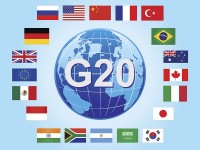
Interlocking the G20 and the IMF, better coordinating the five major economies, and reducing dependence on the US dollar are all opportunities for the Hangzhou summit during China’s G20 presidency.
Ben Reynolds, Writer and Foreign Policy Analyst in New York
Mar 31, 2016
The manufacturing jobs that the U.S. lost in the preceding decades did not move on to China – they no longer exist. There is no way to bring back these jobs as machines can do them better, and cheaper, than any American worker. The solution to our present dilemma certainly isn’t a manufacturing revival, but it may be a 20-hour workweek.
Stephen Roach, Senior Fellow, Yale University
Mar 29, 2016
Chinese leaders' emphasis on the "supply-side reform" could indicate a premature shift away from the consumer-led model back to China’s comfort zone of a producer model that has long been more amenable to the industrial engineering of central planning.
Owen Haacke, chief representative, US-China Business Council’s Shanghai Team
Mar 25, 2016
China’s 13th Five-Year Plan, an economic and social blueprint, could give important insights to U.S. companies planning China business strategies, by providing industry specific plans, local designations for free trade zones, and new policies across the country.
Niu Li, Director of Macro-economy Studies, State Information Center
Mar 24, 2016
China’s new Five-Year Plan emphasizes the quality of growth rather than speed as the country enters a period of ‘new normal’. Maintaining 6.5 percent of economic growth is a priority, but it is even more important to keep such a growth rate sustainable and to channel that growth toward improving the quality of life for the majority of Chinese citizens.

Lawrence Lau, Ralph and Claire Landau Professor of Economics, CUHK
Mar 18, 2016
The Renminbi surprised the world markets by its unexpected devaluations first in August 2015 and then in January 2016. The author argues that the Renminbi is unlikely to devalue abruptly and significantly going forward, even though there may be small fluctuations in the Renminbi exchange rate.
Gong Ting, Research Fellow, China Institute of International Studies
Mar 16, 2016
Divergence and competition between the two major players has intensified as both economies and their business communities want to seize the initiative in developing a more profound and mutually beneficial economic relationship with ASEAN. But there is still room for win-win-win results in this tri-cornered interaction.

He Weiwen, Senior Fellow, Center for China and Globalization, CCG
Mar 16, 2016
The years ahead offer parallel tracks for growth for both countries, and an “early harvest” for US enterprises, if opportunities are seized in areas such as innovation, Internet plus, reducing capacity, expanding the service sector – especially in healthcare -- and developing emerging industries.
Back to Top

- China-US Focus builds trust and understanding between the U.S. and China through open dialogue among thought leaders.