Nicola Casarini, Senior Fellow, Istituto Affari Internazionali
Oct 20, 2022
Europe has stepped up its engagement with Taiwan to a level unthinkable only a few years ago - a dynamic which is welcomed in Washington but risks triggering commercial reprisals from Beijing. If not managed carefully, such actions threaten to reduce Europe’s diplomatic leeway and ability to contribute to a peaceful solution of Cross-Strait relations. The EU should urgently set up a high-level communication channel with Beijing to complement the transatlantic dialogue on the Indo-Pacific established last year.
Zhong Yin, Research Professor, Research Institute of Global Chinese and Area Studies, Beijing Language and Culture University
Oct 20, 2022
There are many imperfections and contradictions in the latest NSS. It’s hard enough to promote fairness and justice in the world, so how does one balance a strategy that puts U.S. interests and the well-being of Americans ahead of everyone else?
Sun Chenghao, Fellow, Center for International Security and Strategy of Tsinghua University; Munich Young Leader 2025
Zhang Ding, Assistant Research Fellow, D&C Think Tank
Oct 20, 2022
The new U.S. National Security Strategy report reflects a certain anxiety within the Biden administration, which has not evolved materially beyond Trump. The strategy neither advances global peace nor prevents China-U.S. relations from sliding into confrontation.
Li Huan, Deputy Director at CICIR's Institute of Hong Kong and Macao Studies, and Distinguished Research Fellow, Xiamen University
Sep 23, 2022
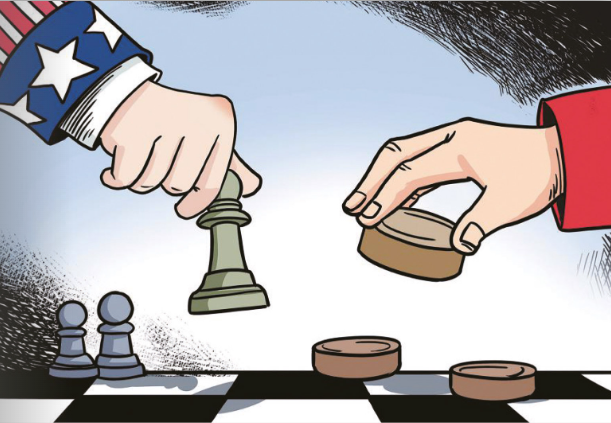
With the possible passage of the Taiwan Policy Act of 2002, the United States is showing that, notwithstanding lip service, it is moving in a direction of open support for the island. China must prepare for the worst-case scenario.
Brian Wong, Assistant Professor in Philosophy and Fellow at Centre on Contemporary China and the World, HKU and Rhodes Scholar
Aug 18, 2022
A China-U.S. military altercation and violence over Taiwan ought to be avoided. Several steps must be taken by both sides to ensure global stability, such as maintaining core values like patience, pragmatism, and some degree of empathy for different parties’ perspectives.
Li Huan, Deputy Director at CICIR's Institute of Hong Kong and Macao Studies, and Distinguished Research Fellow, Xiamen University
Aug 17, 2022
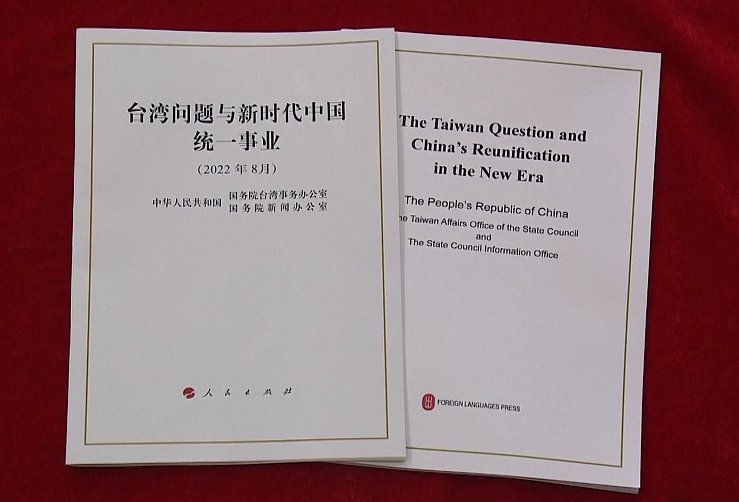
Successive white papers shed light on national leaders’ approach to reunification with Taiwan. All explain and respond to critics, emphasizing a policy of peaceful reunification and the implementation of the one country, two systems concept.
Yang Wenjing, Research Professor, Institute of American Studies, CICIR
Aug 15, 2022
Worried about Taiwan’s fate, Washington imagines that the Chinese mainland might copy Russia and resort to force. Biden administration officials have said they want to see Taiwan apply the lessons learned from Ukraine’s resistance.
Philip Cunningham, Independent Scholar
Aug 10, 2022
It’s imperative that the new “low” in U.S.-China relations doesn’t become the new normal. And understanding the historical connotations of the relationship, particularly regarding Taiwan, is imperative for paving the way for a better, more diplomatic future.
Tao Wenzhao, Honorary Member of the Chinese Academy of Social Sciences; Fellow, CASS Institute of American Studies
Aug 09, 2022
Pushing shamelessness and political amnesia to new heights, U.S. House Speaker Nancy Pelosi sneaked into Taiwan in early August for a visit that was a needless affront. Needlessly inflaming tensions, the trip was wrong at three levels: China’s sovereignty and territorial integrity, relations with the United States and principles of international order anchored by the 1943 Cairo Declaration and the 1945 Potsdam Proclamation.
Minxin Pei, Tom and Margot Pritzker ’72 Professor of Government , Claremont McKenna College
Aug 08, 2022
US Speaker of the House Nancy Pelosi’s arrival in Taiwan has incited a predictably strong response from China. Chinese warplanes have brushed up against the median line dividing the Taiwan Strait. The Chinese foreign ministry has warned of “serious consequences” as a result of Pelosi’s visit to the island. Chinese President Xi Jinping has told US President Joe Biden that “those who play with fire will perish by it.” And now, China has just announced a major military exercise with live-fire drills starting August 4 (just after Pelosi leaves Taiwan). The specter of military confrontation looms large.
Back to Top

- China-US Focus builds trust and understanding between the U.S. and China through open dialogue among thought leaders.